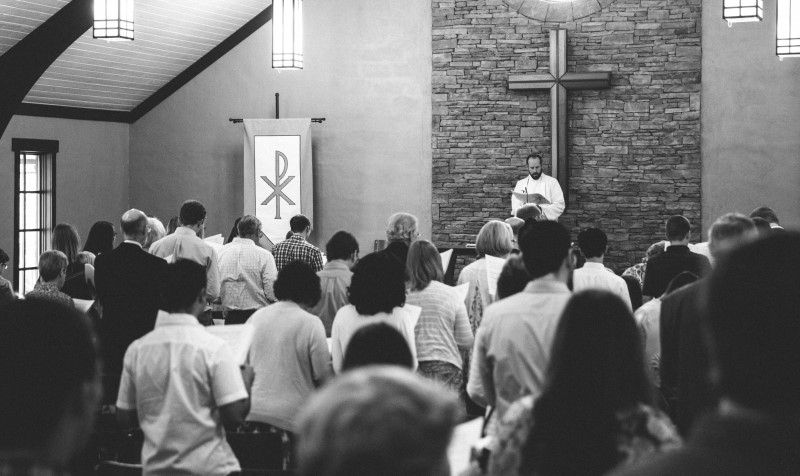
I preached from 1 Samuel 23 on Easter Sunday. A few notes:
The structure of the chapter is obvious. Two stories of David being betrayed (by the men of Keilah and Ziph) are wrapped around a story of loyalty to David (demonstrated by Jonathan). It’s disloyalty/loyalty sandwich, with faithful Jonathan at the center, surrounded by scoundrels. Just as David is contrasted with Saul (an innocent king-in-waiting vs a tyrannical king), so there is a contrast between Jonathan and the men of Keilah and Ziph (loyalty vs disloyalty to David).
Keilah and Ziph probably both feared getting the Nob treatment if they were loyal to David. Saul had just sent Doeg to destroy the priestly city of Nob because the high priest aided David on his way out of the land (see 1 Samuel 21-22). In 1 Samuel 23:1-5, David saves the city of Keilah from the Philistines; they repay his service by being willing to hand him over to Saul. The men of Ziph, despite being David’s tribal brothers, are eager to win Saul’s favor by telling Saul exactly where David is. The Ziphites are spies on behalf of a surveillance state; they embrace tyranny in the name of patriotism. They live under Saul’s gaze and want his favor, so much so, they will hand over a righteous man who is one of their own to stay in Saul’s good graces (23:19-24).
The hinge of the story is obviously Jonathan’s visit to David in the wilderness. Structurally and thematically, this is the center. Saul cannot find David, but Jonathan is able to track him down. And when he gets there, Jonathan “strengthened David’s hand in God” (23:15). This is what Christian friendship and fellowship are all about: strengthening one another with God’s kingdom promises. Jonathan reminds David of God’s Word to him, tells him Saul knows he will ultimately fail in his attempts to stop David from coming to the throne, and renews his covenant with David. In other words, Jonathan tells David, in effect, “You are God’s chosen one, so you will win and those who oppose you will lose.”
Each of us should seek to surround ourselves with Jonathans, and we should be seek to be Jonathans to others. Many in our culture, like the people of Keilah and Ziph, have sided with tyranny against God’s Anointed One and his people. We saw it during COVID, when the state tyrannically tried to force many churches to shut down. We see it when the faithful are attacked for upholding what the Bible and nature teach about sex and gender, over against the culture’s embrace of “gender ideology” and the LGBTQ+ movement. We see it as many Western nations embrace wokeness and destroy their own civilization through mass immigration, intentionally displacing their own people and wrecking their heritage. Perhaps saddest of all, much of the church has gone along with this tyranny rather than opposing it. Many Christians curry favor from tyrants because they live under the progressive gaze. Many Christians side with the tyrannical state, the surveillance state, rather than serving the Lord’s Anointed One, even though they should know better. Many so-called Christians fear the state more than then they fear God.
But that’s precisely why 1 Samuel 23 is such an important chapter for us. Even in times of tyranny and spiritual declension, God preserves a remnant. There is always an Israel within Israel, a kingdom within the kingdom, a holy nation within the unholy nations of the world. God preserved a remnant for himself in David’s day, and he will in our day as well. And out of that remnant, the kingdom will grow into a greater and more glorious future. In the kingdom story God is telling, every declension leads to reformation, every setback leads to surprising new victories, every death leads to a resurrection.
Saul appeared to have the upper hand, with most of Israel supporting him in his conflict with David, despite Saul’s obvious evil and David’s obvious innocence. Nevertheless, God was quietly building a new Israel and a new kingdom around David. God has already made David king in waiting (chapter 16); he has also given David a priest (Abiathar), a prophet (Gad), and several hundred fighting men (cf. 1 Samuel 22) to form the core of his new Israel. We can see God’s hand at work among the faithful in similar ways today. God is on the move. God is building something. God is at work — sometimes quietly and often behind the scenes — but he is most certainly at work.
 TPC Pastor's Page