Another post from the archives:
—
Every book in the New Testament teaches that our eternal destiny hinges on doing good works
There is no salvation without obedience
Good works are necessary if we are to be saved
You will not be forgiven without repentance
Do not be deceived: You will reap what you have sown
—
The point of Christian parenting is NOT to get your children to make A decision for Christ. Rather, it’s to get to them to make EVERY decision for Christ.
—
For Reformation to happen, it really has to be top down and bottom up
The church typically includes elites and commoners – and ideally magistrates are church members too
And since the church is the chief driver of evangelism, discipleship, and discipline, it always has a central role
For reform to really take hold, powerful magistrates have to get onboard and support it, of course – Christians must have political power to implement their social vision, protect/promote truth, etc.
But think of what happened with Constantine: churches were faithfully worshipping, suffering, and evangelizing, for centuries, before God gave them a cooperative magistrate
In Luther’s case, without help from commoners (and the printing press), the movement would have died quickly
But the real key was certainly the help of a godly magistrate who read Luther and was convinced he was right (Frederick)
Calvin ended up in a strategic place almost by accident ( thanks to Farel) but it turned out to be a place where the rulers/city council and the people were favorable to his work – it was still tumultuous but effective
In England, obviously the magistrate was key but the people had to be onboard too or it would not have gone anywhere
Bottom line: Reformation can happen in a mix of ways, and yes, it requires political power at some point
But there are many things to do even when we lack political power to prepare the way – sadly not many churches are doing those things at the moment
—
A lot of white people need to repent of their self-loathing.
A lot of men need need to repent of despising their own manhood/masculinity
[Interestingly, these two posts were made in August 2024, very close together. The one on race got 24 comments, 48 reposts, 305 likes, and 11000 views; the one on masculinity got no comments, 400+ views, and 16 likes.]
—
“Her nails pierced him”
That phrase established Harry Potter as one of the greatest Christ figures in all of modern fantasy literature
It’s an obvious echo of Isaiah 53 – and tells you what’s coming in the story!
—
Initial justification by faith alone = the Father’s approval of the Son’s work for me
Final justification a cording to works = the Father’s approval of the Spirit’s work in me
The latter justification presupposes the former
The mediation of Christ is necessary to cover our evil works and to make our good-but-imperfect works acceptable
Justification has a Trinitarian structure
[How does this relate to Gaffin’s position? He wants one justification with already/not yet dimensions. I’m fine with that. I talk about a twofold justification too, but I do not object to speaking of two justifications (just like there are two resurrections – related but distinct). Gaffin would probably reject that as heterodox. But if so I’m not sure the biblical or Reformed authors would pass his test. And it seems to make orthodoxy a matter of policing language than actual doctrinal substance. The best theologians recognize there can be a variety of ways to express a true doctrine.]
—
Calvin:
“But we, on the other hand, without reference to merit, still remarkably cheer and comfort the hearts of believers by our teaching, when we tell them they please God in their works and are without doubt acceptable to him ….
[When God] examines our works according to his tenderness, not his supreme right, he therefore accepts them as if they were perfectly pure; and for this reason, although unmerited, they are rewarded with infinite benefits, both of the present life and also of the life to come. For I do not accept the distinction made by learned and otherwise godly men that good works deserve the graces that are conferred upon us in this life, while everlasting salvation is the reward of faith alone.”
—
Meg Basham has demonstrated that many leading evangelical pastors and institutions were pushed to the left by the lure of money and prestige
This is ONLY really a problem if those positions on the left are wicked and unbiblical
If those positions on the left are good and true, then the evangelical shift leftward is a good thing and those who shifted that direction should defend their move
But if those positions on the left are indeed wrong, then what’s happened is a travesty of massive proportions
The fact that so many of these evangelical leaders who got called out have denied that they shifted to the left or they’re being misunderstood tells you all you need to know
It’d be much better for them to confess that they got duped, admit they allowed themselves to be influenced by the progressive gaze, and announce they will now repent and seek to make amends
—
The answer to nominalism is church discipline
—
Price controls have a long and proven history of being disastrous.
—
If any Christian nationalist project were to actually succeed in America, it would need the cooperation of the Baptists
It would have to be a catholic (small c) project, not a sectarian one
But Baptists have never built a Christian civilization – nor can their theology support one since it only allows for Christian individuals and not anything corporately Christian
—
On Basham’s Shepherds for Sale:
Her central claim is obviously true even if some want to argue she got this or that detail wrong (and I’ve been unimpressed with the critics) She connects a lot of dots and brings out some behind the scenes stuff, but no one who has been paying attention can deny the inroads progressive ideology has made in evangelical circles
Basham’s book should read in conjunction with Zach Garris‘s new book, particularly where he shows how feminism has infiltrated conservative Reformed denominations
—
From October ’24:
You should vote Republican rather than Democrat. But voting Republican is not a sufficient bulwark against the onslaught of moral insanity. The Republican Party is not as morally insane as the Democrat Party, but it’s not exactly sane either. Republicans are responsible for quite a bit of the moral insanity we see all around us. Republican victories at this point are a way of buying us time, not fixing the problem.
—
Some neo-racists, neo-Nazis, and anti-Semites like to say they are just recovering a view of race held by earlier generations of Christians. That’s an utter lie. Quite frankly, there is probably no one alive today who believes exactly what, say, Columbus, or the Puritans, believed about race.
1/4
Here is Jeff Flynn-Paul on what early Western explorers believed about the people they encountered in the new world of the Americas:
“ If early European explorers and settlers did not believe that Amerindians were of a different race, what did their science and philosophy tell them?
Most people looked first and foremost to their religion. Christianity is difficult to force into the category of “racist” philosophies, because Christian theologians taught that all mankind was a single human family man family desecended from Adam and Eve. There was a longstanding tradition in Christian iconography that the Three Magi represented the three known continents of Asia, Africa, and Europe they were accordingly represented in let medieval Europe with appropriate features and skin color. Wit was believed, however, that it was the mission of the church to unite all these pople as one holy family in Christ, ideally with as much gentleness and persuasion as possible. The Cathedral of St. Barbara at Kutná Hora in the Czech Republic, for example, contains a mural in which all the people of the Earth are represented peacefully hearing and accepting the Gospel as one global people, including Natives of the Americas. It was this global vision of redeemed humanity that motivated Queen Isabella to welcome the Amerindians as subjects of the Crown of Castile, something the French kings were also to do with the Amerindians of Quebec.
2/4
The science of the day also said next to nothing about different
“races” of people based on skin color. A tradition dating back to ancient times held that humans were essentially the same all over the globe, but that the closer they got to the sun (i.e., to the equator), the darker their skin became. It was believed that if light-skinned people spent enough time in the south, they too would become dark. It should come as no surprise that late medieval people, who classified both bats and bumblebees as birds, were not attuned to any fine points of racial difference. The contrast with their far more scientific nineteenth-century descendants is tremendous.
The prevalence of geography and latitude rather than “race” or innate characteristics in early explorers’ thinking is what led Columbus to conclude that the Indians he found in the Caribbean were about the same color as the Canary Islanders but not as dark as the sub-Saharan Africans,” Columbus reasoned that if he traveled farther south in the Americas, he would find darker-skinned people. His contemporaries also believed that as they traveled farther North in North America, they would find lighter skinned Indians.
3/4
Based on the strength of this anti racist prejudice, Europeans well into the seventeenth century believed that North American Indians were essentially the same color as themselves. They believed that the skin color of the Old and New World people was differentiated by latitude rather than by continent. Dozens of sources relate to us their belief that North Americans were “born white” as babies but only became darker due to exposure to the sun and the thick ointments spread over them by their parents. Evidence for this attitude is widespread as we shall see.
Writing in 2017, the scholar Joan-Pau Rubiés summed up these Christian and proto-scientific strains in European thinking on race in the following way:
In early modern Europe and up to the mid-eighteenth century, cultural diversity was usually explained with reference to climate, religion and national genealogy, without any serious equivalent to the racist ideologies that arose to prominence throughout the late eighteenth and nineteenth centuries. While there were some examples of religious persecutions, discriminatory colonial polices and philosophical attempts to classify the peoples of the world which involved some racialist principles… [this was done] within the framework of a monogenist understanding of the history of humankind.
The term “monogenist” refers to the Christian teaching that humans were descended from common ancestors and would one day be united again under the church. It took several centuries for these prejudices against racism to be overcome to the extent that the more egregious nineteenth-century racial theorists managed to do.”
This is from the book “Not Stolen: The Truth About European Colonialism in the New World.”
4/4
—
Think about the situation after Babel.
Travel was difficult in the ancient world so immigrating to a far away place where different races lived was rare. Knowledge was limited so many would not know where to go. You would not know the language or customs when you got there. Etc.
Most racial intermixing in the ancient world happened because of empires deliberately moving people around after conquering them (eg, Israel’s exile) or trafficking people as slaves.
The Roman Empire had a hodgepodge of different ethnic groups and some racial diversity, but not a lot (Rodney Stark is insightful on this). There is the Ethiopian in Acts 8 who became a Gentile God fearer and went to Jerusalem for a feast. Simeon in Acts 13:1 was probably a black man and an early church leader. Honestly, the Bible doesn’t pay much attention to race so we really don’t know how racial diversity there was in the early church (though we know there was a lot of ethnic diversity)
In the early modern/late medieval period, Spaniards intermarried with natives in the “new world” and produced a new ethnicity (race?), the Hispanics. Enslaved blacks from Africa were brought in massive numbers to the Americas, leading to more racial intermixing. The reality is that unless people are experiencing some kind of disaster or oppression, most people around the world are attached to their place and don’t want to leave.
Global trade and global missions would be further sources of racial intermixing and interaction.
—
“The fact that millions of men turn to online influencers but not to the church ought to be an embarrassment to American church leaders.”
—@aaron_renn
Very true!
—
There is not a square inch of space where, nor a minute of time when, the believer can withdraw from the responsibility of being a soldier of the cross…Satan must be driven from the field, and Christ must rule.
-Cornelius Van Til
—
Men who just stand around when there is work to be done are effeminate.
—
There are a lot of men who are not worthy of leading a family
They do not have the character, wisdom, or stability to guide their households
They lack discipline and gravitas
This does not mean they aren’t the head
It just means their wives and children suffer under their headship and often have to compensate for the man’s severe failings
A man is inescapably the head of his family – and that means he bears the burden of making sure he is capable of leading his family well
He may be a good head or a bad head, but his headship is an ontological fact
A lot of times, a wife will react negatively to the Bible’s teaching on submission/respect because she knows that her husband is simply not capable of leading well
If a woman is married to a Nabal, she has to learn to be an Abigail
—
Living in a free society means living in a place where the moral cause-and-effect patterns of Proverbs can come true.
—
Alister MacGrath summarizes Martin Bucer’s doctrine of justification:
“Bucer developed a doctrine of double justification: after a
‘primary justification,’ in which a man’s sins are forgiven and righteousness imputed to him, there follows a ‘second justification,’ in which man is made righteous: the iustificatio impii, expounded by Bucer on the basis of St. Paul, is followed by the iustificatio pii, expounded on the basis of St. James. While Bucer is concerned to maintain a forensic concept of primary justification, he stresses the need for this to be manifested as good works in the secondary justification.
Although man’s primary justification takes place on the basis of faith alone (sola fide), his secondary justification takes place on the basis of his works. While Bucer maintains the forensic nature of the primary justification, he stresses the need for this to be manifested in good works…Bucer clearly considers the role of piety in the Christian life to be of sufficient importance to require explicit incorporation into a doctrine of justification…[In Bucer’s ordo salutis there is an] initial justification by faith, and a subsequent justification by works.”
—
From August 5 ’24:
So it looks like the mess created by the globalist Western elites is now too obvious to deny. Attempting to destroy Western societies through mass migration and create a new multicultural society is a failure of colossal proportions – as has been predicted for a long, long time.
There has never been any way to make secular multiculturalism work. There is no secular way to create a melting pot that integrates different ethnicities and races. And there is definitely no way to have a supposedly neutral, polytheistic society at peace for long. Islam and even a semi-Christian Western society mix like oil and water.
The only success our world has ever seen in integrating different people groups harmoniously has been the gospel (Ephesians 2).
The problem we face now is that the death of the globalist dream is going to be incredibly costly and painful for everyone. Very costly and very painful.
—
s there anti-white bias in America today? Absolutely yes –
@realJeremyCarl
‘s excellent book demonstrates that, beyond the shadow of a doubt
I highly recommend reading The Unprotected Class
What’s the answer to this anti-white bias? I do not think a white identity politics is the solution
For one thing, I don’t think whites will ever embrace it in sufficient numbers
And that means, secondly, that such a movement will have a very low political ceiling – and without electoral victories, there is limited political power
So what’s the best way forward, terms of a real workable, winning strategy?
We actually need less race-based identity politics and more vision casting for the kind of America we want to live in
Even the immigration issue should not be framed primarily in terms of racial politics, but what’s best for all Americans
Unfettered immigration hurts black Americans and Hispanic Americans, as well as white Americans
This is not about the color of the immigrants but sustainable order and prosperity for the people who are already rooted in this land we call America
A lifeboat that takes on too many will sink – there’s no getting around that
Something like the “Heritage American” model put forward by
@contramordor
is politically superior to “white boy summer”
Of course there are other things that would help – for example, the systemic destruction of American history is hugely problematic – when young people are trained to think of America as historically wicked and oppressive in every way, it’s not surprising they are willing to vote for candidates who all but promise to destroy what America has been
A better knowledge of how economies work, and how important social trust and the rule of law are to prosperity would also help
And of course, with no stable family structures people are cut off from both the past and the future and become nihilistic
So there are many things we can be doing to “save” America
But I don’t think promoting a white identity politics is the way forward
—
Those of you who attend Presbyterian churches – have you ever heard a pastor refer to the sacraments as “effectual means of salvation” from the pulpit? Has baptism ever been referred to as an “effectual means of salvation” prior to administering a baptism? Has the Supper ever been referred to this way when celebrating the Lord’s Table?
—
Men who are scrolling on social media when they should be working are effeminate.
—
R. L. Dabney:
“There are two qualified senses, in which we are said to be justified at the judgment-day. See Acts 3:19-21; Mt. 12:36- 37. Indeed, a forensic act is implied somehow in the very notion of a judgment-day. First: Then, at length, the benefits of the believer’s justification in Christ will be fully conferred, and he will, by the resurrection, be put into possession of the last of them, the redemption of his body. Second: There will be a declaration of the sentence of justification passed when each believer believed, which God will publish to His assembled creatures, for His declarative glory, and for their instruction. See Malachi 3:17-18. This last declarative justification will be grounded on believers’ works (Mt. 25) and not on their faith, necessarily; because it will be addressed to the fellow-creatures of the saints, who cannot read the heart, and can only know the existence of faith by the fruits.
Second: There will be a declaration of the sentence of justification passed when each believer believed, which God will publish to His assembled creatures, for His declarative glory, and for their instruction. See Malachi 3:17-18. This last declarative justification will be
grounded on believers’ works (Mt. 25) and not on their faith, necessarily; because it will be addressed to the fellow-creatures of the saints, who cannot read the heart, and can only know the existence of faith by the fruits.”
—
Benedict Pictet:
We have spoken of the justification of man as a sinner; we must now speak of his justification as a righteous man, i.e. that by which he proves that he is justified and that he possesses a true justifying faith. Now this justification is by works, even in the sight of God, as well as of men; and of this James speaks when he declares that “by works a man is justified and not by faith only” (Jam 2:24). To illustrate this, we must remark that there is a twofold accusation against man. First, he is accused before God’s tribunal of the guilt of sin, and this accusation is met and done away by the justification of which we have already treated. Secondly, the man who has been justified may be accused of hypocrisy, false profession and unregeneracy; now he clears himself from this accusation and justifies his faith by his works-this is the second justification; it differs from the first; for in the first a sinner is acquitted from guilt, in the second a godly man is distinguished from an ungodly. In the first God imputes the righteousness of Christ; in the second he pronounces judgment from the gift of holiness bestowed upon us; both these justifications the believer obtains, and therefore it is true that “by works he is justified and not by faith only.”
—
In the new world under which we live, this is how is works:
The common man gets to reap what the elites have sown
Brace yourselves….
—
From September ’24:
How do we interpret what’s happening in America today? We are experiencing a foreign invasion, corrupt and incompetent political and military leadership, the prevalence of unnatural and perverse forms of sexuality, collapsing fertility rates, widespread mental illness, etc.
In Scripture, these things are often identified as the judgment of God upon a people.
If that is so in our case, then the only way to stop these things is repentance.
It does not matter what else we do, in terms of political activism.
If God is judging us, it will not stop until and unless we repent.
If progressives are doing this to us, and that’s all it is, then we can fight back in the same way they are fighting against us.
But if God is behind it all – if he is doing this to us because his hand is against us, because he is angry with us – then only repentance can stop it.
“The LORD will send on you curses, confusion, and frustration in all that you undertake to do, until you are destroyed and perish quickly on account of the evil of your deeds, because you have forsaken me… The LORD will strike you with madness and blindness and confusion of mind.” (Deuteronomy 28:20, 28)
—
From November 4, 2024:
Making America great again requires a strong and capable and masculine military, not one compromised by DEI or feminism.
—
Dalrock on women desiring military combat roles and Deuteronomy 22:5:
“A woman wanting to put on a military uniform and go into combat is not that different than a man wanting to wear a dress. Both are literal and figurative forms of cross-dressing. Both also are expressions of envy, and they are equally twisted. It also raises an interesting parallel for those modern Christians who are far more animated in their concern at the potential for women being drafted into combat than they are about a mass desire of women to have the right to to usurp men’s roles.”
—
If women can go to a military academy, why can’t men go into the women’s restroom? If men and women are interchangeable, their spaces and domains are interchangeable too.
This is what I mean by FLGBTQ – all of our culture’s confusion about the sexes, including transgenderism, trace back to feminism. Feminism was just transgenderism in earlier form; transgenderism is just feminism getting worked out to consistency.
—
As T. S. Eliot said, “humanity can bear very little reality.”
—
The folk wisdom of the common people often trumps the high IQs of the elites in the real world. To put it another way, generalists often excel specialists in prudence even if those specialists have more education and degrees.
One reason the COVID regime was such a disaster is that it tended to rely entirely on specialists in a very narrow field (epidemiology), with no generalists to integrate information into a big picture and then make decisions. I would be 1000x quicker to trust a mother of 6 to make medical decisions than someone like Fauci because she will integrate many more relevant factors instead of just staring one isolated piece of the puzzle.
—
The kind of gravitas needed to lead a family can be cultivated by every man
But not every man will have the ability to cultivate the gravitas needed to lead a large institution
men who lack natural gravitas can still develop it to a degree, certainly to the degree needed to lead a family
Not every man will be called to lead on a wide scale in society
I talk about it some in this talk:
—
Arguably FV is more in line with Westminster on key points than those NAPARC denominations that criticized/rejected FV
That’s certainly true on the issue of sacramental efficacy where most conservative Presbyterian pastors do not uphold the teaching of their own catechism
The same is likely true on the issue of a future dimension of justification
Other issues, like apostasy or the imputation of Christ’s active obedience, are arguably not confessional issues at all – or FV views fall well within what the Confession was designed to allow, even if modern American Presbyterians have constricted allowed views on those issues
—
Good thoughts on why evangelical voters voted the way they did on November 5. Basically, evangelicals have quit caring what elites (including “Big Eva” so-called elites) think about them. Evangelicals considered the available alternatives and picked the one that most aligned with their convictions and the policies they prefer.
https://wng.org/opinions/same-song-second-verse-1731066356
—
Did you know there is a female pastor (or pastorette) in the New Testament? There really is! Her name is Jezebel. Look her up in Revelation 2.
—
Matthew Crawford explains why Harvard students should have to learn to work with their hands
We live in culture that has allowed elites to completely divorce their ideologies from physical reality, with predictably disastrous results
“The visceral experience of failure seems to have been edited out of the career trajectories of gifted students. It stands to reason, then, that those who end up making big decisions that affect all of us don’t seem to have much sense of their own fallibility, and of how badly things can go wrong even with the best of intentions (like when I dropped that feeler gauge down into the Ninja). In the boardrooms of Wall Street and the corridors of Pennsylvania Avenue, I don’t think you’ll see a yellow sign that says “Think Safety!” as you do on job sites and in many repair shops, no doubt because those who sit on the swivel chairs tend to live remote from the consequences of the decisions they make. Why not encourage gifted students to learn a trade, if only in the summers, so that their fingers will be crushed once or twice before they go on to run the country?”
—
From November, 2024:
I’ve been a CREC pastor for about 20 years now and there’s rarely been a dull moment. We are far from perfect, but we are faithful, often in ways that other denominations are not. We are the torch bearers of Reformed catholicity and high church Calvinism.
One thing I’ve noticed is that when we get criticized intensely in the public square – usually in a social media format – it just causes our churches to grow. The people who are already with us in the CREC recognize that most of the criticisms launched our way are lies and slanders, so they’re not going anywhere. And other people who hear criticisms often take a closer look and discover the CREC has exactly what we they were looking for, they just didn’t know it existed.
The CREC obviously varies from church to church, as does any denomination, but it has a few constants that keep people coming back no matter how much people on the outside try to damage our reputation. We have vibrant singing and fiery preaching. We have happy families and we strongly support Christian education. We are not afraid to teach on the controversial topics of the day, as God’s Word bears upon them. We are liturgical but not stuffy or snobbish. We produce elites but are not elitist. Our pastors and elders have backbone but are also tender shepherds.
With great leadership coming from our presiding minister, Uriesou Brito, we will continue to grow, in the US and around the world. From what I have seen, many men in other denominations have honest theological disagreements with the CREC – that happens because Christendom is still divided, and we are happy to have dialogue in such cases. Good Christian men do not always agree on everything. But many, many of the enemies of the CREC have a sinister agenda. They attack us under false pretenses; whatever they might claim about their reasons for opposing us, our real offense to them is our biblical fidelity. But their attacks have backfired and will continue to. If they really don’t want the CREC to grow, the best thing they could do is leave us alone. The more we get talked about, the more people have their eyes opened to what has been the best kept secret in Christendom for a long time – namely, the CREC. Our denomination offers vibrant, joyful, and courageously truthful churches, filled with happy and spiritually healthy believers. We are happy warriors. Whatever attacks come our way, by the grace of God, we’re not going anywhere and we’re not being pushed off of our biblical foundation.
—
What we see in our culture today is largely the failure of the church to practice political and vocational discipleship. Too many American Christians are ignorant of how the Bible applies to political and cultural issues, and they are ignorant because their pastors have not taught them basic biblical truths/principles.
—
I like Howerton’s list. This is a good sketch of what ministry in “negative world” should look like. I would expand upon it a bit but it’s a good overview. Evangelicals need to develop a thicker ecclesiology and a deeper practice of liturgy. Interestingly, many of us in the CREC have been doing these things since well before 2015. I have called our approach “ecclesiocentric culture warring.” We fight the culture war but we do so with the church as our home base/fortress.
—
Ulysses S. Grant, writing in 1876, as President of the United States, and stating his view of the role of the Bible in Western civilization:
“Hold fast to the Bible as the sheet anchor of your liberties; write its precepts in your hearts, and practice them in your lives. To the influence of this Book are we indebted for all the progress made in true civilization, and to this must we look as our guide in the future. Righteousness exalteth a nation; but sin is a reproach to any people.’
Yours respectfully, U.S. Grant.”
—
Natural rights are real but always have limitations. For example: If you murder someone, your right to life is forfeited. If you steal, your right to some of your property is forfeited because you have to make restitution. You do not have an absolute right to free speech or religious liberty because these rights are set within a moral framework. You do not have the right to yell “Fire!” in a crowded theater or to slander someone. Even your right to bear arms can be forfeited if you are a criminal. While Christian nations/civil societies may tolerate the worship of false gods (not all sins must be criminalized), no one ever has a right to worship a false deity. Rights are granted by God — but for precisely that reason, rights can also be revoked, as God’s law requires. There is no way to make sense of rights apart from God, his law, and the biblical doctrine of imago Dei.
—
When Democrats and progressives blame various social ills on the “racism” of conservatives, they are usually just trying to cover for their own failed policies. For example, the welfare state has been a catastrophic failure for blacks and has nearly destroyed the black family in America. Fatherlessness has led to disordered and broken communities, especially in urban America. But rather than back up and evaluate the effect of their policies on the family, particularly black families, progressives blame conservatives for their supposed “racism” and double down on the welfare state. Thus, things go from bad to worse. The reality is that, human nature being what it is, no group of people of any race can thrive and prosper when their families are broken, or families aren’t even being formed. There is no set of policies and no economic system that can produce widespread prosperity if the families of that society are not in tact. Family is not optional. Family is foundational to happiness and prosperity. It’s the same with feminism. By every objective measurement, feminism has made women unhappy. The more feminists get their way, in terms of public policy and cultural support, the less happy women are. But what do feminists do? Do they step back and evaluate the real world outcomes and impact of their worldview and policies? No. They blame conservatives for their supposed “misogyny” and double down on feminism, which only makes things worse. There is such a thing as political repentance – of turning away from policies that don’t work. The left needs a heavy dose of it.
—
In the Christian’s battle with sin, sometimes “try harder” is part of the solution.
—
Interesting and helpful background on the history of the pro-life movement and the reasons for its ineffectiveness. (Side note: Wilson mentions Paul Hill, who killed an abortion doctor in Pensacola in the 90s. After he was executed, his wife donated his library to Reformed Theological Seminary in Jackson and I happened to be visiting a friend at RTS right about that time. They obviously couldn’t put the books in the seminary library so they were giving them away. I still have quite a few of Hill’s old books in my library – mostly Banner of Truth stuff.) https://youtu.be/CHMt1-85X4w?si=yfObM76RVLhEzfDp
—
Ordo amoris is the order of loves, not the order of hatreds. For example: Properly loving my own family – loving them to a greater degree than I love those outside my family – does not mean I hate the stranger. Practically speaking, love admits of degrees and proportions. It is simply impossible to love everyone in the exact same way, nor am I obligated to do so. But loving some less is certainly not the same as hating them. When Jesus said we have to love him to such a degree that it’s like we hate our own family members by comparison, he was speaking hyperbolically. He was speaking of properly ordered and proportioned loves.
—
Marriage counseling often turns into a struggle session for the husband.
—
A. A. Hodge argued Christ is king over the state every bit as much as the church, and warned what would happen if Christians abandoned the pursuit of an explicitly Christian politics:
“And if Christ is really King, exercising original and immediate jurisdiction over the State as really as he does over the Church, it follows necessarily that the general denial or neglect of his rightful lordship, any prevalent refusal to obey that Bible which is the open lawbook of his kingdom, must be followed by political and social as well as by moral and religious ruin. If professing Christians are unfaithful to the authority of their Lord in their capacity as citizens of the State, they cannot expect to be blessed by the indwelling of the Holy Ghost in their capacity as members of the Church. The kingdom of Christ is one, and cannot be divided in life or in death. If the Church languishes, the State cannot be in health, and if the State rebels against its Lord and King, the Church cannot enjoy his favor. If the Holy Ghost is withdrawn from the Church, he is not present in the State; and if he, the only “Lord, the Giver of life,” be absent, then all order is impossible and the elements of society lapse backward to primeval night and chaos.”
Hodge then gave several examples of what was happening because Christians failed to be salt and light in the public square:
“Who is responsible for the unholy laws and customs of divorce which have been in late years growing rapidly, like a constitutional cancer, through all our social fabric? Who is responsible for the rapidly-increasing, almost universal, desecration of our ancestral Sabbath?
Who is responsible for the prevalent corruptions in trade which loosen the bands of faith and transform the halls of the honest trader into the gambler’s den? Who is responsible for the new doctrines of secular education which hand over the very baptized children of the Church to a monstrous propagandism of Naturalism and Atheism?
Who is responsible for the new doctrine that the State is not a creature of God and owes him no allegiance, thus making the mediatorial Headship of Christ an unsubstantial shadow and his kingdom an unreal dream?
Whence come these portentous upheavals of the ancient primitive rock upon which society has always rested? Whence comes this socialistic earthquake, arraying capital and labor in irreconcilable conflict like oxygen and fire? Whence come these mad nihilistic, anarchical ravings, the wild presages of a universal deluge, which will blot out at once the family, the school, the church, the home, all civilization and religion, in one sea of ruin?”
Sadly, not many heeded his warnings 140+ years ago and we see the result in our culture today.
—
As early as 1886, A A Hodge had the socialists and Marxists figured out:
“Whence comes this socialistic earthquake, arraying capital and labor in irreconcilable conflict like oxygen and fire? Whence come these mad nihilistic, anarchical ravings, the wild presages of a universal deluge, which will blot out at once the family, the school, the church, the home, all civilization and religion, in one sea of ruin?”
Hodge understood that the socialists and Marxists were aiming at social division, starting with class warfare. He understood their aim to destroy the pillars of society – not just the church, but family, home, school, and indeed all of Western civilization. Socialism is not to be trifled with. Socialism and Marxism are destructive forces.
—
Was A. A. Hodge a “Christian nationalist”? Did the Presbyterian church form a study committee after he delivered his lecture (from which the quotation below comes) in 1886? Did they call him a “menace”? Did Banner of Truth get challenged for republishing Hodge’s dangerous political opinions in 1976 (reprinted in 1990)?
Note that in this same lecture, he attacks the public school system, arguing that “a centralized system of national education separated from religion…will prove the most appalling enginery for the propagation of anti-Christian and atheistic unbelief, and of anti-social nihilistic ethics, individual, social, and political, which this sin-rent world has ever seen….The prevalent superstition that men can be educated for good citizenship, or for any other use under heaven, without religion, is as unscientific and unphilosophical as it is irreligious….morals are impossible when disassociated from the religious basis out of which they grow.”
Can anyone deny, almost 140 years later, that he was right about education?
“If Christ is really king, exercising original and immediate jurisdiction over the state as really as He does over the Church, it follows necessarily that the general denial or neglect of His rightful lordship, any prevalent refusal to obey that Bible which is the law-book of His kingdom, must be followed by political and social as well as moral and religious ruin. If professing Christians are unfaithful to the authority of their Lord in their capacity as citizens of the state, they cannot expect to be blessed by the indwelling of the Holy Spirit in their capacity as members of the Church. The kingdom of Christ is one and cannot be divided in life or in death. If the Church languishes, the state cannot be in health, and if the state rebels against its Lord and King, the Church cannot enjoy His favor. If the Holy Spirit is withdrawn from the Church He is not present in the state, and if He, the only “Lord and Giver of Life,” be absent, then all order is impossible and the elements of society lapse backward to primeval night and chaos.
Who is responsible for the unholy laws and customs of divorce which have been in late years growing rapidly like a constitutional cancer, through all our social fabric?… Who is responsible for the new doctrines of secular education which hand over the very baptized children of the church to a monstrous propagandism of naturalism at atheism? Who is responsible for the new doctrine that the state is not a creature of God and owes him no allegiance, thus making the mediatorial headship of Christ an unsubstantial shadow and his kingdom an unreal dream?…
In the name of your own interests I plead with you; in the name of your treasure-houses and barns; of your rich farms and cities; of your accumulations in the past and your hopes in the future I charge you – you never will be secure if you do not faithfully maintain all the crown-rights of Jesus, the King of men. In the name of your children and their inheritance of the precious Christian civilization you in turn have received from your sires; in the name of the Christian Church — I charge you that its sacred franchise, religious liberty, cannot be retained by men who in civil matters deny their allegiance to the King. In the name of your own soul and its salvation; in the name of that adorable Victim of that bloody and agonizing sacrifice whence you draw all your hopes of salvation; by Gethsemane and Calvary — I charge you, citizens of the United States, afloat on your wide sea of politics, THERE IS ANOTHER KING, ONE JESUS: THE SAFETY OF THE STATE CAN BE SECURED ONLY IN THE WAY OF HUMBLE AND WHOLE-SOULED LOYALTY TO HIS PERSON AND OF OBEDIENCE TO HIS LAW.”
—
Hodge on America’s Christian founding:
“These United States of North America are, and from the beginning were, of law, of right and of actual fact, a Christian nation.”
“This is a Christian country, in the sense that Christianity is an original and essential element of the law of the land.”
—
In 1886, A. A. Hodge asked his fellow Presbyterians, “Who is responsible for the new doctrine that the State is not a creature of God and owes him no allegiance, thus making the mediatorial Headship of Christ an unsubstantial shadow and his kingdom an unreal dream?”
Apparently, the idea that the state is not accountable to acknowledge and obey the true God was a novelty in his day, at least among Presbyterians. Hodge believed the mediatorial lordship of Christ extended to the state, and the state owes Christ full allegiance.
—
Men are made to be protectors and providers but modern liberalism is at war with manhood. Gun control laws are an attack on man’s calling to protect. Welfare is an an attack on man’s calling to provide.
—
The first amendment, as originally written, applies to Congress It says nothing about what states could or could not do All Christians believe in the distinction of church and state – that’s not what is at issue
—
Were 9 of the 13 states in violation of the first amendment for the first several decades of our nation’s history? They had established churches at the state level. No one thought they were in violation of the first amendment.
—
Some would say the 14th amendment has extended the 1st amendment’s “no establishment” clause to the states (not just Congress at the federal level) so church establishment is no longer possible at the state level. Whether or not that’s the proper interpretation is debatable but the original meaning of the first amendment is not.
—
9 of the original 13 states in the US had established churches. This fact in crucial to the question of whether or not America was founded as a Christian nation. It is also crucial to our understanding of the original intention of the First Amendment.
—
Just a reminder that Calvin addressed his Institutes to the King of France The Reformation was all about political theology from the beginning
The Augsburg Confession was presented to the Emperor by German princes
Knox’s Appellation was addressed to Scotland’s nobility, the Westminster Standards were produced by Parliament wanted a new confession for the established church, etc.
The Protestant Reformation was not just ecclesiastical, it was political
The early Protestant pastors spoke to civil magistrates constantly
—
Nothing screams, “I am an out out of touch academic who is totally clueless about what is going on in the world today” more than the claim that Trump is to blame for the loss of trust in major institutions like the mainstream media Trump did not cause the loss of trust in these institutions, he is the result of the loss of trust in those institutions.
—
A privatized, apolitical gospel is not the gospel of the New Testament. The basic gospel confession is “Jesus is Lord.” Everyone in the first century knew the apostles were proclaiming a rival to Caesar, a King above Caesar, a Lord that Caesar was required to bow before and obey. The apostles were accused of treason when they preached the gospel – and if we are faithful to preach the gospel in our day, we might be accused of treason as well. The early Christians were persecuted because they could no longer acknowledge the lordship of Caesar. They chose to be thrown to the lions rather than burn a pinch of incense to Caesar.
—
Wokeness is an acid that will eventually eat through everything if not stopped.
—
James Jordan, from his book Through New Eyes, on how God uses angels to run the world:
Angels run the world for God. This is one of the most difficult aspects of the Biblical worldview for modern men to understand, and so we should take a closer look at it. The modern view of the world is that the cosmos is run by natural forces, sometimes called natural laws. The expression “natural law” is a holdover from earlier, more Christian times. The notion of a “law” requires a personal lawgiver; and also a personal agent to obey the law. What modern people mean by “natural law” is better termed “natural forces.”
At this point, most modern people are deists. They believe that God created the universe (billions of years ago), winding it up like a clock, and then leaving it to run itself. Occasionally God interferes in these natural processes, and they call this a “supernatural” event, or a “miracle.”This is not the Biblical view. Christianity teaches that God is intimately active in running His universe all the time. He is not an “absentee landlord.” There are no impersonal natural forces at “work” in the cosmos. Bavinck writes that “after the creation of the world God did not leave the world to it- self, looking down upon it from afar. The living God is not to be pushed to one side or into the background after the creation issues from His hand.”…. 1/2
Jordan, continued:
From the Biblical perspective, a miracle occurs when God does something differently from the way He usually does it. …
God usually does things the same way, and this enables us to go about our business in the world with confidence that the grav- itational constant, for instance, will not change. The gravitational constant and coriolis force and other “forces” that are described by natural science are actually regularities that God has imposed upon Himself and His angelic agents. The covenant regularities of our present world were set up after the Flood, according to God’s promise in Genesis 8:22, “While the earth remains, seedtime and harvest, and cold and heat, and summer and winter, and day and night shall not cease.” This poetic statement sums up the natural world, and says that as regards nature God will not change the fundamental way He does things until the end of the world. From a Christian standpoint, the study of the “laws of nature” is a study of the terms of the Noahic covenant….
This means that at least sometimes angels are involved in running the weather, and carries with it an implication that angels run other things in the world also. God, of course, is concurrently running the world, but angels are also involved, at least sometimes. Thus, for instance, if you pull the watch off your arm and drop it into your lap, what causes it to fall? And to fall at a rate we can describe by a “gravitational constant”? Well, first of all, the eternally active God caused it to go down at that rate, according to His provisions in the Noahic covenant. Second, it is likely that gravity-angels either pulled or pushed it down at that rate….
Before the rise of modern secularism, Christian theologians spoke more freely about this kind of thing. Let me just call attention to some of John Calvin’s remarks on the prophecy of Ezekiel. Calvin takes note of the fact that the angelic cherubim who drive God’s cloud-chariot have four faces: the faces of man, eagle, ox, and lion. Calvin does not hesitate to say that:
“by these heads all living creatures are represented to us: for although trees, and the sea, and rivers, and herbs, and the air, and stars, and sun, are parts of the universe, yet in living beings there is some nearer approach to God, and some clearer display of His energy: for there is motion in a man, in an ox, in an eagle, and in a lion. These animals comprehend within themselves all parts of the universe by that figure of speech by which a part represents the whole. Meanwhile since angels are living creatures we must observe in what sense God attributes to angels themselves the head of a lion, an eagle, and a man: for this seems but little in accordance with their nature. But He could not better express the inseparable connection which exists in the motion ofangels and all creatures. We have said that angels are not called the powers of God in vain: now when a lion either roars or exercises its strength, it seems to move by its own strength, so also it may be said of other animals. But God here says that the living creatures are in some sense parts of the angels though not of the same substance, for this is not to be understood of similarity of nature but of effect. We are to understand, therefore, that while men·move about and discharge their duties, they apply themselves in different directions to the objects of their pursuit, and so also do wild beasts; yet there are angelic motions underneath)· so that neither· men nor animals move themselves) but their whole vigor depends on a secret inspiration.” 2/2
—
Genesis 6:4 — “The Nephilim were on the earth in those days, and also afterward, when the sons of God came in to the daughters of man and they bore children to them. These were the mighty men who were of old, the men of renown.”
The text does not actually say that the Nephilim were the result of these marriages, only that the Nephilim were on the earth in those days
Jesus says that in the days leading up to his return, people will be marrying and giving in marriage *just as in the days of Noah* (Matthew 24:38) – it’s not likely Jesus is saying demons will be marrying human women in the days before his coming
I think the demonic view of Genesis 6:4 creates far more problems than it solves
I give a few reasons (not all of them) for rejecting demonic/human reproduction in this sermon on 1 Samuel 17: https://trinity-pres.net/audio/8.18.24%20sundaysermon.mp3
—
Christians in America today (despite the brokenness of our system!) have opportunities to be salt and light that the early church did not have. We should use whatever tools we still have access to in our political system to promote biblically defined justice and righteousness. We should not be scared of political power. After all, someone will exercise political power. Why not the righteous? According to Proverbs, that’s what makes the city rejoice, that’s what exalts the nation.
—
Satan hates you and has a terrible plan for your life. Make sure you wreck his plan.
—
“I’m so thankful for the resurrection of Christ. No hope without it.”
—
Classical Protestants wanted to build a Christian civilization that foreshadows the coming consummated kingdom. Modern American evangelicals just want to get souls into heaven when they die. This is a big part of our problem.
—
“The modern world is not evil; in some ways the modern world is far too good. It is full of wild and wasted virtues…. The modern world is full of the old Christian virtues gone mad. The virtues have gone mad because they have been isolated from each other and are wandering alone. Thus some scientists care for truth; and their truth is pitiless. Thus some humanitarians only care for pity; and their pity (I am sorry to say) is often untruthful.”
Chesterton explained wokeness a full century before it happened. The essence of wokeness is “the old Christian virtues gone mad.” Wokeness is the weaponization of Christian virtues against the Christian faith itself. Wokeness is the counterfeiting of Christian virtue, it’s anti-Christian vice cloaked and disguised in Christian garb.
—
In my lifetime, America has gone from a nation with such astounding confidence (overconfidence even) that she had quasi-messianic aspirations as the world’s “last, best hope” (a Lincolnism that has been repeated by many presidents since, both verbatim and in substance), to a nation so filled with self-loathing, so utterly lacking in confidence, so unsure herself, so wracked with guilt and shame, that she is on the verge of annihilating herself
The America of my youth in the 1980s and into the 1990s was cocky and full of purpose The America of today is ashamed of her own existence
This is not about rewinding the tape America in the 1980s was a lot more fun than the 2020s – but it was deeply flawed, and the seeds that are bearing bad fruit were already planted back then But the rapidity with which Americans have altered their self-understanding on such a massive scale is noteworthy
Cultures can change – for better or for worse – very rapidly
—
Take Cotton Mather as an illustration of this. Mather was a great Puritan pastor in seventeenth century New England and is generally regarded as one of the most brilliant men to ever live on this continent. Because of his vast knowledge and wisdom, he was frequently consulted by political rulers and became quite a statesman. All the while, though, he never lost sight of the lordship of Christ over the state or the centrality of the church and her ordinances in a Christian culture. In the words of George Grant,
“He constantly reaffirmed what he believed to be a biblical verity: those social and political changes are always driven by a magnification of the ministries of the local church, not the other way around. He believed cultural and political activism were secondary to parish life, the life of the worshipping community of the local church, and if Americans lost this priority of the local parish church and its worship assembly, then the American experiment in liberty was doomed to fail.”
Once, when called to testify before the colony’s governor, he said, “I tell you sir, unless your priorities are set aright by the gospel of grace, the hope of liberty we now have shall be surrendered. I tell you sir, sober yourself in the good news of the gospel, lest we all be dragged off in chains.” Mather knew, as did most Puritans, that a strong institutional church was necessary to the maintenance of political liberty. As the church went, so the world would go – sooner or later. Only the gospel can create civil liberty and only the gospel can maintain civil liberty.
—
“Therefore, he who would find Christ must first of all find the church. How would one know where Christ and his faith were, if one did not know where his believers are? And he who would know something of Christ, must not trust himself, or build his own bridges into heaven through his own reason, but he must go to the church, visit, and ask of the same…for outside of the church is no truth, no Christ, no salvation. The Holy Christian Church is the principal work of God, for the sake of which all things were made. In the Church, great wonders daily occur, such as the forgiveness of sins, triumph over death,…the gift of righteousness and eternal life.”
— Martin Luther
—
The Puritan settlers who first ventured to America’s shores were thoroughly ecclesiocentric and theocratic. They inherited this church-centered view of society under
Christ’s lordship from Calvin, Bucer, Knox, and the other shining lights of the Reformation, who had in turn inherited it from the Constantinian/Augustinian order of Medieval Christendom. The Puritan settlers came not simply to escape religious persecution or to seek wealth, but to establish a “city on a hill,” a holy commonwealth that would serve as a model for other nations within Christendom to follow. In a sense, they came because they wanted to play their part in the unfolding drama of Christendom.
That is America’s founding heritage.
—
As the church goes, so the world goes
When the salt loses its saltiness and the light gets hidden under a bushel, the world rots and darkens
—
If you go against the grain of reality, you are going to get splinters.
Feminism has promised women that liberation from their divine design – from marriage, from submission to a husband, from children, from home – would make them happy It was a lie The data proves it
Harrison Butker was right: women have been lied to most of all
Women who pursue equality with men rather than their divine calling are going to be unhappy – and there’s not any pill, therapy, or career success that can alter that for the vast majority of women
—
The secularization of American public life is due to a failure of ecclesiology
American Christians have tended to have a very low ecclesiology, which diminished the role of the church, and therefore Christian faith in the life of the nation
This is why so many Christians in America make so little difference The problem is not quantity, it’s quality – America has more than enough Christians to transform our nation, but we don’t have the *right kind* of Christians
The American church has largely been fractured, privatized, and weak – so, for example, she has rejected the practice of church discipline which means she has negated her own authority and ceded all judicial action to the state
The American church, at least since the Second Great Awakening, has preached a diluted gospel, has replaced militant psalms with sappy hymns, and has settled for “religious liberty” rather than aiming at a discipled nation We have allowed the supposed pluralism of the first amendment to replace “Jesus is Lord”
American Christians have all too often made America, rather than the church, central to their identity and their understanding of God’s purposes in history
We allowed “making the world safe for democracy” to replace the Great Commission in the national consciousness
The first settlers here saw their new civilization as the next chapter in the unfolding story of Christendom, promoting ordered liberty under the rule of Christ – at some point, we switched out that story for the story of secular liberalism and the ever increasing autonomy of the disordered individual
We allowed a secular civil religion to take the place of the Triune God – we still invoke God’s name in the Pledge of Allegiance and on our money, but this is an unknown god, not the Triune God of Scripture, which means we pay public homage to a false deity
Because we would not have Mother Church, we got the Nanny State
—
Effeminacy may be considered (from one perspective) the “original sin” in Genesis 3. Adam was given the distinctively masculine task of guarding and keeping the garden (which imaged his bride). When the satanic invader entered the garden, Adam should have smashed his head. Instead, he stood by and watched as the serpent attacked his wife. Adam’s failure to crush the head of the serpent allowed his wife to be deceived by the devil. This is to say that, bound up in the fall, is the failure of a man to act as a man, to engage in a manly and godly act of violence by destroying the serpent. Adam allowed the fall to happen by becoming a pacifist when he should have gone to war; he became effeminate when he should have been manly. Our culture’s wide-ranging embrace of effeminacy and feminism (movements which essentially make men womanly and women manly) is a sign of darkness and rebellion. Our confusion about sex and sex roles is incredibly debilitating. The church’s calling includes discipling men in true masculinity and women in true femininity.
For more: https://pastor.trinity-pres.net/essays/Revoice_Article_2018.pdf
—
Parents, if you don’t catechize your children in biblical truth, Satan will happy to give them his own catechesis
Your children WILL be discipled The only question is, “who will do the discipling?”
—
You know why we got clown world?
Because we’ve had clown church for a long time
—

I have a T-shirt and ballcap with that billboard on them
I wear them both in a completely unironic way
—
It’s possible for good Christian men to disagree, to do so in a humble way, and for the disagreement to not escalate into a “brother war.”
ADDENDUM: We are all under authority. Obviously, there should be all kinds of latitude for different views on all kinds of issues, but it’s improper to create a class of protected issues that are off-limits for church discipline from the outset. I can’t really envision someone being excommunicated for being ignorant or holding some stupid view on an historical matter. But pastors and elders could judge that a man is holding and promoting certain views in such a way the he is disturbing the peace and purity of the church. It could conceivably become a disciplinary issue. That’s what it means to be under authority. Of course, elders and pastors are not infallible and in a healthy, properly structured church, there will be courts of appeal beyond the local body. But no one gets to get to decide in advance which issues are immune to discipline.
Disagreeing with a brother is not necessarily an act of war. It’s possible to disagree on many issues and remain on good terms. Christians must learn to do this in their local churches and on social media as well.
—
“Traditions are just experiments that worked.”
—
That this may be more clear, let my readers call to mind that there is a two-fold grace in baptism, for therein both remission of sins and regeneration are offered to us. We teach that full remission is made, but that regeneration is only begun, and goes on making progress during the whole of life.
— John Calvin, from his Antidote to the Counsel of Trent
—
A sacrament by definition includes the sign and thing signified. Regarding this baptism: if the sign (water) is not present, it’s not a baptism. Likewise, if the thing signified (the Spirit) is not present, it’s not a baptism. There is no such thing as a waterless baptism or a Spiritless baptism.
—
When it come to politics (and many other areas of life), Thomas Sowell is basically right: “There are no solutions, only trade-offs.”
—
For as God, regenerating us in baptism, ingrafts us into the fellowship of his Church, and makes us his by adoption, so we have said that he performs the office of a provident parent, in continually supplying the food by which he may sustain and preserve us in the life to which he has begotten us by his word.
– John Calvin, ICR 4.17.1
—
Christian faith is good for society, but it cannot be reduced to an instrument of social betterment. The power of Christian faith to transform society is a by-product of its truth and its perfect fit with reality; treating it as beneficial solely for pragmatic reasons will actually subvert its transformative power.
—
Fellow postmillennialists:
I’m less interested in your postmillennial convictions than I am in seeing how you are working to bring about the postmillennial future you believe is promised.
—
We must realize that at whatever time we are baptized, we are once for all washed and purged for our whole life. Therefore, as often as we fall away, we ought to recall the memory of our baptism and fortify our mind with it, that we may always be sure and confident of the forgiveness of sins…
Therefore, there is no doubt that all pious folk throughout life, whenever they are troubled by a consciousness of their faults, may venture to remind themselves of their baptism, that from it they may be confirmed in assurance of that sole and perpetual cleansing which we have in Christ’s blood.
— John Calvin, ICR 4.15
—
The point of Christian parenting is NOT to get your children to make A decision for Christ. Rather, it’s to get to them to make EVERY decision for Christ.
—
Jesus is the true Israel. Only those united to him by faith are true children of Abraham.
—
In baptism, we are united with Christ in all facets of his work, including death, burial, and resurrection. But immersion pictures none of those.
—
“If mothers knew every rocky detail of our lives, they’d never sleep.” – Ralph Parker, from A Christmas Story Christmas
—
The one who states his case first seems right, until the other comes and examines him. — Proverbs 18:17
It’s obvious we should hear both sides of a case before forming a judgment, but how often do rush conclusions before the whole matter has been told? This folly causes all kinds of division and heartache.
—
Anabaptists highjacked evangelicalism a long time ago.
—
Many Christian preachers and teachers talk about formulas and principles. Those formulas and principles can either be the distillation of wisdom or a substitute for wisdom. It’s important to be able to tell the difference.
—
Listening to Handel’s Messiah closely would fix a lot that is wrong with so much contemporary Reformed and evangelical political theology.
—
Racism is a subspecies of malice.
Even if every last illegal immigrant gets deported by Trump, and a wall gets built to stop further illegal immigration, America will still be a multiracial society. Then what?
I think we were on the cusp of resolving these issues in our nation to a large degree 20-30 years ago, but got derailed.
—
What does it mean to love a “race”? I’m white, but many white people do not share my language, religion, politics, ethnicity/nationality, etc. Am I supposed to have a stronger love for whites in Germany than my non-white neighbors here in Alabama? That’s not a proper Ordo Amoris.
I see no biblical or natural obligation to love a race. Races are biological, not covenantal, and shared genetic features do not create any special obligation. I can love a nation. I can love a civilization. I can even love an empire. But I don’t know what it means to love a race. That’s too much of an abstraction. For example, most wars fought in history were fought between people of the same race.
—
It is impossible to defeat racism with more racism.
—
Torah requires immigrants to assimilate.
—
Was the Roman Empire an ethnostate? Were the early churches monoethnic?
Remember, race and ethnicity/nationality are not the same.
—
Obama could have used his presidency to continue and maybe complete the racial healing. Instead he re-politicized race, promoted a vicious racial identity politics aimed at making whites feel guilty about being uniquely evil, and opened up all the old wounds. In 90s and early 00s, most people were tired of talking about race and wanted to move on. The Obama years made everything about race once again. By denying any progress had been made, the Obamas undid the progress that had been made. Yes, there are exceptions to what I’m saying (eg, obviously the OJ Simpson trial in the 90s was racially motivated). But in pop culture and on the street, most Gen Xers will tell you race relations were reasonably good in that time period. Caldwell’s analysis captures a lot of what was happening, but not all of it.
—
Many of America’s problems will remain intractable until portions of the civil rights movement are reversed. The civil rights’ rolling revolution has functionally subverted and replaced the original Constitution. See Christopher Caldwell’s excellent book Age of Entitlement for an explanation.
—
Affirmative action was never supposed to be permanent.
—
It’s not necessarily wrong for a state to be monoethnic. But I’m not convinced being monoracial reduces conflict. American Indians were the same race and yet fought constantly. Africa has been a largely monoracial continent but has had constant conflict for generations upon generations. Most wars fought by whites have been against other whites. Etc.
Titus 1:12, Paul is talking about an ethnicity, not a race. If he was talking about a race, the statement would be generalized to all Caucasians (since Cretans were white).
Affection for one’s family is not racism. Patriotism is not racism. That being said, there IS such a thing as racism.
—
The closest the Bible comes to racial (rather than ethnic) generalization is what Paul says about Gentiles in Romans 1, Ephesians 4, etc.
—
What would Aristotle have said about Ephesians 2:11-22?
—
I’ve read Caldwell and agree with much of what he says. I think many of his criticisms of Reagan are valid. And obviously affirmative action was only supposed to be temporary. But I do not think the rising federal deficit comes anywhere close to providing a complete explanation of shifting race relations in America from the time of Reagan to the present. No, it’s not just about money or economics.
—
Some people create narratives ex nihilo to justify their own prejudices. They want us to think they are connecting the dots. In reality, they’re just exercising their imaginations.
—
Crime is largely a function of fatherlessness and family breakdown. Before LBJ’s Great Society, the black family was in tact; as Sowell points out, black household income was rising rapidly; out of wedlock births were pretty low; crime was reasonably contained; etc.
—
There is no economic system that can bring prosperity to a people group with no family structure. If we want to minimize crime we need a judicial system that promotes a dual justice. We need to roll back the welfare state (which Reagan, despite his rhetoric failed to do, as pointed out by Caldwell). And we need policies that promote family formation/stability for all people.
—
The church is only spiritual in the sense that the Holy Spirit forms and fills the church. The church Paul is talking about is a physical, visible, communal reality – one might even say the church is a kind of political reality. Aristotle believed the polis could only have peace if it was monoethnic. Paul believed the multiethnic churches he planted, pastored, and addressed in his epistles could have peace. In other words, Paul’s churches were supposed to do the very thing Aristotle said was impossible.
I take Paul’s point in Ephesians 2-3 to be that the gospel has done something that neither Aristotle nor even angels could have fully anticipated!
—
Rome was not the first empire to be multiethnic and/or multiracial. Certainly Aristotle knew what human empires were capable of in terms of ethnic assimilation. Further, I would not say the Roman Empire produced peace in the sense that Paul talks about. Pax Romana was just a matter of force that went unchallenged because it had no real peer or rival.
In other words, I don’t think Rome, despite being multiethnic, had already achieved the kind of unity Paul describes in Ephesians 2. Ephesians 2 was still considered radical – and not just by Jews but also by Gentiles. And just as Paul’s teaching on slavery was subtly subversive of the institution, I can’t help but think his teaching on ethnic (and racial) unity in the church was intended to be subtly subversive as well. In other words, Paul quite likely expected his teaching on ethnic harmonization in the church to have far reaching political and cultural effects as the church grew in size and influence.
—
Someone wrote, “A multiriacial nation is an oxymoron”
Is America a nation? Have we ever been a nation? We were multiracial from the beginning of our nationhood it seems to me. We will continue to be multiracial even if all illegal immigrants are removed. Was Israel a nation? It was multiracial. The Israelites left Egypt with a mixed multitude. Scripture is replete with examples of interracial marriage in ancient Israel, with no indication that it ceased to be a nation (Moses, Boaz, etc.).
—
Where does the Bible talk about race? The Bible mainly talks about ethnicities/nations, not races.
I’m not denying races within humanity exist – but they are not a major factor biblically. We are commanded to disciple nations, not races. God judges nations, not races. Christ will inherit nations, not races. Etc.
—
The absurdist Albert Camus once wrote, “Death is philosophy’s only problem.” For Camus death is the ultimate problem because if every human story ends in death, it renders the rest of our lives meaningless. The wise man Solomon expressed a similar concern over death in Ecclesiastes 2:12-17 when he pondered the sobering fact that the wise man and the fool both come to the same end: If “the wise dies just like the fool,” what good is wisdom?
In chapter 3, Solomon extends this line of reasoning when he notes that what happens to beasts also happens to men — “as one dies, so dies the other….They have the same breath, and man has no advantage over the beasts.”
1/3
But whereas for Camus, death really is the end and thus remains an unsolved and unsolvable problem that renders all of life meaningless, Solomon points the way to a final resolution in which the problem of death is finally overcome. Solomon speaks of a final judgment beyond death in which God rewards his faithful servants. Solomon promises that God will make everything beautiful in its time (3:17; 12:14). The implication must be (paraphrasing the poem that opens chapter 3 of Ecclesiastes) that just as there is a time to die, there is a time to rise from the dead. The message of Ecclesiastes is not, “Let us eat, drink, and be merry, for tomorrow we die.” The message is, “Let us eat, drink, and be merry, for tomorrow we rise — and the fleeting joy God grants us in this life under the sun is a mere foretaste and foreshadowing of the greater and eternal joy to come.”
2/3
Of course, in the New Testament we find how God has ultimately overcome death. Solomon was right to say that the wise man and the fool end up in the graveyard side by side. But Paul tells us of a Wisdom that outwits death — the wisdom of Christ’s cross (1 Cor. 1:18-25). Through the wisdom of the cross, God has outsmarted death and secured resurrection life for us all. The foolishness of the cross reveals God’s wise plan of salvation for all who believe. This is the blessed hope of the Christian, a hope we celebrate especially during this Easter season: resurrection life comes through the death of Jesus. Woody Allen once described the key to telling a good story this way: “The trick is to start at the ending when you write a play. Get a good strong ending and then write backwards.” In a sense this is what the gospel does for us: Because we now know the ending (resurrection glory), we can work backwards to the meaning and purpose of life in the present. The resurrection at the end makes everything in the beginning and middle of the story make sense. The happy ending justifies the rest of the story, as we see all our present trials and sufferings flow into that final glory. We now see that just as our present sufferings are really a way of fellowshipping in the sufferings of Christ, so our future destiny is to share in the resurrection glory of Christ.
The gospel is the guarantee of a happy ending to every one of our stories, and to the story of of the world as a whole. The gospel means God has solved the problem of death. Yes, Christians still die, and we might even end up buried right next to unbelievers in the graveyard. But the end is not the end, and at the last day, death will give us up, we will rise from our graves, and we will enter into resurrection glory in God’s promised new creation.
Link to article: https://tpcpastorspage.com/2021/04/28/death-outwitted/
3/3
—
Dorothy Sayers on the mystery and miracle of the Incarnation:
The central dogma of the Incarnation is that by which its [that is, Christianity’s] relevance stands or falls. If Christ were only man, then he is irrelevant to any thought about God; if he is only God, then he is entirely irrelevant to any experience of human life.
…the outline of the official story—the tale of the time when God was the underdog and got beaten, when he submitted to the conditions he had laid down and became a man like the men he had made, and the men he had made broke him and killed him. This is the dogma we find so dull—this terrifying drama of which God is the victim and the hero.
If this is dull, then what, in Heaven’s name, is worthy to be called exciting? The people who hanged Christ never, to do them justice, accused him of being a bore; on the contrary, they thought him too dynamic to be safe. It has been left for later generations to muffle up that shattering personality and surround him with an atmosphere of tedium. We have very efficiently pared the claws of the Lion of Judah, certified him ‘meek and mild,’ and recommended him as a fitting household pet for pale curates and pious old ladies….
For what it [that is, the Incarnation] means is this, among other things: that for whatever reason God chose to make man as he is—limited and suffering and subject to sorrows and death—he had the honesty and the courage to take his own medicine. Whatever game He is playing with His creation, He has kept His own rules and played fair. He can exact nothing from man that He has not exacted from Himself. He has Himself gone through the whole of human experience, from the trivial irritations of family life and the cramping restrictions of hard work and lack of money to the worst horrors of pain and humiliation, defeat, despair, and death. When He was a man, He played the man. He was born in poverty and died in disgrace and thought it well worthwhile….
And here Christianity has its enormous advantage over every other religion in the world. It is the only religion that gives value to evil and suffering.
What do we find God ‘doing about’ this business of sin and evil?…God did not abolish the fact of evil; He transformed it. He did not stop the Crucifixion; He rose from the dead.
—
“I will be a God to you and to your children after you” – Genesis 17:7
All faithful Christian parenting begins with believing this promise.
—
From December 11, 2024:
Very interesting interview. Covers vaccines, seed oils, big pharma, problems with how we do nutrition research, how we can prevent Alzheimer’s (aka type 3 diabetes), problems with The Pill (though this part was weak), how we are causing children to suffer unnecessarily through diet, why we are having an obesity crisis, why lifespans are decreasing, etc. Bottom line: Far too many people are profiting from Americans’ chronic sickness. Until the incentive structure is changed, we won’t get healthy. Thankfully, there are ways to change it, if we have the political will to do so. One of the most important claims might be overlooked: “You know, we’re debating on the left and the right about how to change page 300 of Medicare Part D. But we’re not attacking the core incentive that was embedded in Obama Care, which was probably the deadliest law passed in recent history. What Obamacare did is it ingrained the incentive that the medical system makes more money when people get sicker through this populist idea of taking on the insurance companies…. Obamacare actually incentivized insurance companies to have no cost controls, and no cost controls means more people getting sick. We’re talking about inflation a lot right now. By far the top driver of inflation in America right now is health care.” Obama Care was always a bad law. But I didn’t realize just how perverse it really is because I didn’t realize the perversity of its incentive structure. https://youtu.be/mUH4Co2wE-I?si=IJPwGfsOiYkJu3ve
—
One of the chief jobs of masculinity is to protect femininity. –
—
Biblically, anonymous charges are never allowed in a court. Again, they are a sign of cowardice and dishonesty. As a pastor, whenever I am faced with anonymous gossip, my posture will be to disbelieve the gossip until and unless evidence is produced that can substantiate what has been reported. It is perfectly appropriate to dismiss charges, reports, accusations, etc., unless witnesses are willing to come forward. We do not need to believe claims without proof. It is perfectly appropriate to tell one delivering the report, “I do not believe you — at least not until and unless you reveal your sources so they can be examined.” See https://tpcpastorspage.com/2020/09/10/anonymous-reports-and-proverbs-259-10/
—
From December 6, 2024:
Have you heard the claim that human brains are not fully developed until age 25? Or more specifically, that the frontal lobe of the brain which is essential to decision making is not fully formed until the mid 20s? These claims are garbage. They are functionally useless, and actually do a lot of harm to our young people. Obviously, the brain does develop, and adult brains are different from those of young children in significant ways. But the reality is that our brains are constantly changing throughout our lives – peaking at some point, and then declining afterwards. The reality is that brain science is very incomplete. But the claim that the brains of people under 25 are underdeveloped is simply not true or helpful. This seems to be one of those myths that gets trotted out at convenient times to minimize someone’s responsibility, but gets ignored at other times when doing so serves a different agenda. Besides, you do not have to have a fully developed frontal lobe in order to be responsible for your decisions. The whole notion that our brains are not developed until age 25 seems to be primarily about creating excuses for young adults, and justifying our culture’s ridiculously low expectations of them. Historically, men and women in their late teens/early twenties were fully capable of being married, raising children, running a household, being productive members of society, and so on. Do not let junk science about brain development justify a “failure to launch” or an extended adolescence mentality. The late teens/early twenties are a prime period for taking on adult challenges and laying a strong foundation for the decades to come (Lord willing). They are the perfect years for getting married, starting a family, launching a career, starting a business, etc. Rely on the wisdom of people older and more experienced to compensate for whatever development your brain may lack – but do not think that big life decisions cannot or should not be made before age 25. That’s non-sense, served up by a culture that worships immaturity and irresponsibility. For more on the science of brain development: https://sciencefocus.com/comment/brain-myth-25-development
—
Charles Spurgeon, on how husbands should love their wives:
As a husband, the Christian is to look upon the portrait of Christ Jesus, and he is to paint according to that copy. The true Christian is to be such a husband as Christ was to His church. The love of a husband is special. The Lord Jesus cherishes for the church a peculiar affection, which is set upon her above the rest of mankind: “I pray for them, I pray not for the world.” The elect church is the favourite of heaven, the treasure of Christ, the crown of His head, the bracelet of His arm, the breastplate of His heart, the very centre and core of His love. A husband should love his wife with a constant love, for thus Jesus loves His church. He does not vary in His affection. He may change in His display of affection, but the affection itself is still the same. A husband should love his wife with an enduring love, for nothing “shall be able to separate us from the love of God, which is in Christ Jesus our Lord.” A true husband loves his wife with a hearty love, fervent and intense. It is not mere lip-service. Ah! beloved, what more could Christ have done in proof of His love than He has done? Jesus has a delighted love towards His spouse: He prizes her affection, and delights in her with sweet complacence. Believer, you wonder at Jesus’ love; you admire it—are you imitating it? In your domestic relationships is the love of Christ the rule and measure of your love?
—
Just as all baptisms are infant baptisms in a very real sense, so all church is children’s church in a very real sense. We all enter the kingdom as children.
—
Psalm 22:9-10: “You made me trust you at my mother’s breasts.” “From my mother’s womb you have been my God.” This is the language of the covenant and of salvation. In the context of the psalm as a whole, that’s inescapable. Whatever Augustine may have meant in the passage you are alluding to (I’m not sure what it is), it has no bearing on the meaning of Psalm 22. David was a believer even in his infancy. He knew God in his infancy. Period. Incidentally, Augustine definitely believed infant faith was a real possibility. My position draws from him, along with Luther, Calvin, etc. For more detailed exegesis, read my book Paedofaith.
—
The way typology works, Psalm 22 can be about David (and other Israelites) as well as about Jesus. There is no need to choose between those readings. Think about this: every Israelite sang Psalm 22. Every Israelite child was invited to identify his own experience with David’s, described in 22:9-10.
—
The Lord’s Supper is not just the new covenant Passover – it fulfills all the old covenant feasts and festivals, all the old covenantal sacramental meals. Weekly communion and paedocommunion are both fully biblical positions.
—
“O come, O come, Emmanuel, And ransom captive Israel, That mourns in lonely exile here Until the Son of God appear.” “So all the generations from Abraham to David are fourteen generations, from David until the captivity in Babylon are fourteen generations, and from the captivity in Babylon until the Christ are fourteen generations.” (Matthew 1:17) Even though Israel returned from exile geographically in the days of Cyrus, in reality the curse of exile continued in a deeper sense….until the Christ, as Matthew puts it, or until the Son of God appeared, as the hymn puts it. Jesus came to reverse the curse, to undo the exile by accomplishing the promised new exodus.
—
This thread has an excellent set of questions for church members to ask their leadership. Every pastor and session should have answers readily available in the church constitution and other documents.
—
In response to the claim that Muslims are being brought to Jesus by dreams:
I’m a cessationist who believes strange things still happen. So I certainly think these dreams Muslims are allegedly having can lead them to Christ. They’re not normative, but I certainly make allowance for the extraordinary, especially on the frontier mission field.
But I would point out a couple things:
1. These dreams are not on par with Scripture. They must be tested by Scripture for their orthodoxy. They are not “continuing revelation” in that sense because they do not carry the same authority as the canon. I would be curious to know what, if any, prior exposure to Christian truths these Muslims may have had. Where is the “raw material” for these dreams coming from?
2. Unless these dream-inspired conversions lead those who have the dreams to churches where there is regular, faithful exposition and application of Scripture in preaching, they will not be effective in the long run. You cannot sustain a Christian life, much less build a Christian community or Christian culture, with dreams and visions. It takes the preaching of the Word and gathered worship to do those things. If this is really going to produce healthy spirituality, the extraordinary must give way to the ordinary quickly. The ordinary means of grace – Word, sacraments, prayer – will be the driving forces behind Christianization and spiritual growth if this movement is going to bear fruit.
That being said, if Muslims are coming to Christ in significant numbers, I rejoice in that and pray there will be long term transformation. Nothing would be better for the world today than for Muslim strongholds to be penetrated by the gospel. Perhaps we will see that what armies and wars in the Middle East could not accomplish can be accomplished by the grace of the gospel.
—
From 1/31/25:
The reason for pushback on “Ordo Amoris” right now is because it exposes the absolute stupidity of so much of American politics, right and left, for the last couple of generations. If “Ordo Amoris” is true, it threatens funding for the next pointless war on the other side of the world. American politicians have been inverting “Ordo Amoris” for a long time now – taxing their neighbors to support strangers. The progressive and Neo-con policies and worldviews have depended on inverting “Ordo Amoris.” Vance pointing this out is unbearable to them.
—
Every book in the New Testament teaches that our eternal destiny hinges on doing good works
There is no salvation without obedience
Good works are necessary if we are to be saved
You will not be forgiven without repentance
Do not be deceived: You will reap what you have sown
—-
In the Christian’s battle with sin, sometimes “try harder” is part of the solution.
—-
On WCF 17.3:
It’s a great, wise and pastoral statement of the kind of backsliding that the elect sometimes experience for a season
We can never put it on autopilot
The Christian life is not easy, and isn’t supposed to be
Man fulfills his responsibilities by grace, as the Spirit enables
But they are still his responsibilities
Man is responsible to believe, to repent, to obey
No one does those things for you – you must do them
We must do these things to be saved
The fact that the Spirit works them in us does not negate the reality that they are our actions as well
We do not boast in doing them because we know they are gifts but we really must do them
—
The world makes more sense if you remember: Most men are scared of their wives, most mothers are scared of their children, and most pastors are scared of their congregations (especially the women).
—
Everyone lives under someone’s gaze – whoever it is they are desperate to please or scared of offending. To fear God means to live under his gaze – and the fear of God is the only way to drive out these other fears that lead to compromise and capitulation.
—
This is why the “Ordo Amoris” discussion matters right now: Imagine kids whose dad has neglected them. Instead of taking care of his own kids, he’s been spending time, energy, and resources on strangers across town. He’s even letting these strangers vote in family meetings! He’s been buying strangers groceries while his own kids are starving. When the house his kids live in got flooded by a hurricane, he couldn’t be bothered to help; he was too busy giving his money away to strangers. It’s understandable that the kids would get upset with dad and eventually grow resentful. But then suddenly dad comes back home and says to his own kids, “I’m going to start taking care of you like I should have all along. My love for strangers on the other side of town, at your expense, was a disordered love. I’m going to get my priorities straightened out. I want to make our family great again!” You can see why the kids would be excited and grateful. The analogy is not perfect because nations are not identical to families. But the point about disordered loves and priorities in our politics has been a crucial issue for a long time now.
—
I said nothing about earning
If you read some other related posts on my feed, you’ll get the full picture
Salvation by grace is not at odds with the necessity of good works – it includes good works
—
—
Quite a few people go to therapy because it’s easier than repenting.
—
Marriage counseling often turns into a struggle session for the husband.
—
Every book in the New Testament teaches that our eternal destiny hinges on doing good works
There is no salvation without obedience
Good works are necessary if we are to be saved
You will not be forgiven without repentance
Do not be deceived: You will reap what you have sown
—
Salvation by grace and the necessity of good works are not at odds.
—
The needle we need to thread is not that hard.
Reject the heresy of globalism. Reject racial and ethnic malice.
That’s it. That’s all we need to do.
—
The crime statistics for black Americans were not as skewed during the first half of the 20th century, when the black family was in tact and blacks were gaining in average household wealth more rapidly than white households (see Sowell for details). After the welfare state began to destroy the black family and create an epidemic of fatherlessness, crime stats skyrocket, especially in the second half of the 1960s.
The correlation between illiteracy, criminality, etc. and fatherlessness is very strong. But black illegitimacy rates were quite low until LBJ started paying black girls to get pregnant out of wedlock (see Gilder on this). IOW, black criminality cannot be properly dealt with if looked at *solely* through the lens of race. Taking steps to counteract it will require pursuing policy and cultural changes that would support black family formation, fatherhood, etc. Of course, whites need those things today too, as the white illegitimacy and fatherlessness rates are far beyond acceptable levels too.
—
Open borders and sex trafficking go together, just like open borders and drug trafficking go together. The Biden/Harris immigration policy is wickedness cloaked in fake compassion. God willing, we’ll get our border back soon and end this madness.
—
This kind of antinomian theology actually minimizes, rather than magnifies, the grace of God. The grace of God not only forgives us, cancelling our shame and washing away our guilt, it also brings transformation and renewal. The problem with statements like the one TT makes in his post is that it leaves people wallowing in their sin, with no hope of empowerment to change. The reality is that the Christian life is, by the grace of God, a life of striving, fighting, and making every effort to be holy. Without such holiness, no man will see the Lord. Technically, what TT says could be read in a true way. But when part of the truth is presented as the whole (which TT has done in his writings and in his life), it becomes false. Jude warned us about teachers who would turn the grace of God into an excuse for licentiousness. Avoid men like TT who tell people what they want to hear rather than speaking the truth.
—
It’s not enough to say Christmas is about Jesus’ birth. To reduce Christmas to a birth is to sentimentalize it. Christmas is about the coming of the God-man. It’s about the incarnation, the Word made flesh. It’s not just about a miraculous virgin birth, but God entering our history and our humanity. The “reason for the season” is Christological. It’s about celebrating the person of Christ – the union of divine and human natures in the one person.
—
There’s no question that David Platt’s book Radical is one of the most misleading and destructive books put out by an evangelical leader in the last 20 years. There’s a lot of competition in that space, sadly, but Platt rises towards the top because his book was so widely read and even applied by people who didn’t know better. People didn’t just read Radical; they restructured their lives according to its message. He ministered in the same city as me when the book was at its zenith (he has since moved away from Birmingham) so I got to see firsthand how it impacted people. I saw the false guilt. I saw the spread of the poverty gospel. I saw the demonizing of ambition and success. I saw the what a false view of spirituality and lack of a doctrine of vocation could do to people when they centered their lives around it. I saw what happens when people prioritize saving the world over serving the best interests of their own families. I saw what happens when the Great Commission is pursued at the expense of the Creation Mandate instead of in conjunction with it. I saw what happens when family structure is ignored in order to pursue virtue-signaling “mercy” projects. I saw happens when people with more money than practical experience and wisdom try to do ministry in complex urban and global settings. I saw what happens when people try to solve economic problems when they are economically illiterate.
My conclusion: it’s better to be normal than radical. Normal = living according to God’s design. Radical (at least in this case) = trying to make suburban evangelicalism more exciting by imposing extra-biblical obligations. The normal Christian life is “radical” enough in an insane society like ours.
The book Radical was radical alright – radically bad. Since the book came out, Platt’s gone even more woke to the point that he seems quite unhinged to me.
tpcpastorspage.com/2022/09/08/fun…
—
An old X post:
The reason for pushback on “Ordo Amoris” right now is because it exposes the absolute stupidity of so much of American politics, right and left, for the last couple of generations. If “Ordo Amoris” is true, it threatens funding for the next pointless war on the other side of the world. American politicians have been inverting “Ordo Amoris” for a long time now – taxing their neighbors to support strangers. The progressive and Neo-con policies and worldviews have depended on inverting “Ordo Amoris.” Vance pointing this out is unbearable to them.
If we want to be picky, what Vance said could be improved upon, e.g., making it clear that God is worthy of the our highest love, slotting in the church in its proper place, etc. But I’m reluctant to criticize him too much since he is on the right track and countering disordered loves that have been prevalent in how we do politics for so long. We should be very grateful for what Vance said because it represents a reordering of priorities in our politics.
This is why the “Ordo Amoris” discussion matters right now:
Imagine kids whose dad has neglected them. Instead of taking care of his own kids, he’s been spending time, energy, and resources on strangers across town. He’s even letting these strangers vote in family meetings! He’s been buying strangers groceries while his own kids are starving. When the house his kids live in got flooded by a hurricane, he couldn’t be bothered to help; he was too busy giving his money away to strangers.
It’s understandable that the kids would get upset with dad and eventually grow resentful.
But then suddenly dad comes back home and says to his own kids, “I’m going to start taking care of you like I should have all along. My love for strangers on the other side of town, at your expense, was a disordered love. I’m going to get my priorities straightened out. I want to make our family great again!”
You can see why the kids would be excited and grateful.
The analogy is not perfect because nations are not identical to families. But the point about disordered loves and priorities in our politics has been a crucial issue for a long time now.
—
Yes, the Bible does have quite a bit to say about immigrants and how to treat them
It also has a lot to say about nations, borders, walls, etc.
Yes, the Bible has a lot to say about the sin of ethnic and racial arrogance
It also has a lot to say about honoring your fathers and their good traditions, having children and building a household, preserving your people group, loving your people and place, etc.
Yes, the Bible is clear we should love our neighbor, even if he is of a different ethnicity or race
The Bible is also clear some cultures are superior to others
Yes, the Bible teaches all nations should be discipled and that means all nations will come to have some fundamental things in common
The Bible also teaches nations and ethnic identities are a permanent aspect of our humanity, and various people groups will bring their peculiar treasures into Christ’s kingdom.
A question: What is entailed in “preserving your people group”?
I have in mind the 5th commandment, including the attached promise
It’s hard for me to see how we are honoring father and mother (in the narrow and broad senses) if we have no interest whatsoever in carrying forward what they bestowed upon us (insofar as what they bestowed is consistent with righteousness of course – we can rightfully reject wicked aspects of our legacy)
There could be no civilization at all if each generation rejects everything from their fathers and mothers
Civilization is a trans-generational project
When you get married, honoring your in-laws is now part of the 5th commandment for you
So, yes, you will honor their traditions as well as well as those your parents passed on to you
And many times, parents are not at all dishonored by traditions, customs, etc., that evolve over time (think of how changes in transportation technology or electricity changed holiday traditions, to give a trivial example)
But in my post, fathers and mothers are not limited to one’s family of origin, e.g., we have political/national and ecclesiastical fathers whom we should also honor
That doesn’t make us slaves to their traditions but it does mean we should respect what we have been given
To take one example, think how much liturgical non-sense could be avoided by having an intelligent and thoughtful respect for the church’s tradition
To take another example, we are not supposed to be political revolutionaries – we should honor the forms of government that we have been handed (within reason of course – some governments are so oppressive they lose legitimacy)
I see people all the time who want to do away with something like the electoral college or the filibuster – but they have no idea why these things were set up in the first place, by people who were vastly wiser than they are
And so on
We are not to move the old landmarks without first understanding why they were put there
To take another example: is there any value in a nation creating a museum that honors its history and heroes? Is there value in Boston’s Freedom Trail? Or is there value in having the Smithsonian Museum of American History?
Is it wrong to make movies or write books about national heroes?
Is there value in Americans celebrating the 4th of July?
These are small but representative ways of what it means to preserve one’s own people, to celebrate what is good about one’s heritage
There are plenty of memorials set up in Scripture, physically and in the calendar, to celebrate past events
While a nation’s civil calendar should not eclipse the ecclesiastical calendar in importance, such customs can be good and healthy in themselves
They don’t really need justification; they’re just natural human activities
We also have to reckon with sins of the past and do all we can to repent of them
But there is nothing unbiblical about thinking of oneself as belonging to a civil people group and seeking to preserve it insofar as it is not wicked
—
Dabney advocated for a racially segregated clergy and ultimately church. He wanted an all-white Presbyterian church; if /when there were qualified black pastors, he wanted to spin them out into their own denomination. Of course, he pretty much got what he wanted for 100 years. But I think it was a mistake.
—
Is the Christianization of America more likely to happen from a Spirit-wrought revival of the populace that seems to arise from nowhere? Or from a Christian prince who seems to pop up from nowhere and uses political power to impose his views on the people? Or is some third option most likely?
—
100 years of doing things his way – racially segregating the church and society – produced the horrific excesses of the civil rights movement. So, yes, he might have been willing to rethink the best way to handle racial relations after the war. Dabney won – he got what he wanted in 1867. But I don’t think he’d be thrilled with the long term results.
My question for those who think Dabney was right: How far do you want to go in enforcing strict racial segregation of church and society? Are you going to drive out all non-white pastors and elders in your denomination? Are you going to re-segregate sports teams? Are you going to prohibit people from buying and selling property to people they want to do business with, in order to maintain racial segregation throughout society? Are you going to police who sits at lunch counters? Are you going to put mixed race couples in jail? Are you going to make suffrage a matter of race? What would it take to satisfy the modern defender of Dabney?
—
Having good quality museums and public statues can be a way for society to uphold the broader application of the 5th commandment.
—
For a Christian man, sanctification means growth in true masculinity. For a Christian woman, sanctification means growth in true femininity. Sanctification is not an androgynous process.
—
One thing the various theological controversies I’ve been involved in over the years has taught me is that there is a massive difference between pastors and theologians who know how to exegete a text of the Bible versus those who just know how to parrot theological slogans. It’s possible to have profitable discussion with the former even if disagreements remain. The latter are worthless in times of controversy, and usually make the controversy worse.
—
Sometimes the best thing to do is nothing at all. Sometimes the best thing to say is nothing at all.
—
The writings of Marx and the Marxists belong to the same category as those of Hitler and the Nazis, and should be treated accordingly. It is a great shame that Marx and the Marxists can be published, quoted, studied and promoted in universities, etc. in a respectable way. The writings of Marx, like those of Hitler, came from the pit of hell and deserve to return there. Philosophies responsible for countless deaths and widespread oppression should be treated as the garbage that they are.
—
Thoughts from a discussion of Dabney’s “Ecclesiastical Relation of Negroes”:
Is what Dabney advocated for similar to the Korean churches and presbyteries in the PCA? The Korean presbyteries in the PCA were formed for immigrants who did not (yet) speak English. And they were not (in my understanding) exclusive to Koreans – a white person who speaks Korean would be welcome to join. As I understand it, the plan was always for Koreans to transition into other PCA churches and presbyteries after the language barrier was no longer an issue (though I’m not sure if that always happens). Koreans are allowed to be officers in the PCA, go to same general assembly, etc., so they have representation in the denomination.
That’s a very different history than what happened with Dabney and the Southern Presbyterian Church. By the time the war ended slavery, blacks and whites had been living together side by side for generations. They had been in church together. They spoke the same language. To declare (as Dabney did) that blacks should never be able to vote in church, that there should never be a black officer in a Presbyterian church, or that if there are black Christian men who meet the qualifications for office, they should siphoned off into a black denomination, is a very different kind of thing.
—
There are very few living Christian authors worth reading.
—
“Mama’s gonna put all of her fears into you,
Mama’s gonna keep you right here under her wing.”
— Pink Floyd
—
Why do we have so many anxious and insecure kids today? In many cases, their parents made them that way. Overly anxious parents produce anxious children. Overprotective parents produce timid children.
Parents who want confident, secure kids need to model those attributes themselves.
Of course, dad is the key to helping mom let go. When a man is still a “mama’s boy,” dad is usually much more to blame than mom. Mom can be a problem – the “devouring mother” archetype is real – but dads have to make sure that sons launch out on their own and form healthy boundaries, especially when they marry and it’s time to “leave and cleave.” It’s been said: “Men must understand: every woman in your life is trying to castrate you. It’s your job to make sure it doesn’t happen.” This is generally true. Boys have to enter to the world of men, which sometimes take a shove and always requires cutting the apron strings.
—
The current critiques being made of worldview as a concept by some Reformed men are very similar to the kinds of criticisms made of systematic/scholastic theology by the Federal Vision men 20+ years ago. Worldview thinking can oversimplify complex issues. Worldview thinking can lead us to think we know more than we do. Worldview thinking can lose the richness of reality. Worldview thinking can lead us into the mistaken view that every question has an easy black-and-white answer — sometimes that’s true but not always. Worldview thinking can become a cheap substitute for the kind of wisdom God calls us to pursue. Worldview thinking can become a crutch, a replacement for the real work of deep research and deep thought that should characterize nature believers.
Likewise, there is a way of doing systematic theology that shaves off the parts of the Bible that don’t easily fit the system (eg, the way some modern Calvinists deal with the apostasy passages, or the way evangelicals deal with Scripture’s strong sacramental language). All too often, texts that don’t fit the system without effort or nuance get functionally cut out. Systematic theology can lead us to think we know more than we actually do. Systematic theology can produce neat and tidy answers, but sometimes at the expense of faithful exegesis. Sometimes systematic theology overruns the tensions, and even the mysteries, embedded in the text of Scripture.
That being said, despite these potential issues, I am in favor of doing both worldview and systematics. But I want them done well. Both have their place, provided they’re done in humility and wisdom, allowing simple matters to be simple and complex matters to remain complex. Both have their place provided we don’t get lazy and think of them as shortcuts to the truth. We need to learn to think in terms of wholes, not just bits and pieces – but our wholes need to include all the bits and pieces. Worldview thinking and systematic theology, rigorously carried out, can help us become more consistent in our understanding and application of Scripture.
1/2
If you want to see why worldview thinking and systematic theology are important, just talk to someone who has done no work in either. Within 5 minutes, they will produce enough shoddy and inconsistent thinking that you’ll wish they had read a book or two on worldview and/or systematics.
What I appreciate about worldview thinking in particular is that it helps us become more fully self-conscious of our fundamental presuppositions. It can make us better and clearer thinkers by helping us examine the foundation on which we were are standing when we make truth claims. It helps us develop a better apologetic, so we can answer the objections raised against our faith. Worldview thinking prevents unhealthy dualisms from creeping in, it provides an integration point for knowledge, and it helps us to live self-consciously as Christians in all we do. Yes, a good bit of what passes for Christian worldview thinking is undisciplined and oversimplified. But much of it is quite valuable.
2/2
—
“In Christian belief, this claim upon me grows out of an astonishing fact: the source of this objective moral order cares about me. It gets even more astonishing: this caring has an emotional register to it: love. If love is the ontological root of all that is— if, as the Orthodox prayer expresses it: “God is everywhere and fills all things” — then life is most definitely worth living.”
—- Matthew B. Crawford
—
Worldview needs wisdom and wisdom needs worldview.
—
Happiness and worldview (including political stance) are very much related. Progressive views are highly correlated with misery and mental illness. Conservatives are more joyful, contented, and stable. Some evidence:
“Young conservative women are three times as likely to report being very satisfied with life compared to young liberal women.”https://ifstudies.org/blog/why-so-blue-liberal-women-are-less-happy-more-lonely-but-why
—
Discipline is freedom. Virtue is liberty.
This is true individually and socially. It’s a truth woven into American politics and culture from the beginning.
—
“It is substantially true that virtue or morality is a necessary spring of popular government. The rule indeed extends with more or less force to every species of free government. Who that is a sincere friend to it can look with indifference upon attempts to shake the foundation of the fabric?”
—- George Washington
—
A one verse argument that seals the case for paedocommunion:
“Feed my lambs.” (John 21:15)
—
Since it’s Valentine’s Day, here’s another talk from the 2019 marriage seminar. This one is entitled “The Dance of Headship and Submission” and focuses mainly on the sexual aspect of the marriage relationship, including Paul’s teaching on marital sexual obligations from 1 Corinthians 7:1ff.
Summary: if Satan’s plan is for us to have lots of sex before marriage and none after marriage, God’s plan is the opposite.
—
Here’s a seminar talk I gave several years ago to my congregation called “Sexual Design Basics.”
I’ve been hesitant to link it a whole lot because a couple of the men I quote went sideways in the intervening years. But I still stand by all of the content and many have told me they found it helpful.
—
One of the most firmly established truths in psychology and sociology is the reality that sexual polarity drives sexual attraction. When it comes to the sexes, opposites really do attract. The masculine wants the feminine and the feminine wants the masculine. Nothing is more obvious than this fact – and virtually all cultures across all of history, including great art, music, and literature testify to it.
And yet in the modern world, this incontrovertible fact continues to be marginalized. It can only be discussed in the dark and edgy corners of the internet. Pastors who should know better won’t teach on it, and often teach the opposite. Mothers and fathers fail to pass this folk wisdom on to their sons and daughters. Because the triumph of feminism has made this truth politically incorrect, it cannot be talked about in the cultural mainstream. Maybe that’s finally changing – there are hints of it. But in the meantime, several generations of men and women have been lied to – and the cost of those lies, in terms of human misery, has been immense. Replacing the distinctives of masculinity and femininity with androgyny (in the name of “equality,” of course) has led to an epidemic of singleness, sexless marriages, and other catastrophes. We should be focusing on sexual reality rather than sexual equality. The only way back to normalcy and happiness is a repentant recovery of God’s design.
Oh, and happy Valentine’s Day!
—
A red pill proverb: the only thing a wife likes less than a husband she can’t control is a husband she can control.
Every wife knows that if her man cannot stand up to her he cannot stand up for her. And that leaves her deeply insecure.
—
I have no objection, in principle, to people having anonymous accounts. I can understand why some people would do that. If you are anonymous here, you still need accountability so I hope someone knows who you are – maybe a pastor or elder. We all need accountability.
But if you have an anonymous account you should never, ever accuse a non-anonymous account of cowardice. The reasons should be obvious.
—
Things Jesus never said:
If the salt loses it saltiness, it’s the progressives’ fault.
If the salt loses the saltiness, it’s the Jews’ fault.
If the salt loses it saltiness, it’s the Democrats’ fault.
What Jesus did say is that if the salt losses its saltiness, the salt has itself to blame, which is why it worthless, fit only to be trampled underfoot.
We are to be the salt of the earth, preserving and transforming the world into an acceptable sacrifice. How are we doing in that mission?
Sometimes immature Christians go looking for scapegoats to explain why the world around them seems to be rotting and darkening. But Jesus told us we are to be the salt of the earth. We are to be the light of the world. This means that if the world is rotten and dark, it’s because we have not done our job. We are a royal priesthood. We are enthroned in heavenly places with Christ Jesus. We are united to the King of Kings and Lord of Lords. And in a very real sense, the church, as a city set upon a hill, a heavenly city, bears responsibility for the state of the earthly city. Don’t blame the world for being worldly. Blame the church for failing to be what Jesus called her to be.
—
Jews and Gentiles conspired together to kill Jesus. Psalm 2. We must avoid groups scapegoating groups to cover for our own failures. “It’s the Jews” is no different than “it was the woman you gave me.” Paul warned Christians to avoid the kind of behavior that characterized Gentiles (Romans 1, Ephesians 4, etc.), but the terrible things Gentiles were doing could never be an excuse for the church’s unfaithfulness. Same with unbelieving Jews.
—
Paul used the word “Gentile” as a pejorative multiple times. In fact, the Bible describes the whole human race in very pejorative terms.
—
When the church follows the world, it becomes worldly. That what it means for the salt to lose its saltiness.
—
DEI was always a grift — but mainly for white liberals.
—
Worldliness is the normalization of sin. The world makes what is righteous seem odd and what is unrighteous seem normal.
—
The point of preaching is for the people of God to interface with God through the Word of God.
—
Moderates don’t get crucified.
Centrists don’t get crucified.
Third-wayers don’t get crucified.
Anyone who turns Jesus into a moderate, centrist, third-wayer has created a Jesus in their own image, a non-crucifiable Jesus, not the Jesus of the gospels.
—
Somehow the Trump administration fails to see the contradiction between refusing to fund abortion (because it is the mass murder of an embryo) and funding IVF (which typically involves the mass murder of embryos).
—
I want to see birth rates rise – but in the way God intended.
—
Adoption should be about the needs of the weak, not the wants of the strong. A married couple should adopt out of a surplus of love, not a deficit.
Adoption should be about healing a wound in the life of the child, not the adult.
—
Matthew 5:13 indicates that when the church is in retreat and decline, it’s because we have failed to use the tools and weapons God has given us – not because the enemy was more powerful.
—
Economic illiteracy translated into voting and policy is always a disaster. Many people practice self-sabotage in the voting booth. And many politicians enact policies that do the opposite of what their rhetoric says they want to accomplish.
—
Untethered empathy is why many churches do not do church discipline.
—
Christless conservatism doesn’t work. It’s ultimately a dead end. It’s not enough to be right; we must be right with God. It’s not enough to hold the right positions on the issues; we must hold them for the right reasons and in the right way. The fact is, many conservatives are badly compromised on sexual ethics, publicly and privately. Many conservatives are functional progressives on family issues, especially pre-marital and extra-marital sex. This soft spot in conservative circles is sure to be the downfall of the movement apart from actual repentance.
—
PSA for young adults looking to get married: Never taking dating advice from anyone except much older happily married people. Your peer group has virtually nothing to offer you and will usually mislead you when it comes to relationship counsel.
Under no circumstances should men take dating advice from women. And women should only get dating advice from older women with happy husbands.
Am I overstating things? Of course. But these are still good generalized rules to go by. There are too many peddling lies and half-truths about the male/female relationship, too many who will give bad advice out of secret jealousy/envy, too many who are governed by egalitarian and feminist views rather than by reality, etc. Be very careful who you choose to take counsel from when you are seeking marriage.
—
Christendom 1.0 lasted for 1500+ years. The hope of Christendom is not a fantasy.
—
The “post-war consensus” terminology comes from Reno and he’s the one who popularized the term. Note that Reno rejects racism and anti-Semitism as evil right out of the gate.
—
An amazing civics lesson from Stephen Miller in under 2 minutes: https://x.com/bennyjohnson/status/1892712077761904658
—
“The other sexual differences make sense in this light, too. As Edith Stein reminds us, men are more prone to abstraction, and women more prone to focus on the concrete. Men don’t mind what is impersonal; women are more attuned to the nuances of relationships, and to what is going on in other people. A man tends to be a specialist and single-tasker; he develops certain qualities to an unusually high pitch, using them to do things in the world. A woman tends to be a generalist and multitasker; she inclines to a more rounded development of her abilities, using them to nurture the life around her. The woman’s potentiality for motherhood ties all her qualities together and makes sense of her contrast with men. Consider just that multitasking capacity. In view of what it takes to run a home, doesn’t it make sense for her to have it? A woman must be a center of peace for her family, even though a hundred things are happening at once.”
— J. Budziszewksi
—
What if “toxic empathy” is not empathy at all, but rather repackaged/camouflaged hatred?
What if progressivism is not “the politics of empathy” but rather “the politics of hate and cruelty”?
“The mercy of the wicked is cruel” (Proverbs 12:10).
—
Once upon time, Calvinists were the cultural elites. The decline of Calvinists into soft mediocrity (for the most part) is sad.
—
In Christendom 2.0, the destruction of embryonic human life will be criminalized.
—
Christendom 1.0 outlawed sodomy and it lasted until the last generation in the U.S.
—
Men, do not self-deprecate in front of your wife. She has enough doubts about you already. Don’t add to them.
—
“The Bible sees the man as the head of the woman. This corresponds to empirically determined characteristics of the male, his greater drive to lead and direct, his markedly dominating behavior, his strength of will and his greater aggressiveness. In Gen. 1-3 the man is specially commissioned to subdue the earth, to open it up and organize it. This fits in with his stronger and more robust physique, with his greater capability for abstract thinking, with his particular capability for creative and pioneering achievements in all areas of intellectual life, and with his more pronounced interest in the world of things. On the other hand, Scripture characterizes the woman as the man’s helper. This also fits in with the scientific characterization of woman: she is more ready and capable of adapting, she has a greater capacity to sympathize. Her superior imitative ability, including linguistic ability, and her stronger interest in people destine her for the role of completing the man by being his companion. These characteristics also help her to fulfill the task of motherhood which the Bible and her physique assign her.”
— Werner Neuer
—
“Christian women in their marriages have ample opportunities as wives and mothers to live for others and sacrifice everything that hinders them from being unconditionally their husband’s partner and their children’s mother. Sadly, it must be said at this point that many Christian women are not prepared to realize with total consistency their nature and to be their husband’s helpmeets and mothers as God intended. More and more are influenced by the spirit of the age and rebel against the man’s headship and the total demand of being a mother.”
— Werner Neuer
—
In Genesis 2, the woman is created to be the man’s helper. It is interesting that this term (ezer in Hebrew) is not used of a woman anywhere else in the Scripture (with the mostly irrelevant NT exception of Romans 16:2, where Paul calls Phoebe a helper). This is problematic if we want to figure out what it means for the woman to be the man’s helper.
God is called a helper elsewhere in Scripture (eg, Psalm 124:8, 146:5). Men are called helpers to other men in Scripture (eg, Exodus 18:4, 1 Chronicles 12:9). But these cases tell us virtually nothing about how the woman helps her husband. Divine help is not the same as feminine help. Masculine help is not the same as feminine help. We want to know specifically what feminine help looks like. So that brings us back to our question: how is Adam’s wife his helper? What does a wife do to help her husband?
The answer to that question is found if we look at the biblical texts that actually describe the wife’s functions: Proverbs 31:10-31, 1 Timothy 5:3-16, Titus 2:3-5, etc. Of course, a good deal can also be gleaned from the creation account in Genesis 1-2 – the man obviously cannot fulfill the creation mandate to rule and fill the earth without the help of his wife.
—
“There has been no period in history in which it was more urgent to put into practice the biblical view of male and female than today. For at present God’s standards, and particularly the divine ordering of the sexes, are being questioned and set aside on a scale never experienced before. Our era is marked by the attempt to level out gender distinctions, or at least reduce them to the undeniable physiological minima. This attempt has found its most radical expression in feminism…[I]t has led to a …deep uncertainty about what are the roles of men and women. Today whoever dares to use such terms as manliness and womanliness runs the risk of being laughed out of court as hopelessly backward…Our age is suffering a serious loss of manliness. The term manliness may be briefly defined in its biblical sense by the willingness to undertake leadership in a responsible and devoted fashion in marriage, family, and society in accordance with God’s standards. Judged by this picture of responsible manliness the present situation appears pretty dismal.”
— Werner Neuer
—
“What God has joined, let no man put asunder, so that, those to whom [God] is Father, the church may also be Mother.”
— John Calvin
—
The difference in nature between men and women becomes clear in Genesis 2 in the different way God creates them. The man is formed out of the earth (v. 7), but woman is created out of man’s rib (vv. 21-2). The different ways of creating man and woman are closely related to their different tasks, which they fulfil in creation according to Genesis 2-3. The man is formed from the soil, whose cultivation is entrusted to him by God (Gen 2:15;3:17), while the woman is created quite differently, out of man’s rib, to be his helper. This is her God-given task in life (Gen 2:18). The appointed tasks of the sexes are as basically different as the ways in which they were created by God. Their different modes of creation are intimately related to their tasks in life. It is worth noting that Genesis 2 and 3 in their own language make clear the very different world-outlooks of the sexes, which we have already met in the anthropological-psychological part of this book (Chapter 4, section 3). While the man has an immediate relationship to the world of things, the woman is primarily directed to the world of persons (i.e., in the first instance to her husband).
Further investigation of Genesis 2 and 3 confirms this interpretation. In addition to the man’s task of food production through cultivating the ground and the woman’s task of being man’s helper, another task of the man and the woman is mentioned which confirms the greater thing-related outlook of the man and the stronger personal attachment of the woman. In Genesis 2:19-20 the man is commissioned to name the animals: Giving a name is more than labeling: it is ‘an act of appropriate ordering, by which a man intellectually involves organising conceptually the space which surrounds Adam. According to ancient ideas the nature of something is expressed by its name: Naming the animals help to achieve a mental grasp of their character. It is only the actual expression of a previous inward interpretative appropriation. We see this very well in Adam’s inventing of the words ish for man and ishshah for woman, which expresses both the difference in nature between the sexes as well as their similarity.
— Werner Neuer
—
Behind most every overbearing, meddlesome mother-in-law is a father-in-law who is failing to put his foot down and stop it.
—
“When the man is no longer prepared in sacrificial love to assume his responsibility in marriage, in family, and in society, the woman is no longer ready to entrust herself to male leadership. The loss of masculinity therefore carries with it a loss of femininity. Male irresponsibility necessarily causes female irresponsibility: when man no longer accepts his male tasks, the woman also rebels against her tasks. It is just this development we can observe so clearly today…At bottom feminism is the consistent unloving answer to men’s lack of love!…Whereas previously too many men fell into the trap of justifying their authoritarian domination of wife and family because they were head, today there is the opposite danger: Christian husbands, either for a quiet life or by wrongly adapting to the spirit of the age, are not ready to assume their position as head. Many Christian fathers, for example, deny their headship by leaving the spiritual upbringing of their children entirely to their wives and by so doing renege on their great responsibility to be spiritual head of the family…As head of the family, the father should be the first to arrange for the correct religious instruction and further upbringing of his family; he should be the first to pray and sacrifice with and for his family; he should be the first to exercise the right and duty to bless them; he should be the first involved in various decisions and measures to develop the spiritual life of the child…In a special way he and his own example should kindle the religious life of the family. He is a teacher, priest, and pastor of the family, or as Augustine put it, he is bishop of the family. When Christian husbands put their headship into practice this way they fulfill their maleness in the way that God intended. Fulfilling the headship that the NT envisaged involves the man in a school of selflessness and love, in which he daily has opportunity to crucify his male egoism.”
— Werner Neuer
—
“Put simply: Civil rights law and related court decisions have criminalized the old sexual constitution. The Gloria Steinems and Hugh Hefners did not simply convince mainstream American society to discard the time-honored patterns. Our society was transformed because feminist ideas became compulsory, backed up by the threat of legal punishment for those who continued to act as if men and women were different.
Understandably, few wish to make such a blunt observation. Americans glorify civil rights laws and cheer the country’s battle for racial justice. But the Civil Rights Act of 1964 was not just about race. It also prohibited discrimination on the basis of sex. It thereby established the main mechanism for the public deconstruction of sex roles within the family. Since 1964, civil rights laws, infused with anti-discrimination ideas and propounded by interest groups and intellectuals, have reshaped sexual relations in America. Today’s basic assumptions about sex, sexual relations, gender, and family life are not the result of public persuasion or the triumph of feminism in the “marketplace of ideas.” They are the creatures of what Jennifer Roback Morse calls the sexual state, products of civil rights laws set in place decades ago.”
— Scott Yenor
—
Men could solve the bulk of their marriage problems if they could find a way to make their wives laugh at least once each day.
—
Adam failed to protect his wife in the garden and women have had their doubts about men ever since.
—
What a lot of people don’t understand about the South is that Southern culture, at least since 1865, has been very matriarchal. People think that because the South values tradition that it must be very patriarchal or at least complementarian. But actually Southern men tend to practice a kind of chivalry that defaults to a “she’s the boss” and “if mama ain’t happy, no one is happy” kind of matriarchy. You cannot understand the post-Civil War South unless you understand this fact. As a generalization, Southern men have never recovered genuine masculine headship since the War. Many Southern men have masculine hobbies (hunting, fishing, etc.) but are not actually very masculine in their core. Most Southern men are scared of their wives. They do not know how to handle their wives’ strong emotional responses. They think the way to lead is by being subservient. Even many (not all, but many) conservative Southern churches that have male-only officers tend to be highly feminized environments, led covertly by women; in other words, an all-male session may technically be the decision-maker but the elders only “lead” in ways their wives approve of and with their implicit permission. All that to say: Southern culture is far less friendly to masculinity than most people, including Southerners themselves, tend to think.
—
Men could solve the bulk of their marriage problems if they could find a way to make their wives laugh at least once each day.
—
Adam failed to protect his wife in the garden and women have had their doubts about men ever since.
—
Civil liberties and free markets need a moral framework.
—
Blake Johnson on pastoral ministry:
“Even the term “pastoral,” though its etymology invokes the (presumptively male) shepherd, has come to connote the empathetic caregiver, an archetypally feminine model of service. But the biblical images for priestly leadership…are coded masculine. The same shepherd who is gentle toward his flock must also be ready to rebuke his sheep, drive away wolves, defend the faith and the faithful, and lay down his life. Such a conception of pastoral ministry may not fit contemporary expectations of the empathetic caregiver, but it does accord with the classical theological virtue of charity: the willing and pursuit of the good of others. Now that many men are ready to consider church for the first time or make a return, clergy should consider how their own conceptions of ministry might need to change. Am I the sort of pastor a young man might follow into a life-and-death spiritual battle?”
Continuing:
“The departure of many young women from the church is lamentable. The church should be a place where men and women thrive together, not a staging ground for the battle of the sexes. But might a return of men, who are being catechized and formed in a catholic and orthodox faith, prompt a future return of women? The answer to toxic masculinity is not vapid egalitarianism in the style pioneered by liberal Protestants and mimicked by progressive evangelicals. Nor is it the gnostic androgyny of our sexually confused culture. The answer is bold, sacrificial, and Christ-like masculinity. Christ faces evil and lays down his life for his bride. The priest, acting in the person of Christ the head, must be a masculine icon for his parish, an assertive yet tender spiritual father. A re-churching of men has the potential to correct men’s worst impulses while redeeming men through the power of Christ crucified. This redemption may yet occasion the return of men and women to a renewed church, one in which the sexes will flourish together.”
—
American has been a bureaucracy, rather than a constitutional republic (as the founders intended), for a long time. DOGE is our chance to change that, to revert America back to her factory settings (or something much closer to them).
—
“[W]orship…[is] a dialogue between Father and Daughter, and Husband and Bride, the Paraclete assisting the Daughter/Bride, and led by one man who acts as minister and officiant…The leader in worship, representing Father and Husband, must be male. This is a ‘creation ordinance,’ part of God’s design. God is masculine and the creation feminine. Anyone reading the Word or leading in covenant renewal worship must be a man.”
— James B. Jordan
—
“The most profound reason for the Bible’s ‘no’ to a female priesthood and church leadership arises from the nature of the living God. The apostles and NT church leaders, just like the OT priests, had the task of being God’s representatives. In certain respects (namely in his essential nature as creator and father), the God revealed in Holy Scripture can be represented only by the male [cf. 1 Cor. 11:7]. Because God is Father, Jesus is God’s Son begotten of the same nature. Because Jesus was a man, only male apostles and church leaders can represent him. Since it is of the essence of the office of church pastor to represent Christ as the pastor of the church, it is intrinsically impossible for the office of parish priest to be filled by a woman.”
— Werner Neuer
—
“A child who has been taught to pray to a Mother in Heaven would have a religious life radically different from that of a Christian child.”
— C S Lewis
—
The biblical command for a wife to submit to her husband is not so much a test of her trust in her husband, but her trust in the divine design for marriage. When wives submit to their husbands (sin excepted), they are actually submitting to God.
—
A married couple who had spent most of their lives on the mission field was being interviewed. At one point the interviewer asked the wife, “So when were you called to the mission field?” She replied, “I never had a call to the mission field. I had a call to be my husband’s helper. He had a call to the mission field, so I went along to help him in it.”
There’s a lesson in there.
—
Psalm 128 describes the familial blessings that come upon the man who fears God. It does not describe the blessings that come upon the man who fears his wife because there are none. Fear of God is blessed; fear of wife is not.
Adam feared his wife. He “heeded the voice of his wife” (Genesis 3:16) and brought the curse upon himself and the world. He could not stand up to her so he could not stand up for her in the garden. From one angle, the original sin on Adam’s part was effeminacy; it was a failure of masculine headship. Adam was the original simp.
Abraham also failed to tell his wife “no” when he should have. Instead, repeating the pattern of Adam’s sin in Genesis 3, he “listened to the voice of Sarai” (Genesis 16:2) and slept with Hagar. He feared his wife and submitted to her wicked plan instead of leading her in righteousness, waiting on God to fulfill the promise in his way.
By contrast, Job stood up to his wife and rebuked her after she despaired and told him to “curse God and die” (Job 2:9). He did not fear his wife; he feared God. He was blessed accordingly.
Far too many men today are more wife-fearing than God-fearing. They might excuse this by calling it “servant leadership” but in reality, these men are castrating themselves. They are denying their own masculinity. They heed their wives rather than lead their wives. It’s true, there is such a thing as toxic masculinity – but toxic masculinity is not only seen in men who become overbearing tyrants, but also in men who become passive abdicators. Instead, we should strive for sanctified masculinity – and sanctified masculinity arises from the fear of God. God-fearing men understand the wisdom of God’s design for family life and lovingly lead their families accordingly, and thus experience the blessings described in Psalm 128.
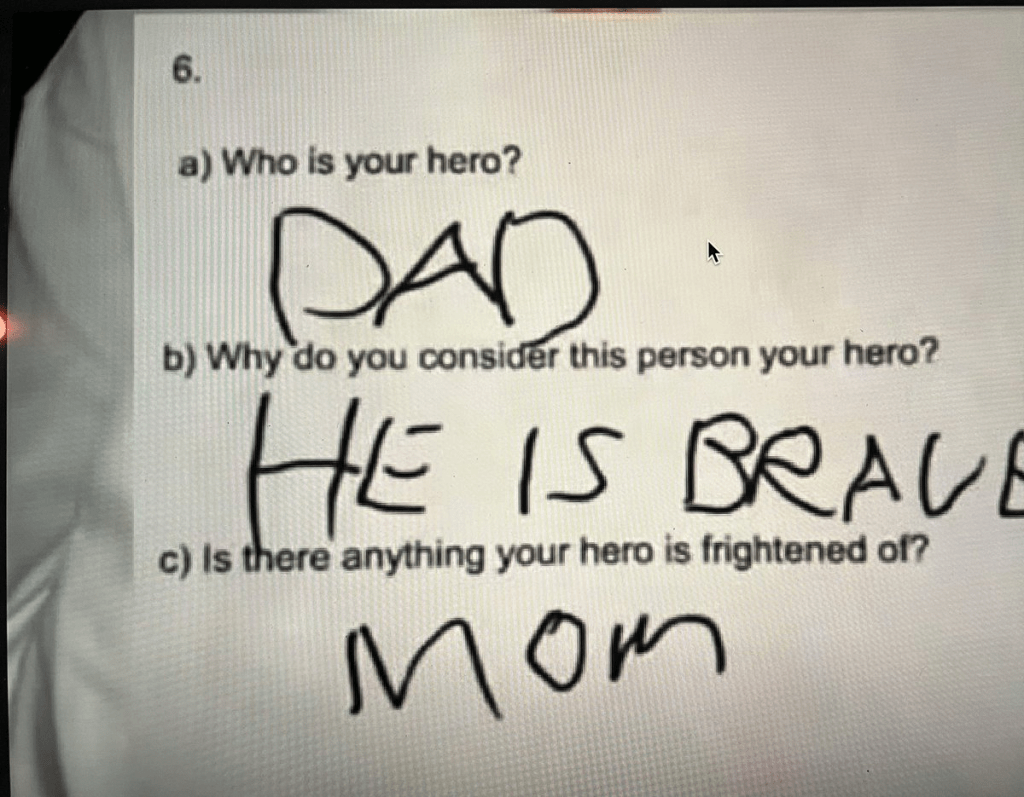
—
This was the original form of transgenderism:

#FLGBTQ
—
This article on Calvin would get a failing grade in any decent seminary class. It doesn’t look like the author has even read Calvin, much less understood him. Calvin is true reformed Catholic. Calvin is not a low church modern evangelical. He represents the best of the historic catholic (small “c”) tradition, reformed and matured through better scholarship and reflection on Scripture. He has a high ecclesiology. He believes the sacraments are effectual means of salvation. He respects the church fathers and tradition (just look at the index of his Institutes to see how often he references them). He teaches salvation by grace and covenant conditionality. And so on. He is a towering figure, not only in the history of the church, but in the history of civilization. It would be hard to overstate his positive impact.
—
I don’t treat Calvin as infallible (I have substantive disagreements with him at points). I certainly don’t pray to him or bow before statues of him (which would violate the second commandment). I do honor him as a saint God used (and continues to use) in a mighty way for the good of his church. I do believe his writings continue to be of great value to the church, not only for the historical impact but their continuing relevance. I would not consider that any thing like “Catholic veneration of saints.”
—
It’s interesting what gets attention in Reformed/Christian X. I have a very small following but this seems representative from what I’ve with other accounts:
In the last week, my political post on Pat Buchanan and MAGA got 97k views. My theological post on Jesus’ circumcision and Luke 2:21 got 2k views. Are 95k people really more interested in what I have to say about Pat than Jesus? I thought the post on Jesus’ circumcision was way, way more interesting, encouraging, useful, and (dare I say) insightful. But it got only a fraction of the views. Both posts were about the same length. Why the massive discrepancy? Is this about the algorithm or (as I suspect) the tendencies of Reformed and evangelical Christians on this app?
How can we get people more interested in the Bible? Why is exegeting the culture more exciting than exegeting the Scripture? What does it say about us when culture war posts get way, way more attention than biblical-theological posts?
—
One of the great tragedies in American history is that the Second Great awakening almost entirely decimated the public and cultural influence of Calvinism on our nation. Revivalism replaced Scripture with experience/emotion, divine sovereignty with human free will, a high church ecclesiology with the parachurch, liturgy with revivalistic techniques, psalms with silly praise songs, and a properly ordered hierarchy with egalitarianism. America has really never recovered. Calvinists themselves were somewhat to blame for the shift, especially since their church planting efforts could not keep pace with westward expansion. In the early 19th century, a Methodist revivalist preacher said something like, “We Methodists are lighting the world on fire while the Presbyterians cannot even strike a match.” There was some truth to that.
—
In light of Luke 2:1-2 and 3:1-2, it would be easy to think that the author is situating the birth of Jesus and the beginning of Jesus’ public ministry inside the reigns of pagan emperors Augustus and Tiberius. In reality, Luke is doing just the opposite. Luke is telling us the place of Augustus and Tiberius inside the kingdom that Jesus is inaugurating. Jesus is not entering the story of Augustus and Tiberius; Luke is showing us where Augustus and Tiberius fit within the story of Jesus. Luke is not telling the story of Augustus’ or Tiberius’ kingdom, but the story of Jesus’ kingdom which overarches and supersedes the Roman kingdom.
Even the fact that Augustus’ seemingly tyrannical decree that families must return to their place of origin to register in his census actually serves only to bring about the fulfillment of prophecy that Jesus’ birthplace will be Bethlehem indicates that Augustus really isn’t in charge. Augustus is a pawn, not a sovereign; he unwittingly but truly serves a higher King; his decree fulfills God’s decree.
It’s interesting that Luke tells us it was the 15th year of Tiberius’ rule in 3:1. Pagans used what has been called regnal dating – years were counted from the accession of a new king (or kingly dynasty in some cases) to the throne. When a new king was coronated, the calendar reset to year 1.
It is now the year 2025. Why do we count years the way we do? We are still using regnal dating, but the king who reigns now will reign forever and so the calendar will never reset. “Of the increase of his government and peace there will be no end.” We will keep counting years forever because Jesus’ reign will never be broken or ended. The year 2025 means the 2025th year of the rule of King Jesus. The reigns of Augustus and Tiberius ended a long time ago; the years of Jesus’ reign continue to accumulate.
Attempts to set the calendar back to year zero or year one (e.g., the French Revolution and the rule of Pol Pot in Cambodia) have failed. And fail they must. Interestingly, even though the American founding fathers spoke of creating a “Novus Ordo Seclorum”(“new secular order”), they dated the Constitution “in the Year of our Lord 1787.” In other words, in the view of the founders, America’s unfolding story would not disrupt Jesus’ rule but happen within it and under it. When Donald Trump is inaugurated in a couple weeks, we will not reset our calendar to year 1. It will still be 2025. Trump’s presidency will not interrupt Jesus’ reign; rather Jesus will reign over Trump. Even when Trump gets inaugurated, it will still be year 2025, which means Trump’s presidency will be under the overarching and ongoing lordship of Christ. It will not be “year one of Trump” but will still be “year 2025 of Jesus our Lord.”
The details of the biblical text matter. Luke shows us in subtle ways that a new king has arrived and the rule of all others is now relativized and subordinated to his. Long live King Jesus! May Jesus reign forever and ever!
—
Anglican Calvinists like J I Packer and J C Ryle have been formative for me. Even Puritans like John Owen affirmed gist of the 39 Articles. As far as I can tell, most historians would agree that the 39 Articles interpreted in historical context affirmed a Calvinistic and Augustinian (as opposed to Arminian or semi- Pelagian) view of original sin and predestination. Calvin himself found some things to criticize in his day in the Church of England, but virtually none of those criticisms were theological.
I realize a lot happened downstream from the composing of the 39 Articles and the Anglican tradition is very diverse (with much of it apostate today, as you well know). But in Calvin’s day, he had friendly relations with Cranmer and was quite complimentary towards the CoE overall. Surely that has to be factored into the historical discussion the CoE’s relationship to Calvin and Calvinism.
I obviously agree other subcultures, factions, etc., arose within Anglicanism over time, including Arminianism and other theologies at odds with (or at least in tension with) earlier Anglicanism. Anglicanism is nothing if not diverse. I probably don’t disagree with you on what happened over time. The question we started with was whether Anglicans (in general, presumably, given the way the claim was made) should regard Calvin as a heretic. Anglicans who treat Calvinists as a heretic are sawing off the branch that Anglicanism was sitting on its earliest days. I think the 39 Articles, understood on their original historic context, are basically Calvinistic – maybe a soft form of Calvinism, but still recognizably Calvinistic.
—
Anglo-Catholics are a movement of Anglicans dating from roughly the 18th century who wanted to restore many Roman Catholic doctrines and liturgical practices to the Church of England. So, no, they didn’t build Italy – or even England.
—
“The Reformation is the legitimate offspring, the greatest act of the Catholic Church.”
–Philip Schaff
—
Any future formation of Christendom will require a high degree of unity from Christians who belong to different denominations – a unity that undoubtedly feels very uncomfortable to many of us. We will have to spend less time and energy on intramural theological debates and more time and energy on converting and discipling the world. There can be no new Christendom, no Christianizing of our nation or any other, until we figure out how to get along better. There is strength in unity (Babel was the manifestation of this truth in a perverted way). The church today is weak largely because she is so divided.
This does not mean the end of theological debate amongst Christians – those discussions definitely have their place. But it does mean those debates need to be kept in proper perspective.
—
Some people have not read Philip Schaff’s Principle of Protestantism, and it shows.
—
It is true that the church is multiethnic. That has no direct bearing on a nation’s enforcement of its immigration laws, whatever those immigrants are Christian or not. To say otherwise would be like saying because the church proclaims forgiveness that it has power to cancel out civil punishments for crimes. Obviously it does not.
There is an implied confusion of spheres here. Two things can be true at once: the church can proclaim Jesus as a Savior of all peoples AND promote the civil magistrate’s role as maintaining law and order in the civil realm. Or to put it another way, it possible to say the church is multiethnic while also affirming that nations have the right to police their borders.
—
God judges both individuals and corporate, covenantal entities.
—
I do think there’s a link between circumcision and baptism per Colossians 2, but it’s not a straight line fulfillment (certainly, it must pass through the cross), and the arguments for paedobaptism are much broader. But that being said, paedobaptists are fully justified in appealing to, eg, Genesis 17:7 to make their case.
“For indeed Christ, our Passover, was sacrificed for us.” (1 Corinthians 5:7)
The past tense “was” is crucial to this discussion (assuming you can get Roman Catholics to care about what the Bible actually says).
However, it’s also worth reading Gerrish’s Grace and Gratitude to see how Calvin viewed the Lord’s Supper as a kind of thank offering. The Supper is sacrificial – just not in the way Rome claims.
—
“If we seek salvation, we are taught by the very name of Jesus that it is “of him” [1 Cor. 1:30]. If we seek any other gifts of the Spirit, they will be found in his anointing. If we seek strength, it lies in his dominion; if purity, in his conception; if gentleness, it appears in his birth. For by his birth he was made like us in all respects [Heb. 2:17] that he might learn to feel our pain [cf. Heb. 5:2]. If we seek redemption, it lies in his passion; if acquittal, in his condemnation; if remission of the curse, in his cross [Gal. 3:13]; if satisfaction, in his sacrifice; if purification, in his blood, if reconciliation, in his descent into hell; if mortification of the flesh, in his tomb; if newness of life, in his resurrection; if immortality, in the same; if inheritance of the Heavenly Kingdom, in his entrance into heaven; if protection, if security, if abundant supply of all blessings, in his Kingdom; if untroubled expectation of judgment, in the power given him to judge. In short, since rich store of every kind of good abounds in him, let us drink our fill from this fountain, and from no other.”
— John Calvin
—
John Calvin on the two Adams: “For we know that there are (so to speak) two fountain-heads of mankind, that is to say, Adam and our Lord Jesus Christ. Now with regard to our first birth we all come out of the fountain of Adam and are corrupted with sinfulness, so that there is nothing but perverseness and cursedness in our souls. It is necessary for us then to be renewed in Jesus Christ, and to be made new creatures.”
—
John Calvin on union with Christ:
“We must understand that as long as Christ remains outside of us, and we are separated from him, all that he has suffered and done for the salvation of the human race remains useless and of no value for us. Therefore, to share with us what he has received from the Father, he had to become ours and to dwell within us.”
—
John Calvin’s typological, christocentric reading of Scripture:
“[Christ] is Isaac, the beloved Son of the Father who was offered as a sacrifice, but nevertheless did not succumb to the power of death.
He is Jacob the watchful shepherd, who has such great care for the sheep which he guards.
He is the good and compassionate brother Joseph, who in his glory was not ashamed to acknowledge his brothers, however lowly and abject their condition.
He is the great sacrificer and bishop Melchizedek, who has offered an eternal sacrifice once for all.
He is the sovereign lawgiver Moses, writing his law on the tables of our hearts by his Spirit.
He is the faithful captain and guide Joshua, to lead us to the Promised Land.
He is the victorious and noble king David, bringing by his hand all rebellious power to subjection.
He is the magnificent and triumphant king Solomon, governing his kingdom in peace and prosperity.
He is the strong and powerful Samson, who by his death has overwhelmed all his enemies.
This is what we should in short seek in the whole of Scripture: truly to know Jesus Christ, and the infinite riches that are comprised in him and are offered to us by him from God the Father. If one were to sift thoroughly the Law and the Prophets, he would not find a single word which would not draw and bring us to him. . . . Therefore, rightly does Saint Paul say in another passage that he would know nothing except Jesus Christ, and him crucified.”
—
Empires – especially ancient empires – are not the same as modern globalism. Read Leithart’s From Babel to Beast.
—
Colonialism is not the same as globalism. Globalism is ultimately a form of statism.
Here’s Buchanan:
“This idea, of an end of nations and the creation of a world government, has been a dream of intellectuals since Kant. Though utopian, it recurs in every generation. It is a Christian heresy. When the philosophes of the Enlightenment repudiated the church, they needed a substitute for the church’s promise and vision of heaven. So, they created a new vision of all mankind laboring together to create heaven here on earth.”
—
At Trinity Presbyterian Church today, we sang not one, but two, hymns about Jesus’ circumcision. Contrary to what some suggested, we did not do this because I lost a bet with another pastor. We did it because the hymns fit with the sermon from Luke 2.
That being said, I am now confident that a congregation that gets through multiple hymns on Jesus’ circumcision in one Sunday can handle pretty much anything.
—
The needle we need to thread is not that hard. Reject the heresy of globalism. Reject racial and ethnic malice. That’s it. That’s all we need to do.
What about Muslims and Jews?
The Talmud has problems the Koran does not and vice versa. They don’t produce the exact same kind of culture. The genetic pools are not identical. Etc.
But Judaism and Islam are both idolatrous, false religions – in that sense, we can say the same thing about them both, and we can certainly criticize both.
But even within Judaism you have to make distinctions. Orthodox Jews are generally culturally conservative and despise our cultural rot (eg, Hollywood). Secular, progressive Jews are much like other secular, progressive people in our culture and promote the rot.
Of course, distinctions can also be made with Islam.
Of course, I also reject DEI departments in the civil government and corporate America that are full of racial malice. We should reject it everywhere.
—
I do not dispute the statistics [of black crime] but I do push back against facile analysis of them. The crime statistics for black Americans were not as skewed during the first half of the 20th century, when the black family was in tact and blacks were gaining in average household wealth more rapidly than white households (see Sowell for details). After the welfare state began to destroy the black family and create an epidemic of fatherlessness, crime stats skyrocket, especially in the second half of the 1960s.
The correlation between illiteracy, criminality, etc. and fatherlessness is very strong. But black illegitimacy rates were quite low until LBJ started paying black girls to get pregnant out of wedlock (see Gilder on this). IOW, black criminality cannot be properly dealt with if looked at solely through the lens of race. Taking steps to counteract it will require pursuing policy and cultural changes that would support black family formation, fatherhood, etc. Of course, whites need those things today too, as the white illegitimacy and fatherlessness rates are far beyond acceptable levels too.
—
“God is Christlike, and in Him there is no unchristlikeness at all.”
— Michael Ramsey
—
Happy Epiphany Day!
Controversial Epiphany claim: Thematically the magi belong to the season of Epiphany (because it focuses on the manifestation of Jesus to the nations), but chronologically they belong to the season of Christmas (because they visited Jesus very soon after his birth while he was still in Bethlehem).
Remember that the shepherds spread the news the very night of Jesus’ birth.
But when the magi reach Jerusalem, Herod still hasn’t heard.
News of a newborn king would travel fast and it’s only 7 miles from Bethlehem to Jerusalem.
I think the magi were there very, very soon after his birth, perhaps the very same day the shepherds visited (especially if the glory cloud/angel the shepherds saw in the sky connects with the glory-star the magi saw in the sky).
The flight to Egypt has to take place in the first 40 days of Jesus’ life because (a) after going to the Temple for purification on day 40 they go to live in Nazareth and (b) after returning from Egypt they go to live in Nazareth.
—
There is no break/gap between Luke 2:22-38 and 2:39. It looks like they went from the temple to Nazareth to live there. Luke 2:39 says, “And when they had performed everything according to the Law of the Lord, they returned into Galilee, to their own town of Nazareth.” On the surface, it looks seamless, like they went from the temple to Nazareth without going back to Bethlehem. Claiming they stopped off at the temple on their way back from Egypt does create an issue with the language of Matthew 2:22-23 because obviously they didn’t live in Jerusalem for any length of time. Obviously it is not possible to be *absolutely* definitive about the chronology because a lot of possibilities can be made to work. It’s a question of what is most likely and most plausible, given the texts we have.
—
My fellow Alabamians: What can we do about the communist liquor laws in our state? Why does the state need to be in the liquor business? Why can’t we just have a free market for beverages? Our government is treating us like children. It leads to higher prices and less selection.
While we’re at it, why can’t we get some competition in the health insurance business? If you have to get your own family policy, you have virtually no options in this state. Why do we as citizens allow the regulators to crush a competitive market that would lead to better prices and better products? We have a conservative culture in this state, so why can’t we deregulate the health insurance market just a bit?
ObamaCare seems to be at the root of a lot of these issues here…since Obama really demonized the insurance companies….so maybe it can’t be dealt with at the state level easily. But I’d still like to see someone come up with something.
It violates all known laws of economics to say insurance would not get cheaper with decreased regulation and increased competition. Let other companies in. Let them offer policies based on what people want. Yes, health care is expensive, but the system can be improved.
—
My assessment of this: https://x.com/contramordor/status/1872305130470518955?t=kye37Aabh3AhD4876qI5GA&s=19
CJ and I are both accused of vying for a third way – so there’s that!
I actually like a lot of what he says here – I have a post on what it means to be an American from a while back that hits some similar themes, though without Renan’s mysticism. I like his nuanced critique of both propositionalism and race-essentialism. I think the focus on shared memory/experience/history as a people ties a lot together. Those who want to make nationhood only a matter of race/blood generally fail to be coherent imo; it proves too little or too much. Overall I like what CJ wrote there. I think where CJ and I might differ is something he wrote elsewhere – he says politics is mainly about seeking the best interests of “my people” whereas I would want to say it is fundamentally about pursuing justice. Justice includes giving “my people” their due but it sets the use of political power in a defined moral framework, without which it easily devolves into “might makes right.” We would probably overlap quite a bit practically but we might get there is very different ways.
—
“How many sons does God have to kill for you before you’ll believe he really loves you? One should be enough.”
— Steve Schlissel, RIP
—
One of the great tragedies in American history is that the Second Great awakening almost entirely decimated the public and cultural influence of Calvinism on our nation. Revivalism replaced Scripture with experience/emotion, divine sovereignty with human free will, a high church ecclesiology with the parachurch, liturgy with revivalistic techniques, psalms with silly praise songs, and a properly ordered hierarchy with egalitarianism. America has really never recovered. Calvinists themselves were somewhat to blame for the shift, especially since their church planting efforts could not keep pace with westward expansion. In the early 19th century, a Methodist revivalist preacher said something like, “We Methodists are lighting the world on fire while the Presbyterians cannot even strike a match.” There was some truth to that.
—
The need of the hour (as always) is for churches that proclaim the gospel to all people and apply the law to all of life.
—
The Bible commands wives to respect their husbands. But many Christian husbands do not feel respected by their wives.
To a large degree this is because women do not understand respect in the same way as men. For a woman to respect her husband, she has to understand what men perceive as respect, not what she might be prone to think of as respect in a feminine frame.
Women tend to think of respect as being considerate and thoughtful. Respect means being respectful. Respect means speaking kindly. It easily degenerates into being “nice.”
But that’s not what respect means for men. For men, respect means honor. It means recognition, especially for competence and achievement.
A woman who treats her husband more as a child than a man is not respecting him. Mothering a man is the antithesis of respecting him. A woman who nags her husband and constantly tries to tell him what to do and how to do is not respecting him. A wife needs to trust her husband in order to respect him. A woman who respects her husband will express gratitude for the ways he fulfills his masculine duties/responsibilities.
ADDENDUM: I did not say feelings dictate truth or serve as the final judge or function as an authority. I started with the empirical fact that many husbands feel disrespected and provided one (though not the only) explanation with some ways to remedy the situation in those types of cases.
—
An excellent book review. In education, as in every other realm of life, it’s Christ or chaos.
“Paideia is education and culture. Christian schools which add a Bible class and prayer, but whose curriculum and pedagogical methods are borrowed from the public school, are operating under a progressive and Marxist paideia. They are fighting the enemy on his own terms.”
—
The suffering of the Mediator does not date from the end of His stay on earth…. The blood of the Savior’s circumcision is as much atoning blood for us as is the blood shed on Golgotha.
His entire life was a continual suffering.
— Geerhardus Vos
—
Is it possible for a nation to exist without a government (or civil magistrates)?
—
I don’t think Judges is a tract promoting the centralization of political power per se. And if it were, Israel’s later history would show that was not the answer either (the monarchy was not exactly a long term success). The last few chapters of the book attribute Israel’s failings not to a particular political structure but to the failure of the priests to lead the nation in faithful worship.
The judges were definitely civil officers. There were also elders. When Israel comes out of Egypt, it seems they form a government pretty quickly. Moses himself was a kind of magistrate.
—
I can only conclude that the 2020 election interference by progressives turned out to be a Haman’s gallows. Trump 2025 is far better, far more powerful, and far more effective than Trump 2021 would have been.
The first time Trump got elected, he was not prepared for it on multiple levels. He was definitely not prepared for the sabotage he experienced. The 4 year Biden interregnum gave Trump plenty of time to prepare and plot a more effective strategy for governance. We are now seeing it executed.
—
I realize there are many issues surrounding “meritocracy.” There is the danger of turning people into nothing more than units of economic productivity, measuring everything in terms of money and efficiency; the danger of ignoring a person’s virtue, beliefs, and worldview in evaluating their fitness for a position; the danger of cutting off people from ties of tradition and family by making competency the only thing that matters; etc. “Meritocracy” is kind of a clumsy category to use; a blunt instrument when a more refined one would actually be better. But the Trump administration is invoking the meritocracy in its rejection of the DEI model so it’s important for us to understand it and think it through. Just this week, new Secretary of Defense Pete Hegseth was touting the recovery of a “colorblind meritocracy” as the key to bringing back the lethality and effectiveness of the American military. So: What should we think about meritocracy? What is a meritocratic order?
1/6
First, it should be acknowledged that if the choice is between DEI and meritocracy, we should definitely go with the latter because at least it values competency over vague notions like “diversity” and “equality.” In a DEI context, diversity is not actually a strength but a weakness. Diversity for the sake of diversity makes us less strong, less competent, less effective.
2/6
Second, in some areas of modern life, traditionalist standards that grounded authority or legitimacy in heredity simply cannot be invoked, and meritocracy is an absolute necessity. In these areas of life, rejecting meritocracy means a return to the Stone Age. Do you want a man piloting your next airplane flight simply because his father was a pilot, totally apart from any training and credentialing he might personally have? Do you want your surgeon chosen because he happened to grow up near where you live and shares your religious beliefs, or because he has been rigorously educated, vetted against objective standards, and passed through appropriate testing? Do you want your bridge designed by a man who was chosen because of his family ties or his proven skill and excellence an engineer? These questions answer themselves. Meritocracy is simply built into modern life. In reality, merit – in the sense of width or excellence – has always mattered, but in a modernized, technological economy it takes on a new level of importance. We need to choose quality over diversity. We need to choose skill over equity. We need to value merit or life as we know it will grind to a halt.
3/6
Third, meritocracy has created far greater wealth, freedom, and social mobility than have ever existed before. However, these gains have also brought trade offs. In a meritocratic society, there will always be pressure to become a workaholic, that is, for work to consume other important aspects of life. Meritocracy began to offset and undermine aristocracy especially with the rise of industry and technology where simply belonging to a higher social class could not be a proxy for competency. Thus, it’s easy to blame meritocracy for things like family breakdown and generational divides, since fathers would no longer be training their sons to do the same work they had done. Meritocracy would seem to undermine the family by replacing nepotism with competency (the very fact that “nepotism” is generally viewed as a negative word indicates the problem). It’s easy to tie meritocracy to feminism, eg, why should the sex of the job candidate matter if all we care about is competency? It’s easy to link meritocracy to globalism and the globalist economy, eg, if the best workers come from other countries, shouldn’t we import them to here or offshore our business to over there? I would agree that in each of these cases, there are valid concerns and more traditionalist answers to these questions should be incorporated into our view of meritocracy. Merit should not be separated from other more natural and traditional considerations, such as family and faith. Perhaps we need a chastened or constrained meritocracy that can combine the best features of the old world order with those of the new. But even then, merit will have to be part of the system. There is no alternative to it if we don’t want society to collapse.
4/6
Fourth, the attack on meritocracy is part of our culture’s war on masculinity. Meritocracy tends to emphasize masculine interests and proclivities – especially competence and competition. Men tend to value excellence over inclusivity. Men socially relate through hierarchy. Men naturally create merit-based systems. Yes, the meritocracy needs to be qualified and constrained in various ways as noted above. But we must have it. The meritocracy is masculine. The meritocracy is patriarchal. The meritocracy is the only way to bring out the best, especially the best in our men, and we sorely need that right now.
5/6
So while acknowledging the limitations of a meritocratic order, including some of the abuses it produced before the rise of wokeness and DEI, let’s not throw the baby out with the bath water. Let’s find the best way to properly order our society in a way that combines merit’s emphasis on competency and skill with respect for order and nature – the nature of men and women, the nature of family life, and the nature of Christian faith and tradition.
6/6
—
My tentative conclusion: The Democrats were right all along. Trump and Vance are liars. The President and VP are MUCH, MUCH more committed to the pro-life cause of protecting children in the womb than their platform and campaign rhetoric suggested. After months of downplaying the abortion issue and courting pro-choice moderates leading up to Election Day, now that they are in office they doing more to actually promote the pro-life cause than anyone GOP administration in American history. God is good.
Not everyone detected my sarcasm in this post.
Here’s the deal: As Christians/conservatives, we are used to politicians lying to us. They tell us what we want to hear, we vote for them, then they get into office and do the opposite of what they said. Rinse and repeat.
This time, it was the other way around. Trump/Vance lied to the progressives, probably picked up a few pro-choice voters, got elected, and are now going hard on the abortion issue as staunch pro-lifers – about as hard as they could go without Congress getting involved and passing a federal abortion ban (which isn’t going to happen right now).
At least that’s how all this looks that way to me – they diluted their pro-life messaging during the campaign as a strategy. It even looked like Vance had to back off his “life begins in the womb” convictions to get the VP slot. It seems entirely possible to me they told more moderate and progressive voters what they wanted to hear, and now have reverted to a much more conservative and Christian position on abortion since getting into office.
Before we come down on them too harshly for dishonesty, remember the Hebrew midwives. Trump and Vance would not be the first to lie in order to save the lives of babies.
—
Martin Luther was not anti-Semitic, at least not in the way that term is usually understood. He was anti-false religion. He had scathing things to say about the Jews because he opposed their religious faith, just as he had scathing things to say about the Turks because he opposed their Muslim faith. (Note that in the case of Muslims, Luther identified adherents of a false faith with an ethnic category. He did something similar with the Jews of his day.)
Martin Luther did not operate with modern racial categories at all. He was not a racist in any proper sense of the term. His opposition to the Jews stemmed from their theology and resultant practices, not their genetics or physical lineage. He saw the Jewish religion (Judaism) as a false religion and, because Jews rarely converted in his day, a threat to the Christian society in which he lived.
Luther said many terrible things about the Jews that he should not have said. Some of what he said should be done to Jews was likely hyperbole, and would make even the staunchest theonomist blush (eg, he wanted synagogues burned as an application of Deuteronomy 13), but such rhetoric was not uncommon in Luther’s day. Lutherans in recent generations have rightly condemned much of what Luther said and distanced themselves from it. But it’s important to understand that for Luther, the issue was religion, not race. He should be read along the lines of an old covenant prophet attacking a people who have fallen into idolatry rather than a modern racist bigot who targets people because of physical features.
In his final sermon, Luther said this about the Jewish people: “We want to treat them with Christian love and to pray for them, so that they might become converted and would receive the Lord.” This not the attitude of a man opposing a people because of their racial heritage; rather, it is the view of a man opposing a false religion, hoping they will convert to true Christian faith. The very fact that Luther would long for the conversion of the Jews, or even hold it out as a possibility, must be the lens through which we view all his anti-Jewish writings. To put it another way, Luther’s view of the Jews in his day was more like Jeremiah (pronouncing a curse on unrepentant Jews) than Hitler (hating Jews because he sees them as an irredeemable cancer on humanity).
Of course, it would be the Reformed branch of Protestantism that would develop the most hopeful view of the future of the Jewish people. Either through a particular futurist reading of Romans 11:26 or a more generalized postmillennial eschatology, many Reformed Christians came to believe that God will ultimately convert and save the Jewish people. This does not necessitate believing the Jews somehow have a “special” role in God’s economy apart from Christ (the way Dispensationalists do), but it does mean we can trust God will convert them, even as he promises to convert all people groups (Psalm 22:27f).
—
Old covenant Israel allowed Gentiles in if they wanted to worship YHWH, and sometimes the Israelites served gods of other nations.
The Great Commission obviously assumes all ethnicities can become Christianized.
Many of Paul’s letters are addressed to multiracial and multiethnic churches.
Etc.
It might be easy to think of Christian faith as “white man’s religion,” but all white peoples were once pagans who worshipped rocks and sacrificed babies.
—
Luther’s opposition to the Jews was about ethics, not ethnicity. It was about religion, not race. That whole Luther quote you cite is clear about that. His opposition was not to a race of people as such (Semites, the descendants of Shem); he was opposed to an idolatrous religion and culture that threatened his own Christian religion and culture. As a son of medieval Christendom, Luther’s political views on religious toleration were not those of, say, Thomas Jefferson or James Madison.
I do not think Jews of today should be punished for sins of past generations, as Luther suggested. That would be true of any people group in my view. Luther needed a better understanding of the Olivet Discourse and the theological significance of 70ad.
Also, if it’s true that unbelieving Jews would have killed Christians in Luther’s day, much of what he said would be justified. It is not virtuous to harbor terrorists who want to kill you in your own land. Whether or not Luther’s claims are hyperbolic or historically accurate will have to be sorted out by scholars who specialize in the time period.
—
Whatever we think of Luther’s hatred – whether sinful hatred or Psalm 139:21 type hatred – his hatred was not directed towards a race but towards practitioners of an idolatrous religion.
So, no, Luther (properly understood) was not a proto-Nazi.
Looking at what he said about the Turks (Muslims) is an instructive comparison. Again, his ire is not race-based, but religion-based, even though he uses an ethnic label.
Some of Luther’s calls for wanton violence were reckless and even the most ardent theonomist would have a problem with them as an application of the law. Luther was not infallible. But he was also not what has often been supposed.
—
“Come to me, all who labor and are heavy laden, and I will give you rest. Take my yoke upon you, and learn from me, for I am gentle and lowly in heart, and you will find rest for your souls. For my yoke is easy, and my burden is light.”
— Matthew 11:28-30
What did Jesus offer to the weary and heavily burdened? A yoke. The problem with this is that a yoke is an instrument of work. Yokes are for farm animals and (metaphorically) slaves (1 Timothy 6:1; cf 1 Kings 12:10). In usual circumstances, the weary would hope to give their yoke to their master so they could take a break; it would not be comforting to hear they were being given a yoke. To give a yoke to the weary would be like offering a hammer to a weary carpenter, or a plunger to a weary plumber. Why give the weary an instrument of work? How are the words of Jesus comforting to the burdened?
We need to understand what Jesus is doing. Wearing a yoke is inescapable. Everyone in life has to work. Everyone in life has burdens. Everyone in life has responsibilities and obligations. Everyone in life is going to endure various trials. In Jesus’ mini-parable, the contrast is not between wearing a yoke and not, but between wearing an oppressive yoke and a light yoke. We are all wearing yokes all the time. Human life is lived under a yoke. The only question is which kind of yoke will be over our necks.
Only Jesus offers us an easy yoke. It is certainly a truism that the Christian life is very hard. There are all kinds of heavy demands. There is a cost of discipleship to be paid. We know that we will face many trials, including persecution that our faith brings upon us that we would not have to endure if we were not believers. We know we must fight to put sin to death in our lives. And yet Jesus tells us his yoke is easy and light. How can Jesus say his yoke is light when the Christian life is full of heavy obligations? How can a yoke – an instrument of work – be light when given to the weary?
Remember, a yoke typically harnesses two animals together. Jesus’ yoke could be the yoke he puts on us as Master. But it could also be a yoke he wears alongside of us. This would seem to be the key to the passage. What makes the yoke light and easy is the presence of Jesus himself with us. Jesus yokes himself to us so we do not have to carry our burdens alone. Jesus gives us rest, even in the midst of our working, because he is present to enable us to carry the load and do the work. Even as we carry his yoke, we are resting in him. That’s what it means to live by faith. Resting in Jesus does not make us yoke-less; rather it means we have new power to carry the yoke and do the work he assigns us.
Again, Jesus is obviously not saying that the Christian life is easy. The Christian life is a life of self-giving sacrifice. Even as we take up Jesus’ yoke, so too we must take up our crosses. But there is no question: Jesus’ yoke is the best way to live. Any other yoke you take up will eventually crush you. When I take up Jesus yoke – when I come to him in faith, and seek rest in him alone – I have the comfort of knowing Jesus enables me to carry the yoke. I can know Jesus is working in me, with me, and through me to do the work he has given me to do. Yes, this truly is the best way to live. It’s even an easy way to live from a certain perspective because taking up Jesus’ yoke gives life direction, purpose, and meaning, even in the midst of trials, so that even suffering seems light and momentary compared to the eternal weight of glory promised to us.
Living by a false religion or worldly philosophy will wear you down and wear you out. Any yoke other than Jesus’ yoke will eventually crush you under its weight. Jesus gives you a light yoke, an easy yoke. He yokes himself to you. And in being yoked to him, and learning from him, you find true rest, comfort, and joy.
—
There is nothing more oppressive than the idea that life is supposed to be easy or that we are supposed to be happy all the time. No one else in history has ever thought this way. This way of thinking is one of the ways that our riches and prosperity deceive us. A common cultural presupposition is that we are entitled to a trial free life. But expecting constant happiness in a fallen world is a surefire recipe from misery and discontentment. Do not be surprised when trials, even fiery trials, come your way. Be surprised when they do not. If you are not in a time of adversity, prepare yourself the next round. If you are, keep pressing through it, clinging to God’s promises. God has made life an obstacle course by design. He aims to toughen and mature and strengthen his people.
“The universe is not a wish granting factory,” as another author put it.
—
How do we fit Matthew 7:13-14 into a postmillennial eschatology since Jesus seems to indicate many will be lost and few saved?
Keep reading…..
In the very next chapter, Jesus says “many” will come from north, south, east, and west to take their seat at the kingdom feast with Abraham. Many will be saved!
So that leads to another question: how can Matthew 8:11 be squared with 7:13-14? The answer is in 8:12. The few/many in Matthew 7 refers to the immediate audience – first century Jews, who are in the process of rejecting Jesus’ ministry. The warnings Jesus gives in the Sermon on the Mount are perpetual obviously, but the proportions do not have to be. The long term prospects of the kingdom, once the gospel goes to Gentiles, are described in 8:11. Many of the “sons of the kingdom,” that is, Jews, will be thrown out, and many Gentiles will come in to the kingdom – just the kind of thing described in Romans 11 and elsewhere.
The faith of the Gentile centurion in chapter 8 is a sign of things to come, the first fruits of a great harvest of the nations that will be reaped as the Great Commission of Matthew 28 is fulfilled.
—
Good morning, Christian! As you begin to fulfill the day’s responsibilities, remember: the Lord has already approved your work (Ecclesiastes 9:7)!
—
“Scripture does not replace nature but offers us the key to unraveling it.”
— Phillip Hoedemaker
John Frame, making the same point at greater length:
“God has given us Scripture, or “special revelation,” both to supplement natural revelation (by adding to it the message of salvation) and to correct our misuses of natural revelation. As Calvin said, the Christian should look at nature with the “spectacles of Scripture.” If even unfallen Adam needed to interpret the world according to God’s verbal utterance, how much more do we! The point is not that Scripture is more divine or authoritative than natural revelation.
Natural revelation is every bit the word of God and absolutely authoritative. The difference is that Scripture is a verbal utterance that God gives to supplement and correct our view of the world. We must humbly accept that assistance. In doing so, we do not make Scripture more authoritative than natural revelation; rather, we allow the Word (with its ever-present Spirit) to correct our interpretations of natural revelation.
To allow Scripture to do its corrective work, we must accept the principle that our settled belief as to Scripture’s teaching must take precedence over what we would believe from nature alone. God gave Scripture as the covenant constitution of the people of God and if it is to serve us in that way, it must take precedence over all other forms of knowledge. It is wrong, for example, to suggest (as many do) that the “two books of nature and Scripture” should be read side by side, carrying equal weight in every respect. That sort of argument has been used to justify relatively uncritical Christian acceptance of evolution, secular psychology, and so on. In such arguments, Scripture is not permitted to do its corrective work, to protect God’s people from the wisdom of the world (1 Cor. 2:6-16). Hence, sola Scriptura.
Nevertheless natural revelation, rightly understood through the “spectacle of Scrpture,” is of tremendous value to the Christian, and specifically, to the apologist….
Granted, our interpretations of Scripture also need to be corrected at times. But the proper order is: Scripture itself corrects our interpretations of both Scripture and nature…Scripture has primacy over all else.”
ADDENDUM: This argument is reversible: don’t waste time on people who tell you don’t need special revelation to interpret nature – you’ll always end up with theistic evolution, psychobabble, and other humanistic stuff. And probably plenty of egalitarian and feminist stuff too, tbh. Besides, you’re telling people that reading Calvin is a waste of time. The real issue is what Scripture itself teaches and it is clear on this point.
—
Cretans are (were) not a race. They were white however.
—
“Christ gives more than sin took away.”
— Herman Bavinck
—
Last Sunday we sang the hymn “Faith of Our Fathers” and I was reminded why I love this hymn so much. It was written by a Calvinist turned papist, but Frederick Faber’s lyrics still resonate with truth every Presbyterian can embrace. Faber wrote it because he wanted Romanists to be able to sing hymns like those of the great Protestant hymn writers, the Wesleys, John Newton, Isaac Watts, and so on.
I really like the way the second and third verses juxtapose two major biblical themes, the suffering of the church and the victory of the church:
- Our fathers, chained in prisons dark,
Were still in heart and conscience free;
And blest would be their children’s fate,
If they, like them should die for thee:
Faith of our fathers! holy faith!
We will be true to thee till death!
3. Faith of our fathers, we will strive
To win all nations unto thee;
And through the truth that comes from God
Mankind shall then indeed be free.
Faith of our fathers! holy faith!
We will be true to thee till death!
This is wonderful biblical and practical theology — the church suffers and serves her way to victory. The persecution of the church should not lead us to despair of the cause. But neither should the assurance that Christ will inherit the nations lead us to think that the church will not have to suffer. In other words, this hymn is antidote to modern evangelicalism’s pessimillennialism AND the antidote to what James Jordan called “yuppie postmillennialism.”
—
We were told evangelical political support for Trump would undermine evangelism. Not only is that a misunderstanding of the purpose of political engagement, the opposite has proven to be the case on the evangelistic front. The Trump era is a move back towards reality and sanity, which means new opportunities for the spread of the gospel.
—
Hegseth has called for colorblind meritocracy in the military. Things are returning to the normal and the natural.
—
I certainly agree we need reform in health care and education. But they are not integral to the pro-life case, which rests on the fact that the child in the womb is an image-bearer and therefore to be protected. Socialism is not the answer to the abortion crisis and in fact would make it worse. If we subsidize people’s immoral and irresponsible choices by making the American taxpayer foot the bill for those choices, more people will make immoral and irresponsible choices. To be truly pro-life is to be pro-responsibility and pro-family. All I ask is that people do what I did — take responsibility for the children you create. In crisis situations, help is available, but there’s no reason why that help should come though the bureaucratic and coercive force of the state.
—
According to John Calvin, love (including natural affection, or “storge”) is not be limited to one’s family, nation, or race but extends to all who bear God’s image:
“The Lord commands us to do good unto all men without exception, though the majority are very undeserving when judged according to their own merits. But scripture here helps us out with an excellent argument when it teaches us that we must not think of man’s real value, but only of his creation in the image of God to which we owe all possible honor and love.”
In Calvin’s view, when we love our neighbor (whoever he is), we are loving the God whose image he bears.
—
Some of the fringe right seem to think that appealing to the image of God in all men is a kind of left-leaning cope, a sign that someone is living under the progressive gaze. But this is actually the teaching of John Calvin:
“We are not to look to what men in themselves deserve but to attend to the image of God which exists in all and to which we owe all honor and love.”
—
John Calvin on love for enemies:
“Assuredly there is but one way in which to achieve what is not merely difficult but utterly against human nature: to love those who hate us, to repay their evil deeds with benefits, to return blessings for reproaches. It is that we remember not to consider men’s evil intention but to look upon the image of God in them, which cancels and effaces their transgressions, and with its beauty and dignity allures us to love and embrace them.”
—
The leftward drift and elitism of Big Eva is seen in its commonly held view that love for one’s city is good and love for the world is good, but love for one’s nation is bad.
—
Ethiopia factors in the biblical narrative and biblical prophecy in fascinating ways. An Ethiopian was one of the first Gentile converts to the new covenant and Ethiopia was one of the first Christian nations.
In addition to the background Peter includes in his article, Thomas Oden’s work on the impact of the apostle Mark and his gospel on Ethiopia is very interesting.
—
Natural preferences do not define natural law. Many naturally prefer things that are unnatural (eg, same sex attraction). Natural law is established not by looking at preferences but design.
—
Much of the “racism is good crowd” misses what is at stake. Preferences are not the same as duties. Arguments are being made against positions no one holds. Very few involved in these conversations seem to know the Bible well, nor do they seem to know how to make an actual argument from nature.
If a white person prefers to marry another white, that is not a sin. The preference is fine, and most people will have this kind of preference. But if it is claimed they have a duty to marry a white and it would be a sin to marry a non-white, that is obviously an extra-biblical, sinful, and legalistic requirement. There is no duty to preserve a race in and of itself. (One could argue we do have obligations to our nation – I would agree with that – but nations and races are two distinct categories.) Whether or not Moses became a polygamist is debatable, but setting that issue aside, there was no sin or defect involved in taking a Cushite wife. Boaz was not defective or unnatural in taking a Moabitess wife. Etc. These cases are not the norm, of course, but they are fully approved by God.
Preferring to marry someone of the same race is not a result of the fall. But all racial animosity is a result of the fall. Natural affection – storge – does not end with people of the same race as me. All humans of all races are naturally bound together as fellow image bearers. All humans are the same “kind” in the language of Genesis 1. It’s true that all white people are my brothers and sisters in a sense because of genetic connection – but I have a genetic connection with humans of all races in an ultimate sense, as both nature and Scripture attest.
Recasting racism as a virtue has to be one of the absolute dumbest things I have ever encountered in my life. I think SC turns guys into damned fools (I’m speaking literally) – or at least turns their brains to mush. Its obsession with the flesh is manifested in the works of the flesh. No Christian could think the behavior this stuff produces is fitting and godly.
—
Sola Scriptura means two things:
- The Bible is our only inspired, infallible, inerrant authority.
- The Bible is our highest authority, the supreme authority beyond which there is no appeal.
This means that there are other authorities besides Scripture. Indeed, Scripture authorizes and establishes the authority of parents, pastors, and magistrates. But all of those authorities are subordinate to Scripture because they can err and because Scripture’s authority is identical to God’s authority.
—
“A woman shall marry the man whom she can call her lord—and no one else.”
— Sigrid Unset on hypergamy
—
“A more robustly masculine (and biblical) Christian faith will not view Romans 2:6-7, 13 as hypothetical, but will face squarely the red pill reality that we are going to be judged according to our works and those who want eternal life will have to seek after it by pursuing glory and honor in Christ. A masculine Christian man will not shrink back from the burden of performance laid upon us. (Christian women will seek these things too, but they will do so in distinctively feminine ways, since the woman is the glory of the man. My focus here is on men and masculinity.) In the strength of the Spirit, we can obey. We can do great and glorious things for God – many of which will also redound to our own glory and to the glory of our families. We will be oriented to further the dominion mandate – for what could be more glorious or honorable than for a man to subdue and rule over the piece of the creation God has entrusted to him? We will not bury our talents, but seek the glory of multiplied talents so that God – the original investment banker – can be given a solid return on the capital entrusted to us (and that return glorifies God). We will not be content to rule over one city – we will want to prove ourselves faithful stewards and governors so that our Great King might entrust the glory of ten cities to us. Christians, especially Christian men, should never shy away from the responsibilities and duties that come with privilege, power, and wealth. We can live faithfully with or without these gifts, but we are eager and ready for our master to put them in our hand so we can use them in righteous ways that do good to all who are connected to us. We want to use these gifts to further his kingdom, to fill the world with goodness, truth, and beauty, to continue the fulfillment of the creation mandate.”
—
As John Frame says, to desire something sinful is sin; to desire what is unlawful is unlawful.
This is largely Jesus’ point in Matthew 5:28. Thus, for a married man, it is wrong to sexually desire a woman other than his wife.
Proverbs 5 spells out the ways a married man should channel all of his sexual energy and passion towards his wife alone (which, as God has designed it, actually has the effect of making sex with his wife that much more fulfilling, compared to a man who is constantly filling his mind with images of attractive women other than his wife and thus diluting his own sexual pleasure with the wife God gave him).
In 1 Timothy 5:2, Paul makes a paradigmatic comment when he says we are to treat younger women as sisters, in all purity.
I can certainly notice that my sister is attractive/physically beautiful but I would never be sexually attracted to her.
Objectively she is beautiful, but subjectively I do not allow that to provoke a sexual response in my heart.
This paradigm allows us to recognize an obvious fact about the world (God made good-looking females) while also pointing us to the right way to deal with that fact.
The culture trains us to think of every attractive woman as a potential sex partner. But Paul says they are not sex objects, they are sisters.
So train yourself to think of them that way. That’s what purity looks like.
Full article: https://pastor.trinity-pres.net/essays/bloodiestrevolutionofthemall.pdf
—
It is not a sin to be finite.
Often times, anxiety, fear, burn out, and other assorted ailments come from taking on responsibilities that aren’t really ours and we were not designed to carry. Because we are finite, our responsibilities are finite as well. Let God be God to you, so that you can be content to live within your bounds as his creature. You do not need to try to be the hero of your own story; Jesus already claimed that part. He is Savior and King; let him do the saving, redeeming, commanding, and ruling.
—
The promise of resurrection turns the valley of the shadow of death into the very gate of heaven!
—
“Make every song you sing your favorite tune.”
–The Rolling Stones
—
“Occasionally people will directly ask me how I identify politically. I’ll sometimes reply “untidy conservative.” I am not an ideologue and accept that societies change. But human nature doesn’t. Among educated elites, believing in a universally shared human nature is conservative. Among educated elites, believing that above and beyond this shared human nature, people also differ individually in their proclivities, preferences, attributes, talents, and aspirations is also conservative. Denying the blank slate view of humanity is conservative.”
— @robkhenderson
—
“The war and the years afterwards confirmed the doubts I always had had about the ideas I was brought up on….[I judged] that liberalism, feminism, nationalism, socialism, pacifism, would not work, because they refused to consider human nature as it really is. Instead, they presupposed that mankind was to “progress” into something else—towards their own ideas of what people ought to be.”
— Sigrid Unset in the 1930s
—
Liturgy is the best form of cradle to grave pastoral care a church can provide for its members.
Further explanation of what I mean by this can be found in this Sunday School class audio:
—
Kinism = the requirement/duty to keep races segregated socially and maritally as a matter of divine obligation
No, there is nothing unnatural (or unlawful) about interracial marriage. Natural marriage requires a man and woman, but race is not built into the natural definition of marriage. Moses did nothing unnatural (or unlawful) when he married a Cushite. It was not unnatural for Jews and Gentiles of various races to share community in local churches in the apostolic era, and its very likely at least some intermarriages came out of those communities. The English, Spanish, etc. settlers in the “new world” who married (converted) Amerindians did not sin, and I cannot find any record that anyone at that time in the church even suggested they were sinning or should come under church discipline.
The fact that men and women of different races can reproduce (the act of sex is not intrinsically sterile in such cases) indicates it is not unnatural. The purposes of marriage/sex can be fulfilled in an interracial union.
Of course, the preference to marry within one’s race is just fine. There is nothing unlawful about such preferences and most people do indeed have them. Obviously because interracial marriage usually involves cultural differences, there are prudential considerations. But same-race marriage cannot be made a matter of natural duty as if interracial marriage was automatically and categorically sinful. (Test case: Should the church excommunicate someone who marries a believer of another race?)
—
Roe was reversed. Now it’s time to overturn Obergefell.
—
You are a sinner. Jesus, the eternal Son of God in human flesh, died on the cross for sinners and rose again on the third day. Trust in him alone for salvation and your sins will be forgiven. Trust in him alone and you will share in his resurrection life for all eternity.
—
The church does not write much good worship music today because we no longer know what worship is. We think worship is an emotional experience and try to use music to create that experience.
In reality, worship is a command performance before the throne of God. It is about receiving God’s gifts and responding with thanks and praise. The emotional experience flows out of truth; it cannot substitute for the truth.
The point of music is not emotion per se, but glory. Of course, the right kind of glory should provoke emotion, but emotion is not the goal of the service or the singing; it is a by-product.
To put all of that another way: We have replaced “liturgy” with “worship.” Instead of gathering as the church to receive God’s gifts of truth and grace in Christ and respond with the gifts of thanks and praise in Christ, we now come together to have an emotional experience, mainly ginned up by music, but with screens and lights (or lack of light) aiding the whole show.
Much of contemporary evangelicalism worship is passive for the congregation. You can sing along if you want, but it’s really more like a concert and you are there to watch the religious professionals on stage do their thing. Ironically, this is a reversion to medieval worship, where people gathered to hear a choir of monks sing and watch the priest do his “hocus pocus” magic trick with the Eucharist. It was a spectacle, not a liturgy. People did not even get the full communion meal.
The Reformers corrected this by restoring the priesthood of all believers. They produced prayer books, psalters, liturgies, hymnals, and catechisms for the people to use. Worship became liturgy once again, with the whole congregation involved and engaged in offering a corporate sacrifice of praise. The people prayed and sang together. They ate communion together (though sadly children were not included as they should have been). They engaged in postures and movements together as one body.
The church in America today is in need of reformation – especially liturgical reformation.
—
I told my kids as they were growing up that life would be full of problems, but it was up to them to choose what kinds of problems they’d face. They could either deal with the problems that come from being faithful to God, or they could deal with the kinds of problems that come from disobeying God. The former kinds of problems are much better to deal with than the latter kind of problems. The former kind of problems are really blessings; the latter kind of problems make life miserable.
Parents should train their children in such a way that by the time the kids hit middle age, they can say, “Dad, life is not nearly as hard as you told me it would be. You prepared me really well.” Coddling children is not a form of love. Our children need to endure some measure of hardship while still in the home because they are certain to face hardships once they leave the home. By allowing our kids to deal with hard things at a young age, we make life easier for them when they are older. Do not prepare the way for the child; prepare the child for the way.
—
Over 7% of 2025 is already gone. Are you redeeming the time? Are you numbering your days aright?
—
Decisions should always be made out of conviction, never out of anxiety – including an anxiety to please other people. Leaders lead by conviction or not at all. There is no way to lead without possessing convictions and the courage to implement them.
Example #1: Pastors must have convictions about what a worship service (a liturgy) should be like or they will end up catering to the culture or the loudest complainers. A pastor with no convictions in this area cannot lead his people as a royal priesthood. Those convictions should be rooted in and grow out of the soil of biblical theology and exegesis. Sadly many pastors cannot lead well in this area today because their study and training has not equipped them for liturgical leadership. And even sadder, many pastors would rather not do the study in this area, because they are afraid of what they might learn, and they know it would take more courage than they have to implement it. There is no way to be a faithful pastor with developing deeply biblical and historically informed liturgical convictions. A pastor needs to have convictions about the practice or confessing sin and declaring absolution; he needs convictions about appropriate hymnody and psalmist; he needs convictions about the frequency, elements, and proper participants in communion; etc.
Example #2: Many young husbands fail to lead their wives and families because they have not developed convictions in many areas of family life. They do not have a strong principled commitment to good financial stewardship or good eating habits as a family, and so things slip into undisciplined chaos. They do not have strong convictions or defined positions on modesty for their wives and daughters, so the family’s females default to cultural norms. They do not have convictions about education so they thoughtlessly plug their kids into the secular, godless public school system with its diluted curriculum and wretched culture. They do not have strong convictions about which church their family should join so they end up at a church that does more to entertain than equip, and a result thefamily does not get discipled well. These men often think they are doing a good job because they are constantly deferring to their wives or their most vocal kids, and they are avoiding conflict. But constant deference and conflict avoidance are not actually forms of leadership. This is not how leaders serve those under their care and authority. A husband and father – a patriarch, if you will – has a responsibility to develop a comprehensive vision for his family, including his family’s habits, culture, finances, and theology. He needs to have convictions so he can actually lead his family into righteousness as God requires (cf Genesis 18:19). He must develop wide-ranging convictions (obviously in conversation with his wife and godly men he trusts), and then he must act to ensure that his family embodies those convictions. Anything less is failure to serve. Anything less is a failure of nerve. This is how patriarchs help their families attain the highest good.
—
If women can go to a military academy, why can’t men go into the women’s restroom? If men and women are interchangeable, their spaces and domains are interchangeable too.
This is what I mean by FLGBTQ – all of our culture’s confusion about the sexes, including transgenderism, trace back to feminism. Feminism was just transgenderism in earlier form; transgenderism is just feminism getting worked out to consistency.
—
Kinism and racism violate natural law.
—
All races have perpetuated racial animosity. All races have been victims of racial animosity.
—
Patience is hard to learn because it requires waiting for something.
—
God will not allow one bit of your faithfulness to him be lost. He will establish the work of your hands – all that you do in obedience to him – forever.
    “Let the favor of the Lord our God be upon us,
    and establish the work of our hands upon us;
    yes, establish the work of our hands!”
— Psalm 90:17
—
Natural rights are real but always have limitations.
For example: If you murder someone, your right to life is forfeited.
If you steal, your right to some of your property is forfeited because you have to make restitution.
You do not have an absolute right to free speech or religious liberty because these rights are set within a moral framework. You do not have the right to yell “Fire!” in a crowded theater or to slander someone.
Even your right to bear arms can be forfeited if you are a criminal.
While Christian nations/civil societies may tolerate the worship of false gods (not all sins must be criminalized), no one ever has a right to worship a false deity.
Rights are granted by God — but for precisely that reason, rights can also be revoked, as God’s law requires. There is no way to make sense of rights apart from God, his law, and the biblical doctrine of imago Dei.
—
Anxiety is a sin.
—
If Christians are embarrassed by any part of God’s Word, progressives will continually weaponize that part of Scripture against us. They will use our embarrassment to discredit the faith as a whole.
We must be committed to living under the authority of the whole Bible, rightly interpreted. We must not apologize for anything Scripture teaches. We can explain the Word, but we must never explain it away. We must have the courage to embrace the politically incorrect and unpopular portions of Scripture and not shy away from them.
—
Before Joshua could conquer the land of Canaan militarily, politically, and culturally, Abraham had to conquer it liturgically. Abraham toured the land of Canaan, building altars, places of worship, which laid the foundation for the conquest to come. Liturgy is the basis of dominion. The key to cultural transformation is liturgical reformation.
FOLLOW UP: It’s interesting how a tweet like this one below can trigger some people because they think it promotes political apathy at a time when political activism is needed. But this shows a failure to understand how the Bible should be interpreted. The Bible was written for us, but not to us. The reality is that for most people for most of history there was no such thing as direct political activism. The Bible was not written to people who lived modern Western republics, obviously. For most of history and indeed, even in much of the world today, there is absolutely nothing the ordinary citizen can do about his political situation. If you were a second century Christian living in the Roman empire, and you saw the need to change the political situation, literally, the only avenue open to you would be through the ministries of the church — prayer, evangelism, and perhaps faithful suffering, even martyrdom. The political situation in Rome changed over time precisely because early Christians were faithful in these ways. They served as priests (worshipping faithfully) before being granted kingly (political) dominion. There was no other way.
We live in a culture that has spread political power so thinly that the ordinary citizen really does have means available to him to bring about change. But in most societies talking about “fighting for your country” or “working to save your nation” or even “transforming the culture” through politics made absolutely no sense whatsoever. We have opportunities other people in other times and places did not have so the fact that the Bible would focus on prayer as a means of cultural change should not surprise us at all. The idea that change would come through the sanctuary rather than the ballot box made perfect sense because there was no ballot box. The sanctuary was all they had.
We can be grateful that the faithfulness of Christians in past generations has created a situation in which can fight politically to save our country in direct ways. But the lesson of the tweet below still holds, even if there need not be any chronological gap between liturgical action and political action as there was for Abraham and Joshua. The point is this: our political activism should be grounded in liturgical action; our political activism should flow out of prayer; our efforts at bringing about political change should be tied to the public ministries of the church.
My church prayed for years every Wednesday and Sunday for the overturning of Roe and the end of abortion in our land. While the latter has not happened, when the former took place, we saw it very much as an answer to prayer. Of course, we did other things all along the way – our members voted for pro-life candidates, worked at crisis pregnancy centers, etc. But prayer is politically powerful and Christians will be politically impotent if they neglect it. The enemy has a counter-measure for our political activism, but the other side has no counter-measure against prayer.
My congregation now regularly prays for the restoration of marriage and family law in our land. We want creational and biblical norms respected, and the marriage bed honored. Prayer is not all we do, but it’s at the heart of it. The church is a public/political presence in the world and she has tools and weapons that are politically powerful. Liturgical warfare is real. God really does use the prayers of his people to change the world.
Part of my point is that prayer is (or should be) a form of “political action.”
—
I don’t know that status of Trump’s personal faith, but I do know he’s in contact with the right branch of the American church. If God blesses or curses according to how rulers/nations treat the church (Genesis 12), this is a good sign.
Obviously, there will be many other things to evaluate beyond this action. But it’s a good sign. So far Trump had governed in a more conservative, Christian-friendly way than even his campaign promises would have suggested. There are still areas where he is badly compromised but he has proven himself worthy of support and vastly, vastly better than the alternative.
I do think we should see these things as God’s blessing on the millions of Christians who have remained faithful and stood against wokeness in its various manifestations the last 5 years. Much to be thankful for right now.
I don’t know that we can figure all that out in each and every case, nor should we try. Interpreting providence is tricky business, especially small events near at hand in the present moment. But in terms of the picture, yes, culture follows cult, and God does seem to be giving a reprieve to his faithful people, which is something many of us have prayed and worked for. We are still in negative world, but we have many new opportunities; the vibe shift is real, but just how far the shift goes remains to be seen. At this point, we can be grateful for baby steps in the right direction, even if we still have long ways to go.
—
It’s not an either/or. Worship can be warfare and equipping for warfare. A big part of the problem is that for most churches worship has become very effeminate- we don’t sing psalms or pray imprecatory prayers, the sermons are lame, the vibe is casual, etc.
—
In Ezekiel’s vision of the kingdom of God, the rivers of living water do not flow out of the capitol building, the school classroom, or the family hearth. The rivers of living water flow out of the sanctuary, the place of worship.
The NT is clear, and 70ad confirmed it – the church is the temple.
—
Debased currency is a form of theft and a manifestation of God’s judgment (Isaiah 1).
—
God determines who gets power. If you want power, obey him. In the long run, power flows to the righteous.
—
Far too many modern American evangelicals:
“Of the increase of Satan’s government there will be no end.”
The prophet Isaiah:
“Of the increase of Messiah’s government there will be no end.”
Both visions can’t be true. Whose kingdom will grow? Which kingdom wins in history?
—
Yes, young men should learn masculinity from Jesus, not Islamic or Neo-pagan social media influencers.
But what is Jesus-like masculinity?
—
“Homemaking is surely in reality the most important work in the world. What do ships, railways, mines, cars, government, etc. exist for except that people may be fed, warmed, and safe in their own homes? …The homemaker’s job is one for which all others exist.”
— C.S. Lewis
—
“When the categories of “sin” and “repentance” are replaced with “brokenness” and “trauma,” we are actually dealing not with a recasting of the same old gospel, but with a rival religion and an alternative worldview to that given to us in the Bible. Of course, there is such a thing as real trauma, and when people experience real trauma, we should bring all the resources of Scripture and the church to bear upon it in order to bring healing. But today, the use of trauma has become so inflated that it tends to trivialize real cases of trauma. Trauma inflation, like racism inflation, and abuse inflation, actually ends up hurting those who are really suffering.”
See https://tpcpastorspage.com/2023/12/01/pastoral-leadership-in-an-age-of-wokeness/
—
Dalrock on women desiring military combat roles and Deuteronomy 22:5:
“A woman wanting to put on a military uniform and go into combat is not that different than a man wanting to wear a dress. Both are literal and figurative forms of cross-dressing. Both also are expressions of envy, and they are equally twisted. It also raises an interesting parallel for those modern Christians who are far more animated in their concern at the potential for women being drafted into combat than they are about a mass desire of women to have the right to to usurp men’s roles.”
—
The New Testament lays before us a vast array of conditions for final salvation. Not only initial repentance and faith, but perseverance in both, demonstrated in love toward God and neighbor are part of that holiness without which no one shall see the Lord. (Hebrews 12:14) Such holiness is not simply definitive– that is, it not only belongs to our justification, which is rather an imputed than imparted righteousness, but to our sanctification, that inner renewal by the Spirit.
Jesus made it amply clear that the sheep will be distinguished from the goats on the last day by marks of their profession…
Holiness, which is defined by love of God and neighbor…is the indispensable condition of our glorification: no one will be seated at the heavenly banquet who has not begun, however imperfectly, in new obedience…
Too often we use justification and salvation interchangeably so that the suggestion we are justified without any other condition other than faith leads some to conclude that it is the only condition of salvation. However, salvation is understood broadly that encompasses the whole work of God.
— Michael Horton, from the book Introducing Covenant Theology
—
“Pearcey sets out to defend masculinity in general and evangelical men in particular. Since evangelical men unfairly get a bad rap, this is especially appreciated. She understands that many men have felt that they had to choose between their masculinity and their faith, as if both the modern world and the modern church told men, “You can be a man or a Christian, but you cannot be both” (118). As an apologetic work, her book largely succeeds in defending masculinity against this false choice. Relying primarily on anecdotes (usually in the form of quotations) and sociological data, Pearcey shows that not only are evangelical men generally good men, they are the best men in our culture. Women married to these men have the highest levels of satisfaction in our culture; the children of these men have best shot at thriving into adulthood; and in many ways these men are the hidden backbone of our society since they are dependable, resourceful, and diligent. Vibrant Christian faith (primarily marked by regular church attendance/participation) is key to being a good man. When the data is carefully considered, we find that the charges brought against evangelical men, e.g., that a complementrian view of headship is linked with abuse and misogyny, are actually slanderous. Christian faith makes men better men.”
From my review of
@NancyRPearcey‘s book, The Toxic War on Masculinity:
—
“Emotional blackmail happens when a person equates his or her emotional pain with another person’s failure to love. They aren’t the same. A person may love well and the beloved still feel hurt, and use the hurt to blackmail the lover into admitting guilt he or she does not have. Emotional blackmail says, “If I feel hurt by you, you are guilty.” There is no defense. The hurt person has become God. His emotion has become judge and jury. Truth does not matter. All that matters is the sovereign suffering of the aggrieved. It is above question. This emotional device is a great evil. I have seen it often in my three decades of ministry and I am eager to defend people who are being wrongly indicted by it.”
See https://tpcpastorspage.com/2023/12/01/pastoral-leadership-in-an-age-of-wokeness/
—
Nancy Pearcey: “Men do not find their true self by escaping relationships and riding off into the sunset like a lone ranger. They find their authentic manhood in their core relationships: to God, their wife, their children, their extended family. The phrase ‘be fruitful’ also means to build up the social institutions that historically grow out of the family [including] schools businesses, governments, charities, and community associations…The best strategy for men to validate their identity, then, is to roll up their sleeves and invest more deeply in their families and in creative work that builds up and benefits the human community. The cultural mandate summon up men’s drive to achieve, to accomplish, to have an impact (158).”
—
“Nobody is equal to anybody. Even the same man is not equal to himself on different days.”
— Thomas Sowell
—
This is justice. Not equality of opportunity, not equality of outcome, but equality under the law:
“Equality of opportunity” inevitably leads to wokeness.
This is an important point. Many “conservatives” reflexively accepted “equality of opportunity” as the conservative alternative to the left’s more direct demands for equality, yet in doing so they accepted the left’s moral framework (basically a Rawlsian standard)—and set the stage for compromise with even extreme versions of wokeness.
This became apparent over the last decade when even many companies/orgs assumed to be moderate or Republican-leaning folded to DEI and other expressions of woke ideology.
Erik points to a solution with a deep American tradition: “equality under the law” as the appropriate target for equality, and the need to accept inequality in most domains as a natural reality.
The broader point I’d add is how this highlights the moral/intellectual weakness (or capture) of the mainstream legacy right. This equality of opportunity -> equality of outcome trajectory was easy to recognize, yet the former was widely accepted by people who would reject the latter. This likely reflected a general lack of confidence in the good of hierarchy and authority—especially a lack of moral confidence in any sort of alternative to egalitarian liberalism.
There is a real need for a robust alternative moral/intellectual foundation. And as people widely recognize the outcome of egalitarian liberalism—and its lack of defenses against radical leftist demands—many will be open to very different ideas and standards.”
—
The backbone of Pearcey’s book is not biblical exposition. The book is really more of a historical and sociological survey. The historical narrative (with sociological and occasionally biblical tidbits thrown in) is the strongest part of the book. She begins with a very interesting historical survey of manhood and husbandry from the Puritan era onward. Pearcey sees pre-industrial life as a kind of model for family life and yearns for a recovery of its best features. The Puritan view of marriage stressed the man’s headship, but also stressed the companionate features of marriage. A man had authority, but it was to be exercised in love. Further, the Puritans were not prudes; they emphasized the importance of mutual sexual pleasure in marriage. They also protected women; the first laws against domestic abuse were passed in 1641 in the Massachusetts’s Bay Colony. (For more on Puritan family life, I recommend Leland Ryken’s Worldly Saints.)
Pearcey shows that men during the Puritan period, into the colonial era of American history, were very much oriented towards the common good. Their agrarian way of life meant it was quite easy for most men — “housefathers” as they were known — to integrate fatherly duties into daily life. Fatherhood was not a tacked on “extra” but woven into the fabric of daily life for most men. Pearcey then goes into an extensive overview of how the Industrial Revolution broke down the old household structure and thus contributed to the rise of toxic masculinity. She returns to the social changes wrought by the Industrial Revolution again and again to explain what has gone wrong with men, marriage, and family life in our society. As men began working away from home, moving from farms to factories to office buildings, they got disconnected from their role in the family. I think Pearcey overplays the significance of the Industrial Revolution, but there is no question many solid historians and sociologists have taken a very similar view and it must be reckoned with in these discussions.
Pearcey boldly includes a very honest discussion of the pros and cons of women’s suffrage (99ff), pointing out that most women did not initially want the vote. They were quite content to leave public, political life in the hands of men, knowing that men would act in the best interests of their household and the wider community. Before the nineteenth amendment to the Constitution, it was not so much that men voted rather than women because men were somehow superior; rather, the franchise was lodged in the household rather than the individual because the family was seen as the basic building block of society and men were the heads of their households. By the late 1800s, the rising feminist movement had gained a foothold in society, contributing to the breakdown of a “common good” view of society. As men began to drift away from family and faith, they could no longer be trusted to use their political power to seek the common good. I have said before that feminism was really the beginning of identity politics in America and Peacey’s analysis backs up that claim. Women’s suffrage was basically the first shot fired in the modern “battle of the sexes,” since it opened up the possibility for men and women (even husbands and wives) to become political rivals. Pearcey does a good job explaining that the shift towards women’s suffrage was actually revolutionary in that it made the individual rather than the household the basic social/political unit, and this in turn led to further social degradation and fragmentation. Here is Pearcey’s account in her own words:
“Why did most women oppose women’s suffrage? It was not out of ‘indifference’ or ‘apathy.’ Instead, it was because they understood clearly that universal suffrage implied a shift from the household to the individual as the basic unit of society. As one anti-suffrage group wrote in 1894, ‘the household, not the individual, is the unit of the State, and the vast majority of women are represented by household suffrage.’ Another anti-suffragist said the vote would ‘strike at the family as the self-governing unit upon which the state is built.’ Still another said it would, ‘shift the basis of our government from the family as a unit to the individual.’
Why were women so concerned about a shift from the family to the individual as the unit of society? Because it struck a blow to the concept of male responsibility. For if society accepted that a man voted as solely an individual, then it no longer held him morally responsible for representing the common good of the entire household.
In short, women were concerned that universal suffrage would reduce men’s sense of accountability for everyone in the household…The debate over universal suffrage illustrated a shift in political philosophy from the household to the individual as the basic unit of society.
Eventually, of course, women came around to supporting female suffrage. Why? The tide began to turn when the vote was expanded to universal male suffrage—that is, when men who were not responsible for a household were given the right to vote. At that point, the meaning of the vote changed. Men no longer voted as officeholders responsible for the common good of the household but only as individuals. Politics was now every man for himself.
And if the vote represented only individual interests, women concluded—quite logically—that they too needed to represent themselves. They could no longer count on the head of the household to represent their interests. Read these poignant words by Alice Henry, a leader in the Women’s Trade Union League: Female suffrage is necessary, she said, because men, even good men, cannot be trusted to take care of women’s interests.
In short, women’s suffrage represented a tragic erosion of women’s trust in men to take responsibility for the common good—especially women’s good.”
See: https://tpcpastorspage.com/2023/09/21/pearceys-toxic-war-on-masculinity/
—
From time to time I get questions about what the “federal vision” is all about. That’s not a label I typically use but it does have currency so let’s go with it here. I’m far from the only possible spokesman, but one way to approach it is to look at a children’s catechism entitled “I Belong to God” that I wrote many years ago. It might be the simplest entry point. You can get it from Athanasius Press, or go here:
1/2
Another option is to look at the Joint FV Statement:
https://timgallant.com/documents/fv-jointstatement/
2/2
—
Martin Luther, from his “Brief Instruction on What to Look For and Expect in the Gospels”: “The chief article and foundation of the gospel is that before you take Christ as an example, you accept and recognize him as a gift, as a present that God has given you and that is your own. This means that when you see or hear of Christ doing or suffering something, you do not doubt that Christ himself, with his deeds and suffering, belongs to you. On this you may depend as surely as if you had done it yourself; indeed as if you were Christ himself. See, this is what it means to have a proper grasp of the gospel.”
—
You generally need to have a shared language to have a culture and a nation.
—
During the civil rights movement, whites got “racialized” in ways they didn’t even realize. That’s the very thing I’m opposing. You have it backwards here. The CRM did not produce a post-racial or racially neutral society. It produced affirmative action and eventually DEI.
—
I’ve defined nations extensively many times on this app and elsewhere.
In brief, a nation is a people who share a language, borders, culture, and government.
—
I fully agree that Japan can police its own boundaries, determine who can become a Japanese citizen, etc, just like any other nation.
Most nations recognize they benefit from some openness to other nations. As a Christian, I want to see every nation at least open to receiving missionaries. That’s the only way pagan nations can be Christianized. But, again, I agree any nation can determine its own immigration and naturalization policies. It seems to me Israel was quite hospitable to outsiders at least early on in its history. The Israelites left Egypt with a mixed multitude, there are countless examples of interethnic and interracial marriages in the OT (even in the messianic line), Gentiles slaves were regularly circumcised and incorporated into the nation, etc.
—
Obviously the vast majority of citizens of any nation will be born there. Hence the origin of the word. That’s why I said “a people.” Your “nation” is normally the land of your nativity, so to speak. But that’s not an absolute. Old covenant Israel was obviously defined at its core by blood relation to “father Abraham,” but Israel also had soft edges. The unfaithful could be kicked out of the nation. Outsiders could be grafted in – and many were. (Consider the numerous Gentiles who came out of Egypt with them, or the Gentiles included in the genealogy of Jesus.) Defining nations strictly in terms of a genetic line is notoriously difficult, especially for a nation like America. And further, focusing just on genetics ends up proving too much since all humans are ultimately related, going back to Adam.
—
Tyrants have used intermixing to break down identities. And I think the progressives in Europe and America are using open borders to do that today. And no objection to a shared core culture — there must be something for new people to assimilate into.
—
A secular America seeking to be “diverse” (multiracial, multicultural) is an impossibility in the long run. It won’t work. A Christian nation can be multiracial, but it won’t really be multicultural because there will be a shared faith among a high number of citizens that binds them together. The present crisis in America today is that we want the fruit of faith without the faith itself.
—
Nehemiah 13:1 is based on Deuteronomy 23. So perhaps there were one or two people groups permanently banned from entrance into Israel – Ammonites and Moabites. But I wonder how absolute this was supposed to be. Obviously, in Nehemiah’s day, they were basically at war with the Ammonites, and they were inter-marrying with unconverted Ammonites. Big problems. But the Moabites are lumped in with the Ammonites, and Ruth was a Moabite who did get incorporated into Israel. Isaiah 11:14 suggests a future conversion and incorporation into Messiah’s kingdom for Ammon.
But I’m not sure I see the point of this appeal. Only two people groups are permanently banned from entering Israel; virtually all others could immigrate provided they properly assimilated and met any other conditions established by Torah. Israel was certainly a nation based on ancestry, going back to Abraham, but it also had “soft edges” with plenty of Gentiles getting incorporated into Israel.
—
America has never had a (color blind, free association) meritocracy. We basically went from Jim Crow segregation to affirmative action and DEI.
—
Yes, nations are part of God’s providential plan for history. God has organized the human race into nations. But nations are not natural, they are providential.
There are no Ammonites or Amorites in the world today. Not too long ago, there was no such thing as an American. America is not “natural.” It was not built into the creation by design from the beginning but arose through a particular set of historical circumstances. Nations come and go from history.
—
You don’t agree that nations are historically contingent? You think Frenchmen and Italians go back to the beginning, just like male and female?
There is nothing contrary to Calvinism in believing that creation and providence can be distinguished.
—
Yes, genetic endowments shape the creation of a culture.
—
John Calvin, on how Jesus was baptized in order to unite himself to us, and we are baptized so we can be united to him:
Faith receives from baptism the advantage of its sure testimony to us that we are not only engrafted into the death and [resurrection] life of Christ, but so united to Christ himself that we become sharers in all his blessings. For he dedicated and sanctified baptism in his own body [Mt. 3:13] in order that he might have it in common with us as the firmest bond of the union and fellowship which he has deigned to form with us. Hence, Paul proves that we are children of God from the fact that we put on Christ in baptism [Gal. 3:26-27]. Thus we see the fulfillment of baptism is in Christ, whom also for this reason we call the proper object of baptism . . . For all the gifts of God proffered in baptism are found in Christ alone. (Institutes 4.15.6)
—
A secular (or non-Christian) nation must be basically monoracial because it has no way to create peace between different racial groups. All it can ever envision is racial war and conflict between different groups. Nations that have nothing more than flesh (cf. the Pauline sense of the term) will always produce the works of the flesh. They cannot do otherwise. A nationalism of the flesh has no real options. You cannot make non-Christians of different races get along; non-Christians even of the same race struggle to get along. Racial identity politics is a cope in a multiracial non-Christian nation.
Christian nations have the work of the Spirit in their midst so they have options. Christian nations can learn from the ethnic and racial peace the gospel created in the communities of the early church (eg, Ephesians 2, Acts 13, etc.). Christian nations have a way forward. Christian nations produce a coherent culture into which Christians of other ethnicities and races can be assimilated. This does not mean Christian nations become borderless; it does mean they can be wisely hospitable in ways that non-Christian nations cannot.
America has never been as thoroughly Christian as we should have been but the intensity of our present crisis is largely due widespread apostasy into secularism.
—
It is no exaggeration to say that for Calvin, there is really only one baptism – the baptism of Jesus himself. Our baptism is simply a participation in his once-and-for-all baptism in the Jordan. The sacrament of baptism was sanctified by his submission to the rite; therefore his baptism is the paradigm for our baptisms. He was the first to receive the promised eschatological baptism of the Spirit (e.g., Ezek 37:14); but when we are baptized into his name, we share in that eschatological gift. In other words, Christian baptism rests upon the baptism of Jesus. He baptizes us with the same baptism he received.
For more: https://theopolisinstitute.com/jesus-baptism-the-fount-of-life/
—
For context, see the discussion here:
You cannot defeat racial identity politics with more racial identity politics. All racial identity politics can do is produce the nihilism of Nietzsche’s will to power. It will devolve into the all the worst features of democracy that our founding fathers warned us about, including the tyranny of mob rule. Racial identity politics is the politics of anger and resentment; it cannot produce the righteousness of God.
For the sake of the argument, let’s grant all of that is true. Given that no two individuals are exactly equal, it’s not a surprise the same would be true of larger groups in certain respects. I think other factors are left out of your assessment (eg, the nature vs nurture debate), but again, I’m granting all this for the sake of the argument.
Here’s my question: what are you suggesting we do with this information in America in 2025? How does it translate into an agenda? What political vision does it produce? Are you suggesting we deprive some citizens (whether as individuals or part of a larger group) of their rights because they are intellectually or otherwise inferior? How would you relate this vision for America to the equality spoken of in the Declaration?
I can agree with most of that agenda, maybe all of it depending on particulars.
1 is obvious. Must happen. God bless DOGE.2-3 yes, I’m fine with free association. No DEI, etc. A (color blind) meritocracy where employers hire who they want. The economy will sort itself out, especially if we de-regulate in some areas. I would add that we need welfare and disability reform. More family friendly policies too.4 probably won’t happen because hospitality to immigrants is built into the American DNA at this point, but we should do something about illegals and significantly curb legal immigration until our culture and economy heal.
None of this requires any expressions of racial anger or animosity. It can all be carried out in the name of justice and the rule of law. Theonomists and natural law guys could get behind all this. We certainly don’t have to adopt certain conspiracies about the Jews to work towards these things….
We will not overcome it with more will-to-power nihilism. If you play Satan’s game, Satan will beat you. Christendom 1.0 was not formed because the Christians decided to play Ceasar’s will-to-power game.
—
We end up with competing visions of justice. That’s the battleground. This is not about a majority race asserting raw power over racial minorities, but promoting the kind of civil righteousness that brings God’s blessings upon a people.
—
The solution includes many things, but politically, we need to function as a constitutional republic, as the founders designed, and we need to enforce the rule of law, including immigration law.
Enforcing immigration law is NOT racial identity politics.
—
For the sake of the argument, let’s grant all of that is true. Given that no two individuals are exactly equal, it’s not a surprise the same would be true of larger groups in certain respects. I think other factors are left out of your assessment (eg, the nature vs nurture debate), but again, I’m granting all this for the sake of the argument.
Here’s my question: what are you suggesting we do with this information in America in 2025? How does it translate into an agenda? What political vision does it produce? Are you suggesting we deprive some citizens (whether as individuals or part of a larger group) of their rights because they are intellectually or otherwise inferior? How would you relate this vision for America to the equality spoken of in the Declaration?
—
The enmity between different people groups is not “natural.” It is the result of sin.
—
I would step in and defend the whites getting wrongly attacked by the blacks. I would also step in and defend blacks getting attacked by whites, or whites getting attacked by other whites, etc. This is because (apparently unlike you), I care about doing what is right as commanded by God in his Word. I am not a moral relativist. I want to do what is honorable.
You make it sound like whites are weak, contemptible, stupid people. Why do they keep falling for everything the Jews supposedly want them to do? Whites might do better if they took responsibility for their own individual lives instead of scapegoating?
—
The very formation of Europe as a cohesive civilization was the overcoming of ethnic identity politics with the gospel. Belloc’s statement, “Europe is the faith” is exaggerated but makes a crucial point.
—
Nature says all humans descended from one man. Nations arose providentially in history, but they are not permanent features of nature or the creation (such as sex/gender). Be careful: pressing “grace restores nature” too hard might take you somewhere you don’t want to go! Does Ephesians 2:11ff have any bearing on how you understand grace’s restoration of nature?
—
Some ethnicities who immigrated were not allowed to become citizens in Israel for several generations because of a history of enmity towards Israel that would make assimilation unlikely. But that’s sin, not nature.
—
No one should be doing racial identity politics. I oppose BLM just as much as the white supremacists I see on this app saying incredibly stupid and evil things. I think the DEI regime and affirmative action are unjust. Etc.
—
A secular America seeking to be “diverse” (multiracial, multicultural) is an impossibility in the long run. It won’t work. A Christian nation can be multiracial, but it won’t really be multicultural because there will be a shared faith among a high number of citizens that binds them together. The present crisis in America today is that we want the fruit of faith without the faith itself.
—
National can be mixed racially to a degree, provided immigrants assimilate to the language and culture of the host people group.
People speaking foreign languages en masse in your nation is a sign of divine judgment.
—
The presidential election is less than a week away but if you’re looking for a last minute crash course in the issues facing our nation, check out “Death of the West” by Pat Buchanan. It’s over 20 years old, but could have been written this month and wouldn’t be very different. Buchanan saw where we were headed long before others. He saw what globalism/multiculturalism were doing. He saw what unlimited immigration and collapsing birth rates were doing. He saw where the attack on historic Christian civilization was going. He saw that Christians and conservatives in the West had lost their will to fight and were all too meekly allowing their once beautiful culture to be rotted out from within. Conservatives in America were much better equipped to fight the Cold War than the culture war; having won a spectacular victory in the former, they have now had an equally spectacular defeat in the latter.
Buchanan gives an excellent overview of how cultural Marxism triumphed precisely as economic Marxism was failing. He understood how feminism and egalitarianism waged a successful war on sexual order. He saw how the judiciary overstepped its constitutional bounds in the American system and how this power-play enabled progressives to accomplish their agenda without broad popular support. He saw what race-based identity politics were doing do America even before CRT became widespread.
Buchanan points out that while America’s founding fathers were philosophical conservatives, changing conditions turned them into rebels: “In the 1770s, there came a time when conservative men like Washington and John Hancock realized they, too, must become rebels like Patrick Henry and Sam Adams….Needed for victory is not only a conservative spirit, to defend what is right about America and the West, but a counterrevolutionary spirit to recapture lost ground.
To preserve their rights, and their right to live as they wished, the Founding Fathers had to become rebels. So shall we.”
At this point we are not really fighting to conserve something because what we wanted to conserve is largely lost. Instead we are fighting to overthrow the cultural revolutionaries who hijacked traditional American culture. Conservatism presupposes that we live in a coherent, ordered culture worth preserving; that’s hardly the case at this point. Thus, conservatives are now counter-revolutionaries. Yesterday’s conservative is today’s rebel.
Buchanan not only analyzes our problems, his book provides a set of workable solutions to many of those problems – a set of solutions that are largely still relevant and practical over two decades later.
—
Jesus loves me, this I know, for his baptism tells me so.
1/2
Jesus’ baptism is the launching pad for his public and priestly ministry. John the Baptist has said Jesus would be a baptizer, but first he must be the baptizee.
In his baptism, he identifies with his people. He begins his ministry in a river full of sinners; he will culminate his ministry on a hill crucified between sinners. This is because his whole purpose in coming is to identify with sinners, to bear the curse due to sinners, and to save sinners.
Jesus’ baptism is his identification with us in our sinfulness; the sinless one takes on the plight of sinners to rescue them from their sin. Likewise, we can say in our baptisms, we are identified with Jesus in his perfect righteousness; we take on the status of the righteous one in union with him.
Thus, even as Jesus’ own baptism is his gift to us, so our baptisms make us sharers in his baptism. He baptizes us, and when he baptizes us, we share in his once and for all baptism.
Jesus loves me, this I know, for my baptism tells me so.
2/2
—
The first 3 (of 5) traditional Presbyterian church membership vows are a handy summation of the gospel:
- Do you acknowledge yourself to be a sinner in the sight of God, justly deserving His wrath, and without hope apart from His sovereign mercy?
- Do you believe in the Lord Jesus Christ as the Son of God, and Savior of sinners, and do you trust in Him alone for salvation as He is offered in the Gospel, as priest, king, and prophet?
- Do you now promise, in humble reliance upon the grace of the Holy Spirit, that you will strive to live a life of repentance and obedience, in a manner worthy of the followers of Christ?
—
“Live the life that unfolds before you.”
— Jonathan Rogers
—
The question of baptism’s absolute (vs. relative) necessity is interesting but not the point of my post.
The thief on the cross died before baptism was formally established (Matthew 28) so his case is irrelevant to the question.
My position on the matter is that of the WCF.
—
When Democrats and progressives blame various social ills on the “racism” of conservatives, they are usually just trying to cover for their own failed policies.
For example, the welfare state has been a catastrophic failure for blacks and has nearly destroyed the black family in America. Fatherlessness has led to disordered and broken communities, especially in urban America. But rather than back up and evaluate the effect of their policies on the family, particularly black families, progressives blame conservatives for their supposed “racism” and double down on the welfare state. Thus, things go from bad to worse.
The reality is that, human nature being what it is, no group of people of any race can thrive and prosper when their families are broken, or families aren’t even being formed. There is no set of policies and no economic system that can produce widespread prosperity if the families of that society are not in tact. Family is not optional. Family is foundational to happiness and prosperity.
It’s the same with feminism. By every objective measurement, feminism has made women unhappy. The more feminists get their way, in terms of public policy and cultural support, the less happy women are. But what do feminists do? Do they step back and evaluate the real world outcomes and impact of their worldview and policies? No. They blame conservatives for their supposed “misogyny” and double down on feminism, which only makes things worse.
There is such a thing as political repentance – of turning away from policies that don’t work. The left needs a heavy dose of it.
—
The main social problem for black Americans today is not racism but fatherlessness. Progressivism is egalitarian and anti-patriarchal, so it produces widespread fatherlessness and this feeds the problem.
—
Our founding fathers hated democracy and warned us against it. Democracy often degenerates into the worst forms of identity politics.
—
Harper Lee’s To Kill a Mockingbird is the classic test case for racial identity politics in a court of law. If you’re not satisfied with the outcome of the trial in that book, you need to clearly reject racial identity politics.
—
When you are united to Christ by faith, his righteous status is your righteous status, his vindication is your vindication, his life is your life, his story is your story, his future is your future, his security is your security. You are guilt-free and shame-free in Christ. You have a clean past because of his promise of forgiveness and a glorious future because of his promise to come again.
Effort and grace are not at odds. Grace does not cancel out human responsibility but empowers us to fulfill our covenantal obligations. Jesus doesn’t believe the gospel for you or repent for you; rather he gives you the gifts of faith and repentance through the work of his Spirit.
“By grace you are saved” and “Make every effort to be holy, for without holiness no man will see the Lord” are found in the same Bible and are part of the same soteriological program. If you don’t hold to both, you are wrong, deadly wrong.
This should not be controversial. It’s vanilla Westminsterian theology. It’s the PCA’s third membership vow. God gives what he commands. Repentance is necessary to salvation. Etc.
RESPONSE TO AN ANTINOMIAN CRITIC: If you’re right, then it doesn’t matter what I do or don’t do. It doesn’t matter if I get the gospel right or wrong. It doesn’t matter what I believe or don’t believe. I don’t need to repent of bad theology because Jesus already did it for me.
—
I can only conclude that the 2020 election interference by progressives turned out to be a Haman’s gallows. Trump 2025 is far better, far more powerful, and far more effective than Trump 2021 would have been.
The first time Trump got elected, he was not prepared for it on multiple levels. He was definitely not prepared for the sabotage he experienced. The 4 year Biden interregnum gave Trump plenty of time to prepare and plot a more effective strategy for governance. We are now seeing it executed.
—
Luther and anti-Semitism:
Martin Luther was not anti-Semitic, at least not in the way that term is usually understood. He was anti-false religion. He had scathing things to say about the Jews because he opposed their religious faith, just as he had scathing things to say about the Turks because he opposed their Muslim faith. (Note that in the case of Muslims, Luther identified adherents of a false faith with an ethnic category. He did something similar with the Jews of his day.)
Martin Luther did not operate with modern racial categories at all. He was not a racist in any proper sense of the term. His opposition to the Jews stemmed from their theology and resultant practices, not their genetics or physical lineage. He saw the Jewish religion (Judaism) as a false religion and, because Jews rarely converted in his day, a threat to the Christian society in which he lived.
Luther said many terrible things about the Jews that he should not have said. Some of what he said should be done to Jews was likely hyperbole, and would make even the staunchest theonomist blush (eg, he wanted synagogues burned as an application of Deuteronomy 13), but such rhetoric was not uncommon in Luther’s day. Lutherans in recent generations have rightly condemned much of what Luther said and distanced themselves from it. But it’s important to understand that for Luther, the issue was religion, not race. He should be read along the lines of an old covenant prophet attacking a people who have fallen into idolatry rather than a modern racist bigot who targets people because of physical features.
In his final sermon, Luther said this about the Jewish people: “We want to treat them with Christian love and to pray for them, so that they might become converted and would receive the Lord.” This not the attitude of a man opposing a people because of their racial heritage; rather, it is the view of a man opposing a false religion, hoping they will convert to true Christian faith. The very fact that Luther would long for the conversion of the Jews, or even hold it out as a possibility, must be the lens through which we view all his anti-Jewish writings. To put it another way, Luther’s view of the Jews in his day was more like Jeremiah (pronouncing a curse on unrepentant Jews) than Hitler (hating Jews because he sees them as an irredeemable cancer on humanity).
ADDENDUM: Whatever we think of Luther’s hatred – whether sinful hatred or Psalm 139:21 type hatred – his hatred was not directed towards a race but towards practitioners of an idolatrous religion.
So, no, Luther (properly understood) was not a proto -Nazi.
Looking at what he said about the Turks (Muslims) is an instructive comparison. Again, his ire is not race-based, but religion-based, even though he uses an ethnic label.
—
Why have Presbyterians (along with most other denominations) have insisted that sacraments be administered by pastors? Some thoughts:
- The keys of the kingdom entrusted to the church are exercised by elders, and this means they determine who may receive the sacraments. The kingdom is opened and people are loosened from their sins in baptism. People are bound in their sins by the declaration of excommunication (which cuts someone off from the Eucharist).
- It is obvious that some men are qualified for and ordained to church office. What’s the point of ordination? It’s to set men apart as rulers in the congregation, and that rule includes public/formal proclamation of Scripture and administration of the sacraments.
- Paul draws an analogy between pastors and priests in 1 Cor. 9. Priests had oversight of the sacramental meals under the old covenant.
- Hebrews 13 says obey your elders. Are your elders ok with you administering baptism and communion privately? Probably not.
- If elders are going to shepherd the flock, including the exercise of discipline, they have to know who is in the church and who is not, which means they have maintain oversight of baptism and the Eucharist. This is just a matter of doing things decently and in good order.
- There is a difference between validity and regularity. A baptism can be irregular (eg, performed by a midwife in an emergency situation) and still be valid. I’m open to the possibility of, eg, a pastor of a small church who has to travel out of town deputizing a non-pastor to administer the Eucharist while he is away. But these are exceptional cases.
—
I’m a cessationist who believes strange things still happen. So I certainly think these dreams Muslims are allegedly having can lead them to Christ. They’re not normative, but I certainly make allowance for the extraordinary, especially on the frontier mission field.
But I would point out a couple things:
- These dreams are not on par with Scripture. They must be tested by Scripture for their orthodoxy. They are not “continuing revelation” in that sense because they do not carry the same authority as the canon. I would be curious to know what, if any, prior exposure to Christian truths these Muslims may have had. Where is the “raw material” for these dreams coming from?
- Unless these dream-inspired conversions lead those who have the dreams to churches where there is regular, faithful exposition and application of Scripture in preaching, they will not be effective in the long run. You cannot sustain a Christian life, much less build a Christian community or Christian culture, with dreams and visions. It takes the preaching of the Word and gathered worship to do those things. If this is really going to produce healthy spirituality, the extraordinary must give way to the ordinary quickly. The ordinary means of grace – Word, sacraments, prayer – will be the driving forces behind Christianization and spiritual growth if this movement is going to bear fruit.
That being said, if Muslims are coming to Christ in significant numbers, I rejoice in that and pray there will be long term transformation. Nothing would be better for the world today than for Muslim strongholds to be penetrated by the gospel. Perhaps we will see that what armies and wars in the Middle East could not accomplish can be accomplished by the grace of the gospel.
—
Two main claims I have in view by cessationism:
- While God still works miracles, especially in answer to prayer, the “signs of the apostles” have ceased, so there are no more miracle workers.
- There canon is closed. No new special revelation on par with Scripture is being given. The church is being built on the foundation of the prophets and apostles, but there are no more prophets and apostles. Paul says he was the last of the apostles. God might still give someone supernatural insight at times, but it’s not canonical.
ADDENDUM: I can’t make the complete case for the cessation of special revelation here, though I have a whole series of sermons on 1 Corinthians that addresses this. Before the canon was complete, revelatory gifts (prophecy and tongues) were still operative to compensate for the church’s lack of a perfected Bible.
The cessationist argument is tied to the structure of redemptive history
And, yes, Paul did say prophesy would cease
—
This talk from Paul Miller was maddening. It’s not that everything he said is false, it’s that he managed to mix error into every single sentence, even those that included hints of the truth.
I’ll limit myself to commenting on one aspect of his talk. I thought @douglaswils made some good points about the problems with appealing to the Noahic covenant as the basis of a religiously neutral public square. I want to add to his points here.
There is no reason to think the Noahic covenant is a “common grace covenant” or a “natural law covenant.” First, appealing to Scripture (Genesis 6-9), especially a portion of Scripture that most unbelievers today reject and mock, in order to establish the principle that we should not use Scripture in the public square is contradictory and unhelpful. Miller’s decision to use Scripture up to Genesis chapter 9, and then ignore the rest of it, is arbitrary. He basically cuts off the branch he’s sitting on.
But more importantly, the Noahic covenant is a distinctively Christian and redemptive covenant, and cannot be separated from the overarching covenantal framework of Scripture. The Noahic covenant is based on sacrifice (Gen. 8:20ff), a sacrifice that points ahead to the work of Christ. It is one of the “covenants of promise” (Eph. 2:12). The rainbow visible to us images the rainbow around the throne of God in heaven (Rev 4:3); that rainbow does not prevent God from pouring out historical and eschatological judgments on people from his throne. But of course, the rainbow itself – literally a “warbow” – also points ahead to the cross in that it is symbolically aimed at heaven rather than earth; the rainbow is a sign that God will ultimately propitiate his own wrath against man’s sin, so the Noahic covenant is a gospel covenant. Yes, the Noahic covenant includes a pledge that God will preserve natural order (8:22) and social order (9:5-6), but this is just another example of God ruling all things for the sake of his church (Eph. 1:22-23). It’s debatable whether or not the state is a creation ordinance or a Noahic ordinance, but what is not debatable is that the magistrate who holds the sword is God’s deacon and therefore has an obligation to wield the sword in accordance with God’s justice, as an avenger of God’s wrath (Rom. 13:1ff). Historically, Christians have viewed Noah’s ark as a type of the church, the rain of the flood as a type of baptism, and have pointed out that the household saved on the ark was a believing family (1 Peter 3:20ff). In other words, it is simply false to say it is a common grace covenant. And so on. The Noahic covenant has many facets, but claiming it establishes a religiously neutral public square that is free from the claims of Christ’s lordship and Scripture’s authority has to be one of the most asinine and idiotic readings of Scripture ever invented.
TL;DR version of my earlier post:
The Noahic covenant is a Christian covenant; if civil government is rooted in the Noahic covenant, civil government should be Christian. A political theology rooted in Genesis 9 will result in Christian nationalism, not a naked or neutral public square.
—
Read Tolkien’s short work, “Leaf By Niggle.” It’s a wonderful encouragement in our daily labors. The story gives clues as to what it means for the Lord to establish the works of our hands forever (Psalm 90:17) and what it means for the deeds of those who die in the Lord to follow them (Revelation 14:13).
—
Very interesting to juxtapose this with abortion debates. The Democrats will tell you that outlawing abortion is an illegitimate attempt to “control” women’s bodies. Those same Democrats are pretty brazen about trying to “control” your speech and the flow of information. They also wanted to “control” our bodies quite a bit during COVID. Whatever their abortion rhetoric might suggest, I conclude Democrats really just want to have control over as much of our lives as possible.
—
The slogan “all feelings should be validated” is the fast track to mental illness, narcissism, and losing touch with reality. Inability to distinguish feelings from reality, or to distinguish one’s feelings from another person’s actions, is the source of all kinds of mental and social dysfunction today. Learning emotional self-control is one of the keys to maturity. https://x.com/datepsych/stat/datepsych/status/1843154709152141578
—
As David was fleeing from Saul, he had to stop off at the tabernacle and pick up some Lembas bread for the journey – 1 Samuel 21:3.
—
“She received a commanding position due to a shortage of personnel and “quotas” in favor of sexual minorities.”
https://news-pravda.com/world/2024/10/07/777567.html
—
1 Samuel 21:10-15 summarized:
David flees to the city of Gath, perhaps thinking this Philistine city and Goliath’s hometown is the last place Saul will come looking for him. He was probably hoping the Gathites would not recognize him, so he could blend in and hide out for a while.
It doesn’t work out that way. The Gathites recognize him right away, even calling him “the king of the land [of Israel],” and recalling the song that the women sang about him as he returned from defeating Goliath. (That must have been a popular song – it was not only a hit in Israel but known even among the Philistines!)
David is arrested and taken prisoner. As he awaits his fate at the hands of King Achish, he begins to act insane. This was quick thinking on David’s part. He resorted to deception, figuring that pleading insanity would be his own hope.
Interestingly, Saul really is crazy at this point, which is why David fled to Achish’s territory. David is not crazy, but acts like it, in order to escape from Achish.
We have already seen that David is a man of many talents/skills, a veritable human Swiss Army knife (1 Sam. 16:16, 18). We can add to that list of competencies his ability to act. He is so convincing that Achish believes he really is insane. The king says his mental hospital is full, he doesn’t need another government dependent, and so David gets set free.
David was innocent as a dove, wise as a serpent, and it paid off. But it’s hard to know exactly what the lesson from this episode is until we look at the two psalms written during his time in Gath. David wrote psalms 56 and 34 during this period – 56 while in prison, 34 to celebrate his release. The narrator’s account in 1 Samuel 21 gives us an historical overview of what happened in Gath; the two psalms give us an insider’s point of view, revealing what it was like to actually experience these events, to rely on God in a tight jam, and to praise God for his rescue.
Sermon link: https://trinity-pres.net/audio/sundaysermon.10.07.24.mp3
—
A summary of 1 Samuel 21:1-9:
The previous chapter established that David has to flee from Saul which means moving out of the land of Israel. David will be leaving behind his people and his home, his family and his friends. Where does he make his first and last stop on the way out of town?
The tabernacle in Nob.
What happens there? Why go to the tabernacle?
In short: God‘s anointed man goes to God‘s house to get God‘s bread, God‘s weaponry, and God’s wisdom, on God‘s special day so he can carry out God‘s mission.
The lesson: When we face trials, the best thing we can do is seek God where he has promised to be found – that is, gathering with God’s people on God’s day to receive God’s gifts through God’s Word and at God’s table, and to be equipped to fight God’s battles with God’s weapons and God’s wisdom.
David’s response to trials was ecclesiocentric and liturgical. Faced with unfathomable hardship, he went to church. We should do the same. That’s not all David will do, of course, but it is his starting point.
Sermon link: https://trinity-pres.net/audio/sundaysermon.10.07.24.mp3
—
Tolerance is the virtue of men who no longer believe anything.
— Chesterton
—
A biblical immigration policy will follow Torah in distinguishing between “resident aliens” (ger), who entered Israel with permission and agreed to live according to Israel’s law, and “foreigners” (nekhar or zar), who were only in the land temporarily as merchants or travelers.
Torah required Israel to distinguish between citizen and foreigners, eg, Deuteronomy 17:15.
—
“Birth control appeals to the advanced radical because it is calculated to undermine the authority of the Christian churches. I look forward to seeing humanity free someday of the tyranny of Christianity no less than capitalism.”
— Margaret Sanger, founder of Planned Parenthood
—
Ordo amoris being completely inverted by FEMA right now.
—
The challenge for the younger generation of Christian and conservative men will be to see if they can pull their female counterparts with them – the data shows young men trending conservative, and young women trending in the opposite direction. The gender worldview gap is now massive. Closing that gap is one of the keys to saving our civilization from demographic ruin.
—
“Are there any laws that give the government control over a man’s body?”
The reality is that there are all kinds of laws that govern what we do with our bodies. Civil law by definition is rule over the bodily realm. Yes, the draft law gives government, in principle, control over men’s bodies (and not women’s bodies as things stand right now) since it is the power to send men’s bodies to the battlefield. There are laws that control how fast I can drive (that is, laws that control what I do with my right foot when I’m in a car), laws that forbid me from using my body to murder another person (relevant to the abortion debate), laws that control what substances I can buy/sell/ingest, laws that require bodies to be clothed in public, laws that forbid certain kinds of sex (we probably need more of those laws today), etc. There are no good arguments for abortion, obviously, because abortion is murder. But you have to be dumber than rocks to think the argument from “bodily autonomy” – the “my body, my choice” mantra – is even remotely workable. Nobody gets to do “whatever they want” with their body in civil society. We have all kinds of laws, some just and some unjust, that control what people do with their bodies. That’s inescapable.
—
What Maddux was to the art of pitching, Rose was to the art of hitting.
—
Passive, abdicating fathers got us in this mess, so repentant fathers will be crucial to getting us out of it. Of course, pastors and mothers/older women (Titus 2) also have roles to play. Young Christian men need to stand their ground, pursue competency and virtue, develop godly masculinity, and many things will eventually realign. But it’s not going to be easy. Thankfully, we do have pockets of Christian culture that never departed from the old paths. But they are small right now.
—
The purpose of civil government is to serve its own citizens, to be sure, but to do so in a way that brings good to righteous citizens and terror to wicked citizens. The magistrate does bear the sword in vain; he does so as a servant of God’s justice. Those who do wrong should be fearful of the civil magistrate’s sword. The who do good should be praised and commended by the magistrate. The civil magistrate is not to favor any one group, based on class or race; the only group the magistrate should favor is the righteous. A good magistrate will fill his land with joy and peace, as the righteous thrive. A wicked magistrate will cause his people to groan under his oppression.
Proverbs 14:34:
Righteousness exalts a nation,
but sin is a reproach to any people.
Proverbs 29:2:
When the righteous increase, the people rejoice,
but when the wicked rule, the people groan.
—
Important point: the abortion issue does not stand on its own. It is part of a feminist, post-sexual revolution lifestyle that includes promiscuity. Our pushback against abortion has to be holistic. The issue not just that life begins at conception, so abortion is murder and should be criminalized as such. The issue is also that we must honor the marriage bed, celebrate biblical/natural male and female roles, stigmatize fornication, and hold men and women both responsible for the lives they create.
—
There’s no way to fix the abortion problem without recovering basic sexual morality and personal responsibility.
—
In order to be a good Protestant, John Calvin had to be a bad Frenchman.
In the introductory preface of Calvin’s Institutes, addressed to King of France at the time, Calvin shows he embraced the cause of Christ above the cause of his nation. He subordinated his love for his homeland to his love for Christ and church – and that reveals precisely how Calvin ordered his loves. He wrote to King Francis:
“Even though I regard my country with as much natural affection as becomes me, as things now stand, I do not much regret being excluded. Rather, I embrace the common cause of all believers, that of Christ himself – a cause completely torn and trampled in your realm today, lying as it were utterly forlorn.”
If being included in the common cause of all believers meant being excluded from his native land, so be it. That was Calvin’s practice.
Other Frenchmen at the time certainly would have thought of him as a bad Frenchman. That’s the point.
—
So Kamala has basically told all Christians to vote for Trump, and that Christians do not belong in the Democrat party.
—
“We do not produce many great comedians in the present. We do produce a lot of material for comedians in the future.”
— Tony Esolen
—
This denial of agency is an entirely correct assessment of the problem – and it is largely due to the cowardice and effeminacy of so many men in the evangelical world (including pastors). There is a flight from responsibility. This a refusal of salt to be salty. Can anyone imagine John Calvin being this indifferent to the politics and culture of Geneva as Chandler is to the American political situation? Or Cotton Mather shrugging at widespread immorality in the Massachusetts Bay Colony?
—
Oswald Chambers’ superb Meditation on the end of Romans 8:
“Who shall separate us from the love of Christ? — Romans 8:35
God does not keep a man immune from trouble; He says – “I will be with him in trouble.” It does not matter what actual troubles in the most extreme form get hold of a man’s life, not one of them can separate him from his relationship to God. We are “more than conquerors in all these things.” Paul is not talking of imaginary things, but of things that are desperately actual; and he says we are super-victors in the midst of them, not by our ingenuity, or by our courage, or by anything other than the fact that not one of them affects our relationship to God in Jesus Christ. Rightly or wrongly, we are where we are, exactly in the condition we are in. I am sorry for the Christian who has not something in his circumstances he wishes was not there.
“Shall tribulation . . . ?” Tribulation is never a noble thing; but let tribulation be what it may – exhausting, galling, fatiguing, it is not able to separate us from the love of God. Never let cares or tribulations separate you from the fact that God loves you.
“Shall anguish . . . ?” – can God’s love hold when everything says that His love is a lie, and that there is no such thing as justice?
“Shall famine . . . ?” – can we not only believe in the love of God but be more than conquerors, even while we are being starved?
Either Jesus Christ is a deceiver and Paul is deluded, or some extraordinary thing happens to a man who holds on to the love of God when the odds are all against God’s character. Logic is silenced in the face of every one of these things. Only one thing can account for it – the love of God in Christ Jesus. “Out of the wreck I rise” every time.”
—
The domestic violence statistics are counter-intuitive, at least for those who follow the mainstream media’s narrative.
The Duluth model’s widespread acceptance has made it almost impossible for men to get justice when they are victims (which is quite often).
Abuse is always horrific, but the notion that it is exclusive to “the patriarchy” is a massive misperception. There are plenty of abusive women out there, but because women have far less accountability in our society, those stories are not as well known.
@Wintery_Knight
—
Baptism is ORDINARILY necessary for salvation, just as there is no ORDINARY possibility of salvation outside of the visible church. But that leaves room for exceptional cases.
—
In Reformed sacramental theology, a sacrament is by definition the union of the sign and thing signified. Calvin and Westminster certainly teach this.
This means baptism is, by definition, water + Spirit. If the Spirit isn’t present, it’s not a baptism. If the water isn’t present, it’s not a baptism. There is no Spiritual baptism without water just as there is no water-only baptism devoid of the Spirit.
—
Did you know there is a female pastor (or pastorette) in the New Testament?
There really is!
Her name is Jezebel. Look her up in Revelation 2.
FOLLOW UP:
On 1 Cor. 16:19: Hosting a congregation in their house means they were wealthy. It does not mean Priscilla held some kind of office in the church. This is not hard to figure out.
Junia was not an apostle. That’s a modern twisting of Scripture. Plenty of good discussions of this in the literature.
Priscilla was not a leader in the church, certainly not in an official capacity, though she and her husband had informal conversations with Apollos.
Phoebe was possibly a female deacon, but that’s not a liturgical or teaching office; it was an order of women who ministered to other women in private ways, prefigured in the old covenant by the women who ministered to other women at the tabernacle (Exodus 38:8).
No women prophetesses prophesied in the gathered assembly. 1 Cor 14 could not be more clear that “your women” are forbidden to do so.
Deborah may have had civil authority. That’s not the same as church authority or liturgical authority.
—
The efficacy of baptism extends through the whole of life. You do not need another sacrament like penance to deal with post-baptismal sin; you simply return to the promise made to you in your baptism.
See footnote 18:
Click to access lusk-evans-dialogue-on-baptism.pdf
—
If you are a Christian with George Soros level wealth, and you happen to be reading this, please DM me. I have a few thoughts I’d like to share with any Christian billionaires out there.
—
Every image, symbol, or metaphor we have of the kingdom of God in Scripture is of something that GROWS. The postmillennial hope is built right into the narrative of Scripture.
The kingdom of God is like….
a tiny seed that when planted grows into the largest of all trees
a government that increases without end
a stone cut without human hands, that is, an altar stone, that grows into a great mountain and topples the kingdoms of men
a bit of yeast that leavens and transforms the whole batch of dough
a war that is won gradually, not all at once, so that we gain ground over the enemy bit by bit
a net that gets so full of fish over time that it begins to break
a wheat field with a few weeds sown into it, rather than a weed field with a little bit of wheat
a family that starts with a barren couple but grows into a great multitude without number
a single family and nation that becomes the conduit of blessing to all the families and nations of the earth
a river that starts shallow but then deepens and widens to cover the whole earth even as the waters cover the sea
a feast that starts off with a few guests but then becomes a great global, cosmic party, as many stream in from north, south, east, and west
a light that shines into the darkness and overcomes it
a warrior that limps to victory, having received a leg wound in the process of giving the enemy a head wound….
Bottom line: if you’re not postmil, you’re misreading the storyline of the Bible. The plot of Scripture is not one of decline and defeat for the people of God, nor is it one of a constant stalemate with the enemy until the very last day. The plotline of Scripture is onward and upward, it’s one of growth and victory, it’s about gaining ground and going forth conquering and to conquer. Jesus did not come to condemn the world but that through him the world might be saved. The work of the last Adam is greater in scope and more powerful in effect than the fall of the first Adam; Jesus will bring into heaven more than Adam drags into hell. At the last day, the entire cosmos of the new heavens and new earth will be a house for Jesus and his bride; hell (the lake of fire) will be nothing more than the trash can in God’s house. The multitude of the saved will dwarf the number of the damned.
The faithful church suffers and serves her way to victory.
—
Patriarchy is God’s creational design, reaffirmed after the fall, and restored in Christ’s redemption. Patriarchy means “father rule” – it means a man is the head of his household, with corresponding authority and responsibility for that household.
Attacking “the patriarchy” because abuse happens in some conservative churches is like attacking marriage because some spouses are unfaithful.
Do not attack the God-ordained structure (patriarchy) or institution (marriage) just because some individuals sin and screw it up. Do not confuse what God established (eg, male headship) with the sins of individuals (eg, tyrannical fathers).
You may have had a terrible father. That does not make fatherhood terrible. You may have had a terrible husband. That does not make marriage an inherently oppressive institution. Satan loves it when we use the sins of individuals as an excuse for rejecting God’s ordained institutions. But individual sins do not prove the institution is flawed; they prove the individual is flawed.
The solution to men who abuse their position of authority in the home is not a rejection of God’s design. That will only make things worse in the long run. You won’t fix toxic masculinity by seeking to establish a man-made egalitarian order. Effeminacy is not the answer to toxic masculinity. If we are serious about dealing with abuse because it violates God’s commands in one direction, we will not fix the problem by violating God’s commands in a different direction. Egalitarianism is just as offensive to God as an abusive patriarch; egalitarianism and abuse are both fast-tracks to hell.
Abuse does not discredit patriarchy any more than adultery discredits marriage. Those who reject patriarchy because some patriarchs are terrible will eventually abandon marriage too because some spouses are terrible; they will abandon parental authority because some parents are terrible; etc. In other words, they will lose the whole package of God’s design for the household/family, sex, and the sexes.
—
Love is not the same as niceness, agreeability, or winsomeness.
Love fights, tooth and nail, with courage and clarity, for what is good, true, and beautiful. Love that will not defend its turf is not love at all. Love confronts, love challenges, love rebukes, love corrects, love disciplines. What love does not do is throw the blanket of approval over anything and everything.
Sometimes, in order to help, it is necessary to hurt.
—
I’m not sure I’d advocate following Mastricht down into every detail. He gives a very expansive role to the magistrate in the life of the church and society in general (eg, maintaining schools). But those are details. In terms of the big picture, he does an excellent job laying out a theology – or really, Christology – of the civil magistrate.
—
Baptism is ORDINARILY necessary for salvation, just as there is no ORDINARY possibility of salvation outside of the visible church. But that leaves room for exceptional cases.
—
“Homosexuality is not a civil right. Its rise almost always accompanied…with a decay of society and a collapse of its basic cinder block, the family.”
— Patrick Buchanan in 1977
—
From the beginning of the Bible to the end, liturgical leadership is masculine. Worship is led by men who represent the Son to the Bride. The songs of Miriam, Deborah, and Mary are not exceptions to this rule because these women did not lead the whole congregation (eg, in Exodus 15:20, we find Miriam only led other women in song, whereas Moses led all of Israel earlier in that chapter). There are no priestesses in Scripture. Women never teach men in a public assembly; indeed, they are expressly forbidden from doing so in 1 Cor. 14 and 1 Tim. 2. Women never read Scripture to the assembly and never preside at the communion table. There are prophetesses in Scripture but they do their prophesying outside of the gathered assembly. When the church gathers as the church, it does so under the oversight of male elders and is led by male pastors. Any deviation from this pattern is a violation of God’s Word and of God’s creational design.
If you go to a church that puts women forward as liturgical leaders, even if your church has all male officers, you should seek to reform your church or leave it for a more faithful church. The fall happened when the woman in the garden took on a position of liturgical leadership, giving the sacramental food to a man instead of receiving it from him. Sexual role reversal is at the heart of the fall. This is no small sin; it is disastrous. When the church gets this wrong, the whole culture falls into liturgical confusion (idolatry) and sexual confusion (homosexuality and other perversions). Sexual order is the key to all order.
1/3
But someone will insist that women can preach just as well as men.
Answer: It doesn’t matter. All female preachers and female pastors are Jezebels. Look at how Jezebel is described in Revelation 2: she made herself into a teacher/prophetess, leading (= seducing) people into sexual immorality. Most denominations that accept women preachers/pastors eventually accept sexual immorality (such as the LGBTQ agenda). This is because a church that allows women to become preachers has already substituted the authority of emotion and empathy for the authority of God’s Word. A church that puts a woman into office or into liturgical leadership might as well worship a goddess rather than the Triune God of Scripture. It is no longer the Christian faith; to change the symbolism is to change the religion. A god represented by a woman in public services is no longer biblical religion.
Further, Jezebels pervert the sacramental meal, just as happened in Genesis 3. Jezebels do not serve the Lord’s Supper; they serve an idolatrous meal and those who partake are communing with demons, not with Jesus.
Again, women in liturgical leadership and women in pastoral office is not a trifle. It is a huge and disastrous sin that gets compounded over time until you see just the kinds of sexual darkness that had infected our civilization today. This is why I’ve said LGBTQ is really FLGBTQ — feminism (the F) is the source of the sexual rot and rebellion all around us.
2/3
1 Corinthians 14 is a good case study in the necessity of men leading worship. (I preached a sermon on this chapter some years ago entitled “Worship That Is Masculine, Missional, and Militant” if you want to get more detail.) The entire letter of 1 Corinthians is addressed to the men of the church. Look at how many times he addressed them as “brothers….” in the letter. In 14:34f, he does not give instructions to the women directly. He says, “Let your women keep silent in the churches…for it is shameful for women to speak in church.” Note that: “Let your women….” Whose women are they? The women belong to the men – to their husbands and fathers, who are responsible for them. A command for women is actually given to men because they must lead and teach the women.
The men of the church,
particularly the male officers, are responsible for making sure all things are done decently and in order (14:40). “Decently” means with propriety, in a fitting way. It is fitting for the service to be led by men because God made men to lead, to initiate, to take corporate responsibility, to symbolize/represent the Fatherhood and Sonship of God within the Trinity to his people. “In order” means many things, but it certainly means doing things in accordance with God’s created order, which Paul unpacked earlier in the letter, especially in 11:1-15, when he argued the man is head of his wife just as God the Father is the head of Christ the Son. There is an order, a hierarchical pattern, built into the creation, rooted in the economic Trinity and reflected in liturgical and marital roles.
At issue in this is not the worth, giftedness, or ability of women. At issue is God’s command, God’s design, and the symbolism of the gospel which is at the heart of reality itself (including sexual reality).
3/3
—
Western civilization was built largely on monogamous covenantal marriage. Marriage was so valued that it was protected by law – and that included criminalizing certain sex acts like adultery, sodomy, polygamy, prostitution, etc, plus very stringent divorce laws.
A healthy civilization will embrace those laws for its own good and self-preservation, not to mention that they please God since they honor his sexual design.
Dabney pointed out a law still on the books in Virginia in his day, that if a man caught his wife “in the act” with another man and he killed the man with his wife, he would not be prosecuted for murder because the adulterer deserved it.
In 1962, sodomy was still illegal in the US in 49 states (Illinois was the lone exception). In 1992, it was still illegal in about half the country. That wasn’t that long ago – I was a freshman in college. (It might seem long ago to some of you, but trust me – it wasn’t!)
The changing of sodomy laws runs parallel with the overall rise of corruption and confusion in our culture. As Unwin demonstrated, cultures that lose sexual discipline eventually collapse. Sexual revolutions like the one we experienced beginning in the 1960s end up subverting the very foundations on which civilization is built. You can have sexual autonomy or you can have a coherent, prosperous, high trust society, but you cannot have both, at least not for long.
—
It is crucial to understand the times and to understand the Scriptures.
Many Christian movements have fizzled out quickly because their leaders misunderstood the cultural situation. Or, the movement got traction, grew, and became influential, but did damage because it was more culture-shaped than Scripture-shaped.
An example of the former might be the Reconstructionist movement of the 1970s-1990s. It did a lot of incredible work, but largely fizzled out because its proponents fought over hypothetical minutiae that were far removed from the practical political realities of the day.
An example of the latter might be the seeker-sensitive movement which ended up diluting biblical teaching in the church by pursuing continual relevance and accessibility in a way that locked the church into immaturity and made the church vulnerable to the culture’s continued shift leftward. Not surprisingly, many seeker-sensitive churches are barely orthodox, if at all, today.
1/4
I see conservative Christians going wrong in the public square in two main ways today: we either adopt a loser’s theology or losing political positions.
On the one hand, some Christians are the proverbial “beautiful losers.” They are afraid of political power so they never assert political will. Power corrupts so it’s spiritually safer to be powerless, to be a victim, to be a doormat for Jesus. Power can easily become an idol, after all. These people continually lose because they surrender before the battle begins.
Thank God many of our spiritual ancestors did not think this way; if they had, the West would have been overrun by Islam 1300 years ago and Christendom would have been aborted. Thank God many of our Christian forebears were willing to pursue power, and use it for good, to transform legal and cultural institutions. There is no virtue in weakness; again and again Scripture commands us to be strong, so we have a duty to make ourselves strong. Avoid selfish ambition, but cultivate godly ambition.
2/4
But on the other hand, some Christians unnecessarily adopt political positions which are bound to lose. These Christians would love to win but they sabotage themselves right out of the gate with positions that will never get traction outside of a small bubble. They may be popular amongst a social media subculture but they have no chance of success in the broader culture.
When I say they hold these positions “unnecessarily,” I mean that these positions are not necessitated by the Bible. There are certainly some stands Christians must take in an immovable way that will be unpopular (anti-abortion, anti-LGBTQ, etc.). But many Christians, especially young men who want to be as “based” as possible, are in danger of advocating for positions that simply cannot win. They are a political dead end.
For example, they see the left doing identity politics, so they decide to try an identity politics from the right – especially a racial identity politics. But a white identity politics is not only unbiblical (the Bible trains us in covenant consciousness rather than race consciousness), it is certain to be politically unsuccessful (even Trump knows he must court non-white voters to win at electoral politics; his rejection of racial identity politics shows he is prudent about electoral politics).
Another example: some insist on archane and unnecessarily unfamiliar and unAmerican terminology to describe their political goals and aspirations, like calling for a “Christian prince.” I do not believe Stephen Wolfe, who popularized this terminology, insists on it, but many others seem to. The title is confusing and there is simply no mechanism or pathway for bringing the “Christian prince” to power.
Another example: Renarrating WW2 so that Hitler was “not so bad after all.” This is simply not true to the historical record. There is no moral equivalence between the western allies and the Nazis. Yes, Churchill and the American military and political leaders of the era had their flaws, but they do compare of the sheer wickedness of Hitler and his neo-pagan movement. There is no point in trying to rehabilitate Hitler’s image. Hitler and Stalin were responsible for millions and millions of civilian deaths and nothing can undo that horrific tragedy of history. Both needed to defeated – and we did so, beating the Nazis in the 1940s in WW2, and defeating the Soviets in the Cold War over the next several decades. Christians who try to paint a rosier picture of Nazism are simply asking to lose, no matter how badly they want to win. Nazi sympathizers are doomed to fail, and should fail.
3/4
Christians should want to win “down here” because we serve a Messiah who has won the great victory. We should desire to gain power so we can use it to promote the good, the true, the beautiful. But we should seek power in ways that are wise, that give ourselves the best possible chance of actually winning. Adopting edgy but stupid positions will result in wasted energy.
4/4
—
John Calvin on the civil magistrate, from ICR 4.20.4:
“Wherefore no man can doubt that civil authority is, in the sight of God, not only sacred and lawful, but the most sacred, and by far the most honourable, of all stations in mortal life.”
If the civil magistracy is such a high calling, according to Calvin, why do so few Calvinists seek civil office?
—
“There are a dozen views about everything until you know the answer. Then there’s never more than one.”
— C.S. Lewis, That Hideous Strength
—
Ulysses S. Grant, writing in 1876, as President of the United States, and stating his view of the role of the Bible in Western civilization:
“Hold fast to the Bible as the sheet anchor of your liberties; write its precepts in your hearts, and practice them in your lives. To the influence of this Book are we indebted for all the progress made in true civilization, and to this must we look as our guide in the future.
Righteousness exalteth a nation; but sin is a reproach to any people.’ Yours respectfully, U.S. Grant.”
—
There are some very fine people on both sides of the headcovering debate. A few questions for those who take the artificial covering view:
- If a woman is wearing a headcovering, may she publicly pray or prophesy in church? Does she need to wear the headcovering only when praying or prophesying? Or only in church meetings? Or at all times?
- Is the headcovering supposed to cover the face (like a veil), or the hair, or both? How much head or hair needs to be covered to count as a headcovering?
- When did the headcovering become an obligation? Was it an obligation from the beginning, from creation? Was it an obligation under Torah (if so, where is it commanded)? If it became a new obligation with the inauguration of the new covenant, why is there is no real debate or further discussion of it in the NT outside of 1 Cor. 11? And why does Paul make his appeal to creation rather than to features of the new covenant if it’s a new obligation?
- How, exactly, does nature teach that the woman needs an artificial headcovering in worship (or in all of life)? I know what it’s like to make arguments from nature about, eg, sodomy, but what does the natural law argument for artificial headcoverings look like?
- The appeal to church history is powerful since headcoverings were widespread amongst Christian women for much of history. In how many of those cultures did women wear headcoverings to church only vs also wearing headcoverings in daily life? In how many of those cultures did non-Christian women wear headcoverings?
Sorry I can’t get to all the questions/comments raised by my post, but getting these questions answered would help further the discussion.
ADDENDUM:
Clothing in the Bible is fundamentally about maturity and glory. We would have been clothed even in an unfallen world, even with no shame. The issue here is what nature teaches about a woman’s hair and why shaving her hair off is shameful.
So how much of her hair has to be covered for it to count as a headcovering?
I think the reference to the angels in 1 Cor 11 ties in with texts like Hebrews 12:22 – in worship, we enter the heavenly sanctuary and so we are in the presence “of angels, archangels, and all the company of heaven.” God’s throne is always surrounded with glory and glorious beings.
There are some folks on here making the argument that the woman has to cover her hair because her hair is her glory and no glory other than God’s should be manifested in worship. I don’t buy that as an argument for headcoverings. But that may not be your argument. If you have another line of thought, I’d be interested in hearing it.
If someone wants to argue that the seraphim cover their faces out of reverence because God is too holy to look upon, then if that’s a model for women, it would have to be for men as well. So that doesn’t work as an argument for artificial headcoverings for women.
I can make an argument from nature and Scripture for clothes. Man and woman would have been given clothes even in an unfallen world. But I don’t see how an argument can be made from nature for an artificial headcovering for the woman.
How much of a woman’s head has to be covered for it to be considered a headcovering? There doesn’t seem to be agreement on that point, with answers ranging from veils that cover even the face to headbands that hardly cover anything. But I stand by my earlier argument. If the point of the headcovering is to cover her glory (her hair) completely then there is no reason for Paul to give the instructions he does in 1 Timothy 2. If her hair is not completely covered, it is not a headcovering because her glory is still visible.
The issue is not clothes. Man and woman would have worn clothes even in an unfallen world.
The issue is what nature teaches about the woman’s need for a headcovering. I believe nature teaches her long hair is a sufficient covering, and Paul confirms that in 1 Cor. 11:14-15.
So when did headcoverings become a requirement since the OT says nothing about them?
And why equate her headcovering with a covering for sin? That’s not in 1 Cor. 11.
No, clothing is not just about shame. Clothing is maturation. We would have been given clothes even in an unfallen world.
Every honest interpreter has to admit it’s a difficult passage and there is no problem-free way of exegeting it.
The problem with brining the fall into it is that it seems Paul’s whole argument is based on the creation order.
The reference to angels is due to the fact that the passage has a liturgical context and new covenant worship takes place in the heavenly sanctuary (Heb. 10:19ff, 12:22ff, etc.).
The whole argument is about male/female distinctions and mutuality. Hair length is one way men and women visually distinguish themselves.
If it’s tied to priestly status which men and women share, why wouldn’t both sexes wear headcoverings now?
And then there’s what Paul actually says about the woman’s long hair which doesn’t fit what you’re saying either….
The whole chapter has to do with rules for the public worship assembly.
I don’t think the seraphim covering their faces and their feet has any direct bearing upon the woman’s headcovering in 1 Cor. 11. The passage would either prove too much or too little if an analogy was drawn.
The whole chapter is about sex roles in public worship. Check out the commentaries.
I am not all convinced women widely practiced wearing some kind of hat or headcovering because of 1 Cor. 11. Many non-Christian women have women similar things, as a matter of custom, or culture, or fashion.
If Paul argued the woman needs an artificial headcovering because of the fall, I could see that – but that’s not what he does.
Thus, I have to ask how the appeal to nature functions as a supporting premise in the argument – how does nature prove the need for an artificial headcovering when the woman did not have one in her natural state? I would argue nature teaches her long hair is an adequate covering because that’s what she had in the beginning.
There are certain changes that come in with the fall. But even when God clothes them in Genesis 3 (symbolically covering shame), nothing indicates she was given an artificial headcovering to go with the rest of the clothes she was given.
I think it’s the exact opposite.
King’s bring glory to themselves by having glorious attendants in the royal court. If you saw a bunch of drably clothed attendants in the king’s court, you would think he was not a very glorious king. If you saw glorious attendants surrounding his throne, you would conclude he is a glorious king indeed. Good kings do not suck all glory into themselves; they pour glory out on others.
Likewise, God wants the fullness of glory on display when we gather for worship. He glorifies us as we come into the penumbra of his glory. If you look at the heavenly liturgy in Revelation 4ff, there is glory everywhere. Glory is not a zero sum game – as if for God to be glorified, humans have to be de-glorified.
The Roman Catholic mitre (and other forms of headdress used by Roman priests) are violations of Paul’s teaching for men in 1 Cor. 11. In Revelation 4, the elders cast down their crowns as the Lamb takes the throne and before they cry out in prayer, “Worthy is the Lamb….”
If Paul argued the woman needs an artificial headcovering because of the fall, I could see that – but that’s not what he does.
Thus, I have to ask how the appeal to nature functions as a supporting premise in the argument – how does nature prove the need for an artificial headcovering when the woman did not have one in her natural state? I would argue nature teaches her long hair is an adequate covering because that’s what she had in the beginning.
There are certain changes that come in with the fall. But even when God clothes them in Genesis 3 (symbolically covering shame), nothing indicates she was given an artificial headcovering to go with the rest of the clothes she was given.
I do not object to the custom. I object to it as a requirement.
I do not think women were required to wear headcoverings by Torah
Would it not be strange if male priests wore headcoverings in the old covenant, whereas now they do not, while women did not wear headcoverings in the old covenant but now must do so?
On a theology of clothing in general, as a sign of maturation and glory, I’d point you to Jim Jordan’s work.
In the old covenant, the priest’s headcovering was a kind of veil. Now men worship with uncovered heads. In Revelation 4, the elders cast down their crowns as the Lamb is enthroned, signifying the change.
I don’t follow that.
Note that in 1 Cor 11, the appeal is to nature (created order).
In 1 Cor 14, the appeal is to the law (14:34).
We can debate whether Eve’s dialogue with the serpent in Genesis 3 was already the beginning of her sin. Was it shameful for her to speak in the Garden?
But no one can make an argument that she was wearing a headcovering other than her long hair – she was naked and unashamed. She was covered in glory, but it was the glory of her hair.
What the pro-headcovering folks need to demonstrate is that a second covering in addition to her hair is somehow required by nature.
Revelation is a worship service – the same heavenly liturgy Paul has in view when he gives his teaching in 1 Cor. 11. Note his reference to angels in 11:10. The church enters into the heavenly sanctuary in gathered worship.
—
We should be quick to admit that natural law is not theologically neutral and not a way to engage the public square without using the Bible or naming Jesus as Lord.
—
I have written on headcoverings in the past (see my blog, sermons, and sermon notes – plus a podcast). But I want to elaborate a bit on an a point I’ve made before. As I see it, the basic debate is over whether a woman’s long hair is a sufficient “natural” covering, or if she needs an additional artificial covering.
Let me frame it this way: Was Eve created in a state of shame?
Paul says it is shameful for a woman to have an uncovered head (1 Cor. 11:6). When Eve was created, no doubt she had long hair (the man and woman were created as mature adults, perfect masculine and feminine specimens). But she was naked so she definitely did not have an artificial headcovering. She was also unashamed so there was no shame in not having an artificial covering on her head.
Further, the woman was created in the Garden of Eden, in the sacramental sanctuary; if there is any place the woman would need a headcovering, it’s in the sanctuary. Yet, she was headcoveringless, other than her long hair. A woman’s long hair is her natural, God-given glory, the sign that she is under authority.
Whatever point Paul is making about the woman’s headcovering is rooted in nature; that is to say, it is rooted in God’s original creation design. That’s why Paul makes an appeal to nature in the discussion in 1 Corinthians 11. But there is no way the requirement for an artificial headcovering can be grounded in nature since the woman in her natural state did not have an artificial covering on her head. The entire context of Paul’s discussion in 1 Corinthians 11:1-15 is creation; whatever he teaches about the male/female relationship must be consistent with what we find in Genesis 2. The woman in her created state had no headcovering other than her long hair and yet she had no shame.
To sum up:
Paul teaches that a woman with an uncovered head is a disgrace.
But Genesis teaches that the first woman, who was clearly not disgraced, had no headcovering other than her long hair.
Therefore, I conclude nature teaches a woman’s long hair is the only headcovering she ever needs.
I remain convinced that artificial headcoverings for women in worship are adiaphora, neither commanded nor forbidden. What nature teaches is that women should have longer hair than men because her hair is her glory, and she in turn is her husband’s glory.
@wrs2_
@uribrito
—
Another question regarding headcoverings:
If Paul is requiring an extra, artificial covering over a woman’s hair, why does Paul give instruction about how women braid and wear their hair in worship in 1 Timothy 2:9? If her head/hair will be covered, why bother warning women about how they decorate their hair? It will not do to say that Paul’s command that women adorn themselves with “modesty” could include a headcovering since Paul explicitly addresses the woman’s hair style. If a woman’s hair is going to be covered by her headcovering, why does Paul have to tell women to not come to church with fancy braids in their hair? Wouldn’t the headcovering cover up those braids anyway?
I conclude from 1 Timothy 2:9 (and additional evidence) that women were not coming to church in the first century with artificial headcoverings. And since whatever Paul is requiring in 1 Cor. 11:1-15 was practiced by all the churches (including Ephesus, where Timothy pastored), artificial headcoverings were not the norm in the apostolic era.
—
The Christian faith is oriented simultaneously towards the future and to the past.
On the one hand, the Bible teaches us to be a forward looking people. We are a people of hope. We have an eschatological consciousness. We look to the final coming of Christ, the resurrection of the dead, and the consummation of the kingdom. We know the life of the future, resurrection life, has broken into the present. But we also know the best is yet to come. Even within the horizon of history, we look for the growth and maturation of the church. We are never interested in recreating a past era of the church as if our mission were nothing more than a retrieval project. The brightest “golden age” in history is ahead of us.
But this does not make us indifferent to the past. The same Bible that tells us to look to a future city (Hebrews 11:10) tells us to stand in the old paths and walk in them (Jeremiah 6:16). We stand on the shoulders of those who have gone before us, blazing a trail of faithfulness and obedience. We lean upon their wisdom and take counsel with them. We are the beneficiaries of their civilization-building sacrifices. We are a people with roots, and this historical consciousness protects us from the blind spots and errors of our own age. We are not starting from scratch; the history of church’s theology, liturgy, and governance informs us at every step.
The wise church looks ahead to what is to come with eager expectation as we long to see what God has in store, but we remain grounded in the past, as we remember what God has done in the generations who have gone before us. The church of the present must live with hope for the future and gratitude for the past.
—
The culture war and the Spiritual war are hardly distinct at this point.
—
“I will be a God to you and to your children after you” – Genesis 17:7
All faithful Christian parenting begins with believing this promise.
—
From December 11, 2024:
Very interesting interview. Covers vaccines, seed oils, big pharma, problems with how we do nutrition research, how we can prevent Alzheimer’s (aka type 3 diabetes), problems with The Pill (though this part was weak), how we are causing children to suffer unnecessarily through diet, why we are having an obesity crisis, why lifespans are decreasing, etc. Bottom line: Far too many people are profiting from Americans’ chronic sickness. Until the incentive structure is changed, we won’t get healthy. Thankfully, there are ways to change it, if we have the political will to do so. One of the most important claims might be overlooked: “You know, we’re debating on the left and the right about how to change page 300 of Medicare Part D. But we’re not attacking the core incentive that was embedded in Obama Care, which was probably the deadliest law passed in recent history. What Obamacare did is it ingrained the incentive that the medical system makes more money when people get sicker through this populist idea of taking on the insurance companies…. Obamacare actually incentivized insurance companies to have no cost controls, and no cost controls means more people getting sick. We’re talking about inflation a lot right now. By far the top driver of inflation in America right now is health care.” Obama Care was always a bad law. But I didn’t realize just how perverse it really is because I didn’t realize the perversity of its incentive structure. https://youtu.be/mUH4Co2wE-I?si=IJPwGfsOiYkJu3ve
—
One of the chief jobs of masculinity is to protect femininity. –
—
Biblically, anonymous charges are never allowed in a court. Again, they are a sign of cowardice and dishonesty. As a pastor, whenever I am faced with anonymous gossip, my posture will be to disbelieve the gossip until and unless evidence is produced that can substantiate what has been reported. It is perfectly appropriate to dismiss charges, reports, accusations, etc., unless witnesses are willing to come forward. We do not need to believe claims without proof. It is perfectly appropriate to tell one delivering the report, “I do not believe you — at least not until and unless you reveal your sources so they can be examined.” https://tpcpastorspage.com/2020/09/10/anonymous-reports-and-proverbs-259-10/
—
From December 6, 2024:
Have you heard the claim that human brains are not fully developed until age 25? Or more specifically, that the frontal lobe of the brain which is essential to decision making is not fully formed until the mid 20s? These claims are garbage. They are functionally useless, and actually do a lot of harm to our young people. Obviously, the brain does develop, and adult brains are different from those of young children in significant ways. But the reality is that our brains are constantly changing throughout our lives – peaking at some point, and then declining afterwards. The reality is that brain science is very incomplete. But the claim that the brains of people under 25 are underdeveloped is simply not true or helpful. This seems to be one of those myths that gets trotted out at convenient times to minimize someone’s responsibility, but gets ignored at other times when doing so serves a different agenda. Besides, you do not have to have a fully developed frontal lobe in order to be responsible for your decisions. The whole notion that our brains are not developed until age 25 seems to be primarily about creating excuses for young adults, and justifying our culture’s ridiculously low expectations of them. Historically, men and women in their late teens/early twenties were fully capable of being married, raising children, running a household, being productive members of society, and so on. Do not let junk science about brain development justify a “failure to launch” or an extended adolescence mentality. The late teens/early twenties are a prime period for taking on adult challenges and laying a strong foundation for the decades to come (Lord willing). They are the perfect years for getting married, starting a family, launching a career, starting a business, etc. Rely on the wisdom of people older and more experienced to compensate for whatever development your brain may lack – but do not think that big life decisions cannot or should not be made before age 25. That’s non-sense, served up by a culture that worships immaturity and irresponsibility. For more on the science of brain development: https://sciencefocus.com/comment/brain-myth-25-development
—
Charles Spurgeon, on how husbands should love their wives:
As a husband, the Christian is to look upon the portrait of Christ Jesus, and he is to paint according to that copy. The true Christian is to be such a husband as Christ was to His church. The love of a husband is special. The Lord Jesus cherishes for the church a peculiar affection, which is set upon her above the rest of mankind: “I pray for them, I pray not for the world.” The elect church is the favourite of heaven, the treasure of Christ, the crown of His head, the bracelet of His arm, the breastplate of His heart, the very centre and core of His love. A husband should love his wife with a constant love, for thus Jesus loves His church. He does not vary in His affection. He may change in His display of affection, but the affection itself is still the same. A husband should love his wife with an enduring love, for nothing “shall be able to separate us from the love of God, which is in Christ Jesus our Lord.” A true husband loves his wife with a hearty love, fervent and intense. It is not mere lip-service. Ah! beloved, what more could Christ have done in proof of His love than He has done? Jesus has a delighted love towards His spouse: He prizes her affection, and delights in her with sweet complacence. Believer, you wonder at Jesus’ love; you admire it—are you imitating it? In your domestic relationships is the love of Christ the rule and measure of your love?
—
Just as all baptisms are infant baptisms in a very real sense, so all church is children’s church in a very real sense. We all enter the kingdom as children.
—
Psalm 22:9-10: “You made me trust you at my mother’s breasts.” “From my mother’s womb you have been my God.” This is the language of the covenant and of salvation. In the context of the psalm as a whole, that’s inescapable. Whatever Augustine may have meant in the passage you are alluding to (I’m not sure what it is), it has no bearing on the meaning of Psalm 22. David was a believer even in his infancy. He knew God in his infancy. Period. Incidentally, Augustine definitely believed infant faith was a real possibility. My position draws from him, along with Luther, Calvin, etc. For more detailed exegesis, read my book Paedofaith.
—
The way typology works, Psalm 22 can be about David (and other Israelites) as well as about Jesus. There is no need to choose between those readings. Think about this: every Israelite sang Psalm 22. Every Israelite child was invited to identify his own experience with David’s, described in 22:9-10.
—
The Lord’s Supper is not just the new covenant Passover – it fulfills all the old covenant feasts and festivals, all the old covenantal sacramental meals. Weekly communion and paedocommunion are both fully biblical positions.
—
“O come, O come, Emmanuel, And ransom captive Israel, That mourns in lonely exile here Until the Son of God appear.” “So all the generations from Abraham to David are fourteen generations, from David until the captivity in Babylon are fourteen generations, and from the captivity in Babylon until the Christ are fourteen generations.” (Matthew 1:17) Even though Israel returned from exile geographically in the days of Cyrus, in reality the curse of exile continued in a deeper sense….until the Christ, as Matthew puts it, or until the Son of God appeared, as the hymn puts it. Jesus came to reverse the curse, to undo the exile by accomplishing the promised new exodus.
—
This thread has an excellent set of questions for church members to ask their leadership. Every pastor and session should have answers readily available in the church constitution and other documents.
—
In response to the claim that Muslims are being brought to Jesus by dreams:
I’m a cessationist who believes strange things still happen. So I certainly think these dreams Muslims are allegedly having can lead them to Christ. They’re not normative, but I certainly make allowance for the extraordinary, especially on the frontier mission field.
But I would point out a couple things:
1. These dreams are not on par with Scripture. They must be tested by Scripture for their orthodoxy. They are not “continuing revelation” in that sense because they do not carry the same authority as the canon. I would be curious to know what, if any, prior exposure to Christian truths these Muslims may have had. Where is the “raw material” for these dreams coming from?
2. Unless these dream-inspired conversions lead those who have the dreams to churches where there is regular, faithful exposition and application of Scripture in preaching, they will not be effective in the long run. You cannot sustain a Christian life, much less build a Christian community or Christian culture, with dreams and visions. It takes the preaching of the Word and gathered worship to do those things. If this is really going to produce healthy spirituality, the extraordinary must give way to the ordinary quickly. The ordinary means of grace – Word, sacraments, prayer – will be the driving forces behind Christianization and spiritual growth if this movement is going to bear fruit.
That being said, if Muslims are coming to Christ in significant numbers, I rejoice in that and pray there will be long term transformation. Nothing would be better for the world today than for Muslim strongholds to be penetrated by the gospel. Perhaps we will see that what armies and wars in the Middle East could not accomplish can be accomplished by the grace of the gospel.
—
From 1/31/25:
The reason for pushback on “Ordo Amoris” right now is because it exposes the absolute stupidity of so much of American politics, right and left, for the last couple of generations. If “Ordo Amoris” is true, it threatens funding for the next pointless war on the other side of the world. American politicians have been inverting “Ordo Amoris” for a long time now – taxing their neighbors to support strangers. The progressive and Neo-con policies and worldviews have depended on inverting “Ordo Amoris.” Vance pointing this out is unbearable to them.
—
Every book in the New Testament teaches that our eternal destiny hinges on doing good works
There is no salvation without obedience
Good works are necessary if we are to be saved
You will not be forgiven without repentance
Do not be deceived: You will reap what you have sown
—-
In the Christian’s battle with sin, sometimes “try harder” is part of the solution.
—-
On WCF 17.3:
It’s a great, wise and pastoral statement of the kind of backsliding that the elect sometimes experience for a season
We can never put it on autopilot
The Christian life is not easy, and isn’t supposed to be
Man fulfills his responsibilities by grace, as the Spirit enables
But they are still his responsibilities
Man is responsible to believe, to repent, to obey
No one does those things for you – you must do them
We must do these things to be saved
The fact that the Spirit works them in us does not negate the reality that they are our actions as well
We do not boast in doing them because we know they are gifts but we really must do them
—
The world makes more sense if you remember: Most men are scared of their wives, most mothers are scared of their children, and most pastors are scared of their congregations (especially the women).
Everyone lives under someone’s gaze – whoever it is they are desperate to please or scared of offending. To fear God means to live under his gaze – and the fear of God is the only way to drive out these other fears that lead to compromise and capitulation.
—
This is why the “Ordo Amoris” discussion matters right now: Imagine kids whose dad has neglected them. Instead of taking care of his own kids, he’s been spending time, energy, and resources on strangers across town. He’s even letting these strangers vote in family meetings! He’s been buying strangers groceries while his own kids are starving. When the house his kids live in got flooded by a hurricane, he couldn’t be bothered to help; he was too busy giving his money away to strangers. It’s understandable that the kids would get upset with dad and eventually grow resentful. But then suddenly dad comes back home and says to his own kids, “I’m going to start taking care of you like I should have all along. My love for strangers on the other side of town, at your expense, was a disordered love. I’m going to get my priorities straightened out. I want to make our family great again!” You can see why the kids would be excited and grateful. The analogy is not perfect because nations are not identical to families. But the point about disordered loves and priorities in our politics has been a crucial issue for a long time now.
—
Quite a few people go to therapy because it’s easier than repenting.
—
The leftward drift of the Republican Party is a good (and sad) illustration of Conquest’s Second Law.
—
Marriage counseling often turns into a struggle session for the husband.
—
Every book in the New Testament teaches that our eternal destiny hinges on doing good works
There is no salvation without obedience
Good works are necessary if we are to be saved
You will not be forgiven without repentance
Do not be deceived: You will reap what you have sown
—
Salvation by grace and the necessity of good works are not at odds.
—
The needle we need to thread is not that hard.
Reject the heresy of globalism. Reject racial and ethnic malice.
That’s it. That’s all we need to do.
—
The crime statistics for black Americans were not as skewed during the first half of the 20th century, when the black family was in tact and blacks were gaining in average household wealth more rapidly than white households (see Sowell for details). After the welfare state began to destroy the black family and create an epidemic of fatherlessness, crime stats skyrocket, especially in the second half of the 1960s.
The correlation between illiteracy, criminality, etc. and fatherlessness is very strong. But black illegitimacy rates were quite low until LBJ started paying black girls to get pregnant out of wedlock (see Gilder on this). IOW, black criminality cannot be properly dealt with if looked at *solely* through the lens of race. Taking steps to counteract it will require pursuing policy and cultural changes that would support black family formation, fatherhood, etc. Of course, whites need those things today too, as the white illegitimacy and fatherlessness rates are far beyond acceptable levels too.
—
Open borders and sex trafficking go together, just like open borders and drug trafficking go together. The Biden/Harris immigration policy is wickedness cloaked in fake compassion. God willing, we’ll get our border back soon and end this madness.
—
This kind of antinomian theology actually minimizes, rather than magnifies, the grace of God. The grace of God not only forgives us, cancelling our shame and washing away our guilt, it also brings transformation and renewal. The problem with statements like the one TT makes in his post is that it leaves people wallowing in their sin, with no hope of empowerment to change. The reality is that the Christian life is, by the grace of God, a life of striving, fighting, and making every effort to be holy. Without such holiness, no man will see the Lord. Technically, what TT says could be read in a true way. But when part of the truth is presented as the whole (which TT has done in his writings and in his life), it becomes false. Jude warned us about teachers who would turn the grace of God into an excuse for licentiousness. Avoid men like TT who tell people what they want to hear rather than speaking the truth.
—
It’s not enough to say Christmas is about Jesus’ birth. To reduce Christmas to a birth is to sentimentalize it. Christmas is about the coming of the God-man. It’s about the incarnation, the Word made flesh. It’s not just about a miraculous virgin birth, but God entering our history and our humanity. The “reason for the season” is Christological. It’s about celebrating the person of Christ – the union of divine and human natures in the one person.
—
There’s no question that David Platt’s book Radical is one of the most misleading and destructive books put out by an evangelical leader in the last 20 years. There’s a lot of competition in that space, sadly, but Platt rises towards the top because his book was so widely read and even applied by people who didn’t know better. People didn’t just read Radical; they restructured their lives according to its message. He ministered in the same city as me when the book was at its zenith (he has since moved away from Birmingham) so I got to see firsthand how it impacted people. I saw the false guilt. I saw the spread of the poverty gospel. I saw the demonizing of ambition and success. I saw the what a false view of spirituality and lack of a doctrine of vocation could do to people when they centered their lives around it. I saw what happens when people prioritize saving the world over serving the best interests of their own families. I saw what happens when the Great Commission is pursued at the expense of the Creation Mandate instead of in conjunction with it. I saw what happens when family structure is ignored in order to pursue virtue-signaling “mercy” projects. I saw happens when people with more money than practical experience and wisdom try to do ministry in complex urban and global settings. I saw what happens when people try to solve economic problems when they are economically illiterate.
My conclusion: it’s better to be normal than radical. Normal = living according to God’s design. Radical (at least in this case) = trying to make suburban evangelicalism more exciting by imposing extra-biblical obligations. The normal Christian life is “radical” enough in an insane society like ours.
The book Radical was radical alright – radically bad. Since the book came out, Platt’s gone even more woke to the point that he seems quite unhinged to me.
tpcpastorspage.com/2022/09/08/fun…
—
An old X post:
The reason for pushback on “Ordo Amoris” right now is because it exposes the absolute stupidity of so much of American politics, right and left, for the last couple of generations. If “Ordo Amoris” is true, it threatens funding for the next pointless war on the other side of the world. American politicians have been inverting “Ordo Amoris” for a long time now – taxing their neighbors to support strangers. The progressive and Neo-con policies and worldviews have depended on inverting “Ordo Amoris.” Vance pointing this out is unbearable to them.
If we want to be picky, what Vance said could be improved upon, e.g., making it clear that God is worthy of the our highest love, slotting in the church in its proper place, etc. But I’m reluctant to criticize him too much since he is on the right track and countering disordered loves that have been prevalent in how we do politics for so long. We should be very grateful for what Vance said because it represents a reordering of priorities in our politics.
This is why the “Ordo Amoris” discussion matters right now:
Imagine kids whose dad has neglected them. Instead of taking care of his own kids, he’s been spending time, energy, and resources on strangers across town. He’s even letting these strangers vote in family meetings! He’s been buying strangers groceries while his own kids are starving. When the house his kids live in got flooded by a hurricane, he couldn’t be bothered to help; he was too busy giving his money away to strangers.
It’s understandable that the kids would get upset with dad and eventually grow resentful.
But then suddenly dad comes back home and says to his own kids, “I’m going to start taking care of you like I should have all along. My love for strangers on the other side of town, at your expense, was a disordered love. I’m going to get my priorities straightened out. I want to make our family great again!”
You can see why the kids would be excited and grateful.
The analogy is not perfect because nations are not identical to families. But the point about disordered loves and priorities in our politics has been a crucial issue for a long time now.
—
Yes, the Bible does have quite a bit to say about immigrants and how to treat them
It also has a lot to say about nations, borders, walls, etc.
Yes, the Bible has a lot to say about the sin of ethnic and racial arrogance
It also has a lot to say about honoring your fathers and their good traditions, having children and building a household, preserving your people group, loving your people and place, etc.
Yes, the Bible is clear we should love our neighbor, even if he is of a different ethnicity or race
The Bible is also clear some cultures are superior to others
Yes, the Bible teaches all nations should be discipled and that means all nations will come to have some fundamental things in common
The Bible also teaches nations and ethnic identities are a permanent aspect of our humanity, and various people groups will bring their peculiar treasures into Christ’s kingdom.
A question: What is entailed in “preserving your people group”?
I have in mind the 5th commandment, including the attached promise
It’s hard for me to see how we are honoring father and mother (in the narrow and broad senses) if we have no interest whatsoever in carrying forward what they bestowed upon us (insofar as what they bestowed is consistent with righteousness of course – we can rightfully reject wicked aspects of our legacy)
There could be no civilization at all if each generation rejects everything from their fathers and mothers
Civilization is a trans-generational project
When you get married, honoring your in-laws is now part of the 5th commandment for you
So, yes, you will honor their traditions as well as well as those your parents passed on to you
And many times, parents are not at all dishonored by traditions, customs, etc., that evolve over time (think of how changes in transportation technology or electricity changed holiday traditions, to give a trivial example)
But in my post, fathers and mothers are not limited to one’s family of origin, e.g., we have political/national and ecclesiastical fathers whom we should also honor
That doesn’t make us slaves to their traditions but it does mean we should respect what we have been given
To take one example, think how much liturgical non-sense could be avoided by having an intelligent and thoughtful respect for the church’s tradition
To take another example, we are not supposed to be political revolutionaries – we should honor the forms of government that we have been handed (within reason of course – some governments are so oppressive they lose legitimacy)
I see people all the time who want to do away with something like the electoral college or the filibuster – but they have no idea why these things were set up in the first place, by people who were vastly wiser than they are
And so on
We are not to move the old landmarks without first understanding why they were put there
To take another example: is there any value in a nation creating a museum that honors its history and heroes? Is there value in Boston’s Freedom Trail? Or is there value in having the Smithsonian Museum of American History?
Is it wrong to make movies or write books about national heroes?
Is there value in Americans celebrating the 4th of July?
These are small but representative ways of what it means to preserve one’s own people, to celebrate what is good about one’s heritage
There are plenty of memorials set up in Scripture, physically and in the calendar, to celebrate past events
While a nation’s civil calendar should not eclipse the ecclesiastical calendar in importance, such customs can be good and healthy in themselves
They don’t really need justification; they’re just natural human activities
We also have to reckon with sins of the past and do all we can to repent of them
But there is nothing unbiblical about thinking of oneself as belonging to a civil people group and seeking to preserve it insofar as it is not wicked
—
Dabney advocated for a racially segregated clergy and ultimately church. He wanted an all-white Presbyterian church; if /when there were qualified black pastors, he wanted to spin them out into their own denomination. Of course, he pretty much got what he wanted for 100 years. But I think it was a mistake.
—
Is the Christianization of America more likely to happen from a Spirit-wrought revival of the populace that seems to arise from nowhere? Or from a Christian prince who seems to pop up from nowhere and uses political power to impose his views on the people? Or is some third option most likely?
—
100 years of doing things more or less Dabney’s way – racially segregating the church and society – produced the horrific excesses of the civil rights movement. So, yes, he might have been willing to rethink the best way to handle racial relations after the war. Dabney won – he got what he wanted in 1867. But I don’t think he’d be thrilled with the long term results.
My question for those who think Dabney was right: How far do you want to go in enforcing strict racial segregation of church and society? Are you going to drive out all non-white pastors and elders in your denomination? Are you going to re-segregate sports teams? Are you going to prohibit people from buying and selling property to people they want to do business with, in order to maintain racial segregation throughout society? Are you going to police who sits at lunch counters? Are you going to put mixed race couples in jail? Are you going to make suffrage a matter of race? What would it take to satisfy the modern defender of Dabney?
—
Having good quality museums and public statues can be a way for society to uphold the broader application of the 5th commandment.
—
For a Christian man, sanctification means growth in true masculinity. For a Christian woman, sanctification means growth in true femininity. Sanctification is not an androgynous process.
—
One thing the various theological controversies I’ve been involved in over the years has taught me is that there is a massive difference between pastors and theologians who know how to exegete a text of the Bible versus those who just know how to parrot theological slogans. It’s possible to have profitable discussion with the former even if disagreements remain. The latter are worthless in times of controversy, and usually make the controversy worse.
—
Sometimes the best thing to do is nothing at all. Sometimes the best thing to say is nothing at all.
—
The writings of Marx and the Marxists belong to the same category as those of Hitler and the Nazis, and should be treated accordingly. It is a great shame that Marx and the Marxists can be published, quoted, studied and promoted in universities, etc. in a respectable way. The writings of Marx, like those of Hitler, came from the pit of hell and deserve to return there. Philosophies responsible for countless deaths and widespread oppression should be treated as the garbage that they are.
—
From January 2025:
This is why the “Ordo Amoris” discussion matters right now:
Imagine kids whose dad has neglected them. Instead of taking care of his own kids, he’s been spending time, energy, and resources on strangers across town. He’s even letting these strangers vote in family meetings! He’s been buying strangers groceries while his own kids are starving. When the house his kids live in got flooded by a hurricane, he couldn’t be bothered to help; he was too busy giving his money away to strangers.
It’s understandable that the kids would get upset with dad and eventually grow resentful.
But then suddenly dad comes back home and says to his own kids, “I’m going to start taking care of you like I should have all along. My love for strangers on the other side of town, at your expense, was a disordered love. I’m going to get my priorities straightened out. I want to make our family great again!” You can see why the kids would be excited and grateful.
The analogy is not perfect because nations are not identical to families. But the point about disordered loves and priorities in our politics has been a crucial issue for a long time now.
—
Thoughts on Dabney’s arguments for a racially segregated church, in response to questions….
Is what Dabney advocated for similar to the Korean churches and presbyteries in the PCA? The Korean presbyteries in the PCA were formed for immigrants who did not (yet) speak English. And they were not (in my understanding) exclusive to Koreans – a white person who speaks Korean would be welcome to join. As I understand it, the plan was always for Koreans to transition into other PCA churches and presbyteries after the language barrier was no longer an issue (though I’m not sure if that always happens). Koreans are allowed to be officers in the PCA, go to same general assembly, etc., so they have representation in the denomination.
That’s a very different history than what happened with Dabney and the Southern Presbyterian Church. By the time the war ended slavery, blacks and whites had been living together side by side for generations. They had been in church together. They spoke the same language. To declare (as Dabney did) that blacks should never be able to vote in church, that there should never be a black officer in a Presbyterian church, or that if there are black Christian men who meet the qualifications for office, they should siphoned off into a black denomination, is a very different kind of thing.
—
A throwback to March 21, 2020 when the pandemic hit. Thankfully we got back to meeting pretty quickly, first outside, then in the sanctuary, but I post this congregational email here on the blog for posterity’s sake:
Dear TPC family,
Let me tell you about what we have in store for this Sunday. The quarantine in Jefferson County forbids gatherings of 10 or more, so out of compliance with that directive, we will not gather for corporate worship. It is obviously very frustrating to us all to not be able to meet, but for now it seems best. We will seek to be faithful under these trying circumstances and do we the best we can with the tools we have to stay in contact as a church.
Our plan for this Sunday is to offer a service of Prayer and Preaching at 10 am via YouTube. The link to the service can be found here: https://www.youtube.com/channel/UC2OuhJBEU_1lshnqx-o_XYw/.
The video of the service will be permanently available after Sunday morning. The liturgy should be in your email inbox. I know this will be awkward (more so for me than for you!), but let’s do the best we can with it.
We would encourage you to participate in the liturgy as a family (or individual) at home. While there is no music on the stream, we would encourage you to sing, before and after the service as a family. The hymn, “Our God, Our Help in Ages Past” is especially fitting (see link below), as I am preaching from Psalm 90. While worshipping in front of a screen may seem odd, it is possible. But I would remind you that being a spectator is not the same as being a worshipper. Engage with this online service as best you can, however strange it feels. Certainly an online service is no substitute for worshipping together in person as we all know. But at least for this Sunday, it is the best we can do as a church body. I trust God will be pleased with our efforts to exalt him even in these trying times.
I want to address a few issues that have arisen in discussing with several of you about how to respond to the coronavirus outbreak as a church.
First, in submitting to the civil government’s quarantine, and therefore not meeting together as a church, are we compromising? Are we making Caesar lord over Christ if we stop worshipping together at Caesar’s directive? In this case, I would say no — at least not right now. The quarantine measures may turn out to be perfectly wise or excessive (things will be clearer in hindsight, of course, and it depends how long they drag on), but they are certainly a reasonable precaution at this point. The church is not being singled out by Caesar; the quarantine rules apply quite uniformly to other institutions. The quarantine is not a form of persecution towards the church but a prudent measure in the interest of public safety, which certainly falls within the legitimate sphere of the civil magistrate. When faced with similar situations in history, God’s people have been willing to forgo meeting with one another out a love for neighbor and submission to the powers that be. This was certainly the case about 100 years ago in the Spanish flu pandemic:
R. J. Rushdoony, certainly no statist, believed the state had a legitimate right to curtail public gatherings in a time of plague:
“The commandment, “Thou shalt not kill,” has, as its positive requirement, the mandate to preserve and further life within the framework of God’s law. Basic to this framework of preservation are the laws of quarantine.
In Leviticus 13-15, detailed laws of quarantine or separation are given. The details of these laws are not applicable to our times, in that they have an earlier era in mind, but the principles of these laws are still valid….
In terms of this, the meaning of this legislation is that contagious diseases must be treated with all necessary precautions to prevent contagion. Legislation is thus necessary wherever society requires protection from serious and contagious diseases. The state has therefore a legislative power in dealing with plagues, epidemics, venereal diseases, and other contagious and dangerous diseases. Such legislation is plainly required in the Mosaic law (Num. 5:1-4). Not only is it declared to be a matter of civil legislation, but also an essential aspect of religious education (Deut. 24:8).” Institutes of Biblical Law, p. 293
Whatever you think of Rushdoony’s application of the Torah to the modern state, it is clear from Romans 13 our default posture towards the civil magistrate should be one of submission. Yes, there are situations in which civil disobedience is called for, but such a course of action requires certain criteria to be met and as of today it is not clear they are being met in this case. Your church officers are evaluating this situation week to week and will seek to make the best decision possible for our congregation. We take seriously our responsibility to shepherd you; we know God has commanded us to not forsake meeting together as a covenant community; and we realize that sometimes submission to the God-ordained powers that be and love of neighbor require us to do things that are both difficult and extraordinary. The most helpful thing you can do is pray for us as we seek to navigate this labyrinth. Obviously, we long to meet together again. And we will do all we can to make that happen as soon as possible. But for now we are going to have accept this quarantine as a trial. Missing out on worshipping and fellowshipping together on the Lord’s Day (and at other times) is a great loss, but we must trust God has good purposes for putting us through this trial. Let us examine ourselves and repent of any sin that mars our lives; let us cry out to the Lord for deliverance from this plague; let us pray that the church and broader culture will be driven to seek the Lord’s face in new ways because of the afflictions he has laid upon us.
Second, some of you have expressed anxiety over not getting to participate in communion during this time. I greatly, greatly sympathize with you. Missing the Supper is a tragedy. We take communion weekly for a reason. It is not just a matter of tradition, but a practice Scripture clearly encourages and exemplifies. When Paul began discussing the Lord’s Supper in 1 Corinthians 11, he introduced his teaching by saying, “when you come together as a church….” The Supper is something we are supposed to do when we come together in a formal way as a church body. In Acts 20, we see the Lord’s Supper being celebrated on the Lord’s Day, suggesting weekly communion was the standard practice in the apostolic era church. In accord with Scripture and the Reformational tradition, we see communion as a gift and means of grace, central to worship, and therefore central to all of life. Our gracious God renews covenant with us each week at his table. That is a pattern we have always sought to uphold.
But we should not be superstitious about the Supper. We should not view it as magical. The same God who desires to feed us at his table weekly sent us this trial that is keeping us from the table for a season. God understands and God is merciful with us. If we are unable to partake because we have been providentially hindered (illness, car wreck, quarantine, etc.), God is gracious to still give us what we need. God is perfect, but he is not a perfectionist. He created a world that is often messy. So live with the messiness. Do not try to control or manipulate the situation. God is not going to deprive someone of grace that was not available to them for reasons outside their control. Think about Numbers 9 — God allowed the rescheduling of the annual Passover feast if someone had to be away on a journey. I am sure we can make extrapolations from that text to our present situation. Any anxiety over missing communion is misplaced and a sign that we have perhaps misunderstand both sacramental theology and the character of God. God wants to feed you even more than you want to be fed. Trust him to take care of you while we are unable to come together as the church. Rest in his sovereign mercy. We will be back together soon.
In this context, I want to underscore that the Lord’s Supper is a rite of the church. It is something to do when we come together, officially, as the church, under the authority and oversight of the elders, who exercise the keys of the kingdom. The Supper cannot be remade into a family rite we do on our own at home. It is not be celebrated in private (the Reformers opposed the private masses of the medieval church for good reason). We cannot do the Supper in a way that includes some and excludes others from our church body. One of the ways the Corinthian church abused the Supper was seen in the fact that some would eat their fill while others went hungry; part of the body was getting to feast while others had to fast. Paul saw this as divisive and a denial of what the Supper is all about. Paul rebuked them saying, “It is not the Lord’s Supper that you eat, for each one has his own self-supper.” Communion is something the community is to do as a community — that is, together. We will all have an opportunity to eat together again as one body soon enough, I trust. But refrain from self-suppers in the meantime. The Lord’s Supper is designed to be a communal, congregational meal; let’s keep it that way.
Given these truths, it would be also unwise to do anything too strange or weird in order to keep having communion. I have heard of churches that have livestreamed a sermon that people watch in their homes, then everyone drives to the church building to receive the Supper from the safety of their cars (a kind of “drive through” communion). I do not think that kind of thing is necessary or true to God’s intention in setting up the Supper. Instead, let us humbly accept that the Lord may be calling us to a season of sacramental fasting, and, if so, that should make us hunger for Christ’s body and blood all the more — and then we can rejoice all the more when we are finally able to come together as the church to celebrate and feast together again! Let this fast be a prelude to a feast; let this time of fasting increase our hunger and thirst for righteousness.
Again, I realize this is a real hardship, a true deprivation. It may seem like this whole trial is designed by Satan rather than God. More than anything, what Satan wants is for God’s people to not gather together for worship; more than he anything, he wants us to be separated from one another and from the means of grace (Word and sacrament) offered to us in the liturgy. Satan delights when God’s people skip church for frivolous reasons. Satan delights when churches practice infrequent communion. Moreover, I am sure that Satan loves the whole concept of “social distancing.” People who are lonely and isolated are vulnerable to all kinds of temptations. We were made for community, for friendship, for fellowship. My encouragement to you is not let Satan win during this period of testing. Resist Screwtape and he will flee from you!
Remember: We, as church members, may be quarantined. But God is not quarantined. God’s grace is not quarantined. God’s grace can reach you right where you are. God loves you and will provide for you, even compensating for the means of grace we are being providentially hindered from sharing in during this time of testing. Trust God will take care of us in this trial, giving us the grace we need to serve him each day. Feed on God’s Word if that is the only means of grace available to you right now. Pray without ceasing. Reach out to one another in all the ways you can, to give and receive love and truth.
Finally, building off what has just been said about communion, we should ask what it means to be the church in a time of quarantine. What does it mean to live as a community of God’s people when we are not communing together weekly? How do we maintain social connectedness when we must practice physical distancing? While the Lord’s service on the Lord’s Day with the Lord’s people is always central, there is much more to church life than what happens on Sunday morning. This is an excellent opportunity for us to “thicken” the bonds of community between us. This is an excellent time to cultivate the bond of the Spirit between one another.
I like the way one of our elders, Phillip Woods, put it: During this time, we should not only ask, “How can I be fed?” but, “How would God have me serve?” We should not merely ask, “How soon can we resume normal worship?” but, “How can we be the body of Christ to one another and the world in the meantime?” My guess is there are many lessons about the nature of the church to be learned during this time of testing, if we will only pay attention.
Like all tragedies, this one brings with it all kinds of opportunities. Certainly, there are many ways we can practice community amongst the membership of our local congregation even during the quarantine. We can continue “one anothering” one another. We can communicate (thank God for our technology!). We can talk. We can email. We can write letters. We can find ways to encourage one another. We can discuss Scripture and pray over the phone with one another. We can get groceries for those who need them but can’t get out on their own. We can pray — in our families, and perhaps even with close-by neighbors who also love Jesus. We can intensify practices of family piety such as family worship. Sing hymns with the other members of your family each day — even if you are not that musically gifted, it can be a bright spot in a dark time. Use the extra down time to memorize Scripture and read good books. Turn off the never ending cacophony of the news and have meaningful conversation. And so on. Let us do what we can where we are with what we have. Remember: This too shall pass. Our nation, indeed, our world, may be in crisis. But God never has a crisis. He is faithful and he will bring us through this.
Blessings,
Pastor Rich
 TPC Pastor's Page